

Why Choose the Right Motor Pump for Your Business Needs?
Choosing the right motor pump is crucial for business efficiency. As John Miller, a renowned expert in the motor pump industry, once stated, "Getting the right motor pump can save you time and money." This insight reflects the significant impact that an appropriate motor pump can have on your operations.
In many industries, the selection of a motor pump is often overlooked. Sometimes, businesses opt for a generic model that doesn't meet their specific needs. This can lead to high maintenance costs and decreased performance. A tailored motor pump can enhance productivity and reliability, making it a vital component of any operation.
Understanding the nuances of motor pumps is essential. Different applications require different specifications. Choosing the wrong pump can result in inefficiencies and even project delays. Reflecting on your business's unique needs will guide you in selecting the most fitting motor pump for your requirements.
Understanding the Role of Motor Pumps in Various Industries
Motor pumps play a vital role across many industries. They are essential in sectors like agriculture, manufacturing, and construction. Each industry has unique needs. Selecting the correct motor pump can greatly influence efficiency. For instance, a mining operation requires heavy-duty pumps to handle abrasive materials, while a food processing facility needs pumps that meet sanitation standards.
In agriculture, motor pumps are used for irrigation and livestock watering. They help ensure water is delivered efficiently to crops. Yet, many businesses overlook the implications of energy consumption. An inefficient motor pump can significantly increase operational costs. It’s crucial to match the pump type to the specific terrain and infrastructure of the farm.
Construction sites often need pumps for dewatering or transporting concrete. The demand for reliability is high. A failure could lead to delays and extra costs. Several factors can affect a pump's performance: maintenance practices, environmental conditions, and correct sizing. Many operators may not fully understand these aspects, leading to misapplications. Taking time to assess and understand the specific requirements can lead to better decision-making.
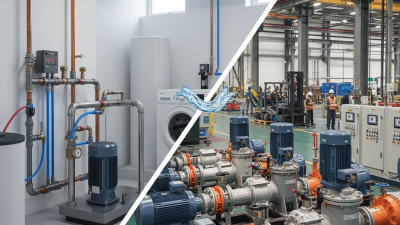
Factors to Consider When Selecting a Motor Pump for Business
Selecting the right motor pump is crucial for business operations. One must consider several factors, including flow rate, pressure requirements, and energy efficiency. According to the Global Pump Market Report, companies that invest in pumps with optimal energy efficiency can reduce operational costs by up to 30%. This emphasizes how strategic choices can enhance bottom lines.
Durability is another key factor. A pump's lifespan impacts maintenance costs significantly. Businesses often overlook this aspect. A pump that fails prematurely can incur replacement costs that far exceed initial savings. Research from the Hydraulic Institute indicates that quality pumps can last over 15 years with proper maintenance, thus reducing the total cost of ownership.
Understanding the specific application is essential. Different industries have unique fluid characteristics. For example, food processing requires sanitary designs. In contrast, chemical industries demand compatibility with various substances. Many businesses fail to assess their fluid types correctly. As a result, they may choose pumps that cannot handle specific requirements, leading to inefficiencies. Overall, care in selection is necessary to ensure long-term reliability and performance.
Types of Motor Pumps and Their Applications
Motor pumps are essential in various industries, from agriculture to manufacturing. Each type serves specific applications. Centrifugal pumps are common in water transfer and irrigation. They efficiently move large volumes of liquid. Their design features a rotating impeller that accelerates the fluid. This makes them ideal for agricultural fields or municipal water systems.
Positive displacement pumps are another popular choice. They are used in applications requiring precise fluid control. These pumps work by trapping a fixed amount of fluid and forcing it into the discharge pipe. This design is beneficial for chemical processing or food applications where accuracy matters. However, their maintenance can be more complex. Users should remain vigilant about wear and tear.
In choosing motor pumps, consider your operational needs. Think about the types of liquids you'll be handling. Ensure compatibility with your existing systems. Reflect on your budget, as initial costs can vary significantly. The right choice can enhance efficiency. Balancing performance with maintenance is key. It can be a challenging task, but assessing your specific requirements will guide you.
Why Choose the Right Motor Pump for Your Business Needs? - Types of Motor Pumps and Their Applications
| Type of Motor Pump | Application | Benefits | Common Industries |
|---|---|---|---|
| Centrifugal Pump | Water Supply, HVAC Systems | High Efficiency, Smooth Flow | Construction, Agriculture |
| Positive Displacement Pump | Chemical Processing, Oil Transfer | Handles Viscous Liquids, Precise Flow Rates | Petrochemical, Food and Beverage |
| Submersible Pump | Dewatering, Wastewater Management | Compact Design, Low Maintenance | Mining, Municipal Services |
| Diaphragm Pump | Pharmaceuticals, Water Treatment | No Leakage, Safe for Hazardous Materials | Chemical, Environmental |
| Magnetic Drive Pump | Corrosive Liquid Handling, Chemical Applications | No Mechanical Seal, Reduced Risk of Leakage | Chemicals, Petrochemical |
Evaluating Efficiency and Performance of Motor Pumps
Motor pumps play a vital role in various industries, impacting efficiency and performance significantly. Choosing the right motor pump requires a deep understanding of the specific business needs. An efficient motor pump can reduce operational costs and minimize downtime. It's crucial to evaluate factors such as flow rate, pressure, and energy consumption. These metrics help in selecting a pump that meets your requirements without overspending.
Performance evaluation is equally important. Regular assessments can reveal inefficiencies in your current motor pump system. Wear and tear often lead to reduced performance over time. A thorough analysis of pump operation can identify issues early, allowing for timely maintenance or replacement. Selecting a pump based purely on initial cost can lead to longer-term losses, highlighting the need for a more comprehensive evaluation.
Attention to factors like noise levels and vibration can also influence the decision. A motor pump that operates quietly can enhance workplace conditions. Likewise, vibration can indicate underlying mechanical issues. Both are crucial elements that should not be overlooked during the evaluation process. Overall, understanding these dimensions ensures smarter choices that align with operational goals and foster sustainable growth.
Motor Pump Efficiency Comparison
Cost-Benefit Analysis of Investing in the Right Motor Pump
Choosing the right motor pump can significantly impact your operational efficiency. A suitable pump not only meets your current demands but also prepares your business for future growth. Investing in a motor pump with the right specifications can save you money in the long run. Upfront costs seem daunting, but consider the potential savings on energy and maintenance.
A cost-benefit analysis reveals hidden advantages. For instance, high-efficiency models may have a higher initial price but offer substantial savings on electricity bills. Over time, this can offset the initial investment. Additionally, reliable pumps reduce downtime, leading to increased productivity. Reflecting on previous experiences, inadequate pumps often lead to frequent repairs, driving up overall costs.
Determining the right pump requires careful consideration of your specific needs. Ignoring this can result in mismatched performance and efficiency. Seek expert advice to evaluate your options and understand the long-term implications of your choice. Balancing quality and cost is essential for a sustainable investment. Sometimes, the cheapest option can end up being more expensive in the long run. Choosing wisely means looking beyond the initial price tag.
Related Posts
-
Top 10 Best Pump Systems for Home and Industrial Use?
-
Top 10 Electric Chemical Injection Pumps for Global Buyers?
-
Why Choose a Chemical Metering Pump for Precise Liquid Handling in Your Industry
-
7 Reasons Why Electric Diaphragm Pumps Are Your Top Choice for Efficient Fluid Management
-
Top Fluid Pumps Types and Their Applications Explained?
-
Understanding the Role of Chemical Pumps in Enhancing Water Treatment Efficiency

Whether your solution requires a single pumping application or an expansive engineered system,
CheckPoint is committed to becoming your partner in excellence.