Why Choose Float Glass for Your Project?
Choosing Float Glass can shape a project’s clarity, consistency, and long-term performance. The material begins as molten glass, which flows over a bath of molten tin. This process creates a flat, smooth sheet with even thickness. Look closely at a clear pane: straight edges remain visually steady, and nearby details appear crisp. That uniformity makes float glass a practical starting point for windows, partitions, doors, and many other applications.
Dr. John Mauro, a glass scientist and materials researcher, offers a useful perspective. A fair paraphrase of his work is: “Glass performance depends on composition and processing, not appearance alone.” This is a paraphrase, not a verified verbatim quotation. The distinction matters. Project decisions should rely on documented specifications, suitable testing, and advice from qualified suppliers—not attractive claims by themselves.
Float glass also offers flexibility. It can be cut and processed for uses such as heat-treated or laminated glazing, subject to the project’s design and safety requirements. It is widely available, too. Still, it is not perfect. Untreated glass can break, and a clear sheet may not provide the privacy, insulation, or impact resistance a particular space needs. Those limits deserve attention early, not after installation. A careful selection process weighs dimensions, thickness, coatings, edge finish, and intended use. The best choice is not always the cheapest pane or the clearest one. It is the glass that fits the real conditions of the project.
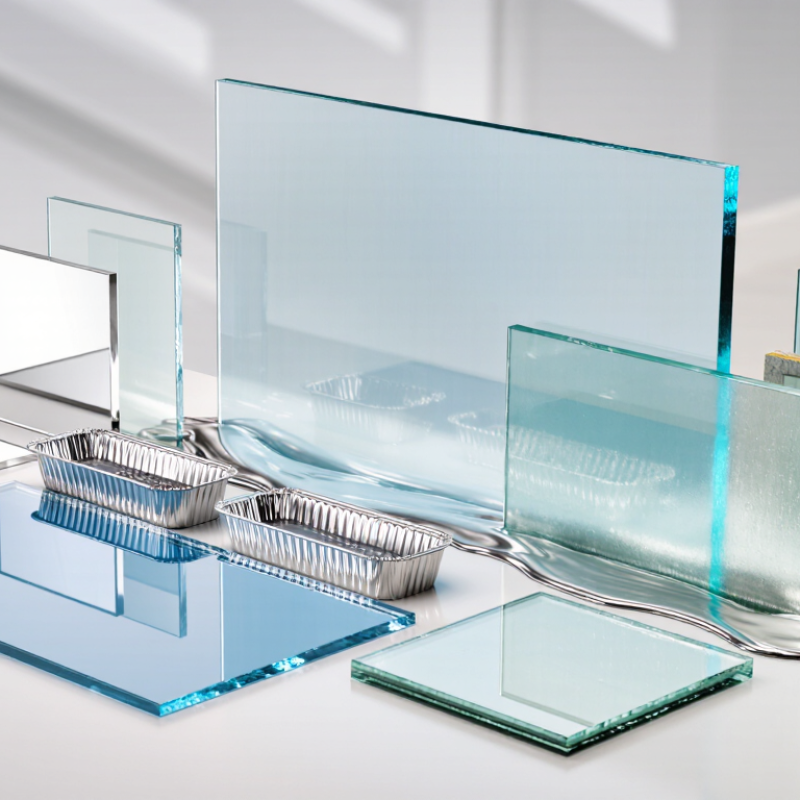
What Float Glass Is and How It Is Made
Why Choose Float Glass for Your Project?
What Float Glass Is and How It Is Made
Float glass is made by melting a carefully measured mix of silica sand, soda ash, limestone, and other materials. The molten glass flows onto a bath of liquid tin. Because the glass is less dense, it spreads across the tin and forms a broad, level ribbon. No rollers press against its main surfaces. That matters.
As the ribbon moves forward, its temperature is controlled so it gradually cools in an annealing lehr. This reduces internal stress and makes the sheet easier to cut and process. Thickness depends on how the glass is formed and controlled along the line. The result is a smooth, consistent sheet used in windows, doors, and many interior applications.
“Flat” does not mean optically perfect. Small variations can still appear, and the right specification depends on the project, viewing conditions, and later processing. I think this point is easy to overlook when comparing samples under showroom lighting. Float glass offers a reliable starting material, but selection should account for the finished panel’s size, thickness, and intended use.
Why Choose Float Glass? How It Is Made
Float glass is made by floating molten glass on a bath of molten tin, creating a flat, uniform sheet. The chart shows indicative temperatures associated with key stages of soda-lime float-glass production; actual temperatures vary by composition and plant.
How the Float Process Creates a Smooth, Uniform Surface
Why Choose Float Glass for Your Project?
How the Float Process Creates a Smooth, Uniform Surface
Float glass begins as a carefully blended batch of silica sand, soda ash, limestone, and recycled glass. The melted material flows onto a bath of molten tin, where gravity spreads it into a flat ribbon. Because the glass does not touch rollers, its two faces emerge remarkably smooth and parallel. The ribbon then cools gradually in an annealing lehr, reducing internal stress before cutting. The European Commission’s Glass Manufacturing Industry BREF describes float furnaces producing hundreds of tonnes daily, with large lines commonly reaching about 600–800 tonnes. That scale supports consistent production, though quality still depends on process control and inspection.
A uniform surface matters when glass is viewed through, coated, or fitted into a tight frame. It helps reduce visual distortion and gives coatings a more predictable base. Still, “uniform” does not mean flawless: thickness, edge condition, and optical quality can vary by specification. Ask suppliers for declared tolerances and inspection details, especially for large panes or demanding façades. I would not judge a sample only under showroom lighting; view it against a straight grid in daylight, too.
Tips: Check the required thickness, flatness, and coating compatibility before ordering. For critical sightlines, inspect a full-size sample if available. A small ripple may seem minor on a bench, but stand beside a tall window and it can become obvious.
Why Choose Float Glass for Your Project? — How the Float Process Creates a Smooth, Uniform Surface
| Dimension | Typical Data or Process Detail | Why It Matters for Your Project |
| How the surface is formed | Molten glass floats across a bath of molten tin, forming a continuous ribbon with broad, smooth faces. | The process produces naturally flat surfaces, often reducing the need for grinding or polishing in standard applications. |
| Typical thickness range | Commercial float glass is commonly available in thicknesses from about 2 mm to 19 mm; availability varies by market and product. | A range of thicknesses can suit uses such as glazing, partitions, furniture, and further processing. |
| Typical density | About 2,500 kg/m³ for common soda-lime-silicate glass. | For a rough estimate, a 4 mm sheet weighs about 10 kg per square metre, before any coatings or additional components. |
| Refractive index | Approximately 1.52 for common soda-lime-silicate glass in visible light. | This optical property is relevant to appearance and light transmission; the exact value depends on glass composition and wavelength. |
| Visible light transmission | Clear, uncoated 4 mm glass typically transmits around 90% of visible light. The result varies with thickness, composition, and measurement method. | Useful where daylight and visual clarity are important. Tinted, coated, patterned, or thicker glass can transmit less light. |
| Thermal expansion | Common soda-lime-silicate glass has a linear thermal expansion coefficient of roughly 9 × 10⁻⁶/K. | Consider temperature changes and edge conditions when specifying glass for applications exposed to thermal stress. |
| Thermal conductivity | Approximately 1 W/(m·K) for ordinary soda-lime-silicate glass near room temperature. | Single-pane glass provides limited insulation; insulated glazing units use sealed spaces and appropriate glass configurations to improve thermal performance. |
| Mechanical processing | Float glass can be cut, edge-worked, laminated, coated, or heat-treated, subject to product specifications and processing requirements. | It serves as a versatile starting material. Heat-treated or laminated products have different safety and performance characteristics from annealed glass. |
Values are typical reference figures for clear soda-lime-silicate float glass, not guaranteed product specifications. Confirm dimensions, optical properties, and safety requirements with the glass supplier for the intended application.
Key Properties That Make Float Glass a Practical Choice
Float glass is made by allowing molten glass to flow across a bath of molten tin. This process creates broad sheets with smooth surfaces and consistent thickness. For windows, cabinet doors, and interior partitions, that uniformity can simplify measuring and fitting. Clear glass also lets daylight pass through without the visual waviness sometimes found in less consistent sheets. The result is practical, not magical.
Tip: Confirm the required thickness, dimensions, and edge finish before ordering. A small mismatch can complicate installation.
Float glass is available in different thicknesses and can be cut to suit many project layouts. Its smooth faces are useful when a clean, unobstructed view matters. However, ordinary float glass can break under impact, and temperature differences may create stress. It is not automatically the right choice for every location. Check whether local building requirements call for safety glazing, and ask a qualified installer about support, edge quality, and exposure. I have seen plans focus on appearance while overlooking the frame; that detail deserves more thought. Surface clarity is valuable, but the whole assembly determines how well the glass performs.
Factors to Consider When Selecting Float Glass
Why Choose Float Glass for Your Project?
Factors to Consider When Selecting Float Glass
Choosing float glass starts with the job it must do: admit daylight, provide a clear view, or form part of an insulated unit. Check thickness against pane size, wind exposure, support, and handling requirements. A thin sheet may flex more; a thicker one adds weight and can require stronger framing. Also inspect samples in daylight. Clear glass can show a slight green tint at the edge, especially in thicker panes. Easy to miss. For façades and windows, compare light transmission, solar heat gain, and U-factor rather than judging clarity alone. The U.S. Department of Energy estimates that windows account for 25–30% of residential heating and cooling energy use, so glazing choices can affect comfort and energy demand.
Consider whether the project needs heat-treated or laminated glass for impact resistance, and confirm that the selected product suits the intended application. For better thermal performance, float glass may be combined with low-emissivity coatings and insulating glass units; the whole assembly matters more than one pane’s label. I still find this easy to underestimate: frame quality and installation gaps can weaken an otherwise sound specification. Ask suppliers for current technical data, including glass thickness, coating position, visible light transmittance, and solar heat gain coefficient.
Tip: Compare physical samples beside the actual frame, then review performance figures under the project’s expected climate and orientation. Don’t choose by appearance alone.