What Is Nail-Free Glue Used For?
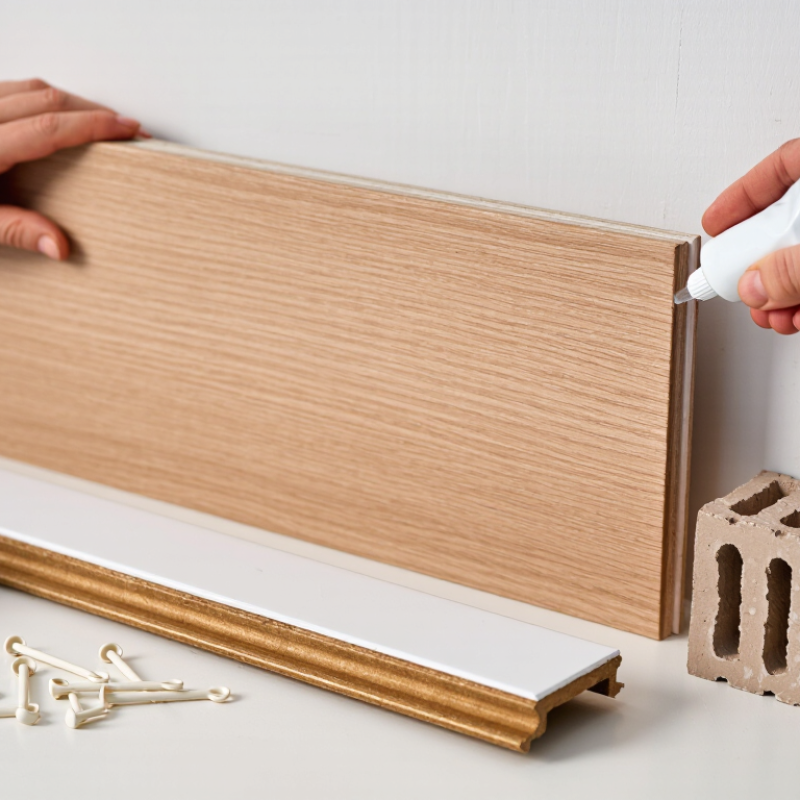
Nail-Free Glue is designed to secure items without screws, nails, or drilling. It is commonly used for lightweight panels, trim, hooks, and decorative pieces on suitable surfaces. Think of a clean wall, a measured bead of adhesive, and a panel held firmly in place while the bond develops. The exact result depends on the product, the materials, and the surface condition.
This guide explains what Nail-Free Glue can attach, where it works best, and what to check before use. Some formulas suit porous materials such as wood or masonry. Others are made for smoother surfaces. Always read the label for compatible materials, application instructions, and curing time. Dust, moisture, paint condition, and uneven contact can weaken a bond. Small details matter.
A useful rule: match the adhesive to both surfaces, not just the object. Nail-Free Glue is not a universal fix, and “strong” does not mean suitable for every load or environment. Test a discreet area when finish or adhesion is uncertain. For overhead, heavy, or safety-critical installations, follow the manufacturer’s guidance and choose an appropriate fixing method.
No verifiable quotation from a named Nail-Free Glue industry expert was provided, so I won’t invent one or attribute words without a reliable source. That restraint matters. Adhesive performance is product-specific, and trustworthy advice should be too.
What Nail-Free Glue Is: A Construction Adhesive for Fixing Materials Without Nails
Nail-free glue is a construction adhesive used to join materials without driving nails or screws through them. It is often applied to trim, panels, skirting boards, and other building components. The adhesive forms a bond between surfaces, helping avoid visible holes and reducing the chance of splitting thin wood. It is not magic.
The exact use depends on the product formula and the materials involved. Some adhesives suit wood, plaster, or masonry, while others may not bond well to smooth plastic or damp surfaces. Check the label before use. In practice, a bead along the back of a light trim piece can hold it against a clean wall while it sets. Heavier items may need temporary support, and some applications still require mechanical fasteners.
Good preparation makes a real difference. Remove dust, grease, and loose paint, then apply the adhesive as directed. Press the materials together firmly, but do not assume the bond reaches full strength immediately; curing time varies with temperature, airflow, and surface type. A small test area can reveal problems before a larger installation. That matters. One easy mistake is choosing adhesive for convenience without checking whether it suits both surfaces and the load.
What Is Nail-Free Glue Used For?
Nail-free glue is a construction adhesive used to fix materials in place without nails or screws. Typical uses include attaching trim, panels, and skirting boards to suitable surfaces.
How to read this chart: Ratings are a qualitative guide to how commonly these items are fixed with construction adhesive, not measured performance scores. Suitability depends on the adhesive, materials, surface preparation, and load; check the product instructions before use.
Common Uses: Bonding Trim, Skirting Boards, Panels, and Lightweight Fixtures
Nail-free adhesive is used to bond trim, skirting boards, wall panels, and lightweight fixtures where drilling may be awkward. It spreads the bond across a wider contact area, provided both surfaces are compatible and prepared correctly. For skirting boards, apply an even bead along the back, then press the board against a clean wall. Small spacers can help keep it straight while the adhesive cures. Don’t expect instant grip.
Tips: Remove dust, grease, and loose paint before applying adhesive. Check the product directions for suitable materials, bead size, and curing time. Hold panels in place with temporary supports if needed. A rushed fit can leave a visible gap; measure and dry-position each piece before bonding.
Wall panels and lightweight fixtures, such as small decorative hooks or cable covers, may also suit this method. Use enough adhesive for contact without squeezing excess onto the edges. Avoid relying on adhesive alone for heavy items or anything that could cause injury if it falls. Small details matter. If a surface is damp, uneven, or poorly bonded to the wall, the result may disappoint, even with careful application.
How Bond Strength Is Tested: ISO 4587 Lap-Shear Results in N/mm²
What Is Nail-Free Glue Used For?
How Bond Strength Is Tested: ISO 4587 Lap-Shear Results in N/mm²
Nail-free glue is commonly used to attach trim, panels, hooks, and other items to suitable surfaces. Its holding ability depends on the adhesive, the materials, and how they are prepared. A clean, dry surface matters. So does allowing the adhesive to cure fully.
ISO 4587 measures tensile lap-shear strength in bonded test pieces. Two rigid pieces overlap across a defined area, with adhesive joining them. A testing machine pulls the pieces in opposite directions until the bond fails. The result is reported in N/mm², also called MPa. For example, 1 N/mm² equals 1 MPa. Small details matter: surface preparation, adhesive thickness, curing time, and test conditions can all affect the reading.
A result is not a promise of equal strength on a painted wall or dusty tile. Test pieces are controlled; real surfaces are not always so cooperative. That number is useful, but incomplete. Compare results only when the materials and test conditions are similar, and check the product’s instructions for compatible surfaces and curing requirements. A quick pull test at home can also mislead, since the adhesive may need more time to develop strength.
What Is Nail-Free Glue Used For? - How Bond Strength Is Tested: ISO 4587 Lap-Shear Results in N/mm²
Nail-free construction adhesives are commonly used to attach trim, panels, skirting boards, and other building materials without mechanical fasteners. The figures below are illustrative examples only—not measured, certified, or product-specific ISO 4587 results. Actual lap-shear strength depends on the adhesive, substrates, surface preparation, curing conditions, and test procedure.
| Typical application | Example adherends | Illustrative lap-shear result (N/mm²) | Example failure mode | Practical note |
| Fixing interior skirting boards | Primed timber to plasterboard | 1.2 | Substrate surface failure | Dust and weak paint layers can limit adhesion. |
| Attaching decorative wall panels | Timber panel to plywood | 1.8 | Mixed adhesive and wood-fibre failure | Results can vary with wood grain and moisture content. |
| Bonding a ceramic trim piece | Ceramic tile to cement board | 1.5 | Adhesive-interface failure | Confirm that the adhesive is suitable for both surfaces and the intended environment. |
| Mounting rigid PVC trim | Rigid PVC to sealed masonry | 0.9 | Adhesive-interface failure | Low-energy plastics may need specific surface preparation or a compatible adhesive. |
| Fixing a timber batten to a wall | Timber to concrete | 1.4 | Concrete surface failure | Concrete should be sound, clean, and free of loose material. |
How the test works: ISO 4587 measures the tensile force required to shear an adhesive joint between overlapping rigid adherends. Lap-shear strength is calculated by dividing the maximum force by the bonded overlap area and is reported in N/mm² (equivalent to MPa). The example values above are not ISO test findings; verified results require testing under a defined, documented procedure.
How to Apply It: Check Bead Size, Open Time, and Cure Time on the Product Data Sheet
Nail-free glue is used to attach items such as trim, small panels, skirting boards, and decorative pieces without driving nails through their surfaces. It can reduce visible holes and simplify fitting. The right adhesive depends on the materials, their weight, and whether the surfaces are porous or smooth. A neat bead cannot compensate for an unsuitable surface.
Before applying it, read the product data sheet and check the recommended bead size. A bead that is too thin may not bridge small gaps; one that is too thick can squeeze out along the edges. Clean and dry both surfaces, then apply the adhesive in the pattern specified. Keep a damp cloth nearby for fresh excess, if the instructions allow it. Small details matter.
Check the open time, too: this is the window for positioning the piece before the adhesive begins to set. Press it into place within that window, and use temporary support if the sheet recommends it. Cure time is different. The bond may need hours, or longer, before it can carry weight. Not instantly. It is tempting to test the joint early, especially when it feels firm, but that can be misleading. Allow the stated cure time under the conditions listed, including temperature and ventilation. A little patience here is harder than it sounds.
Where It May Fail: Verify Load Ratings, Substrate Compatibility, and VOC Levels in g/L
What Is Nail-Free Glue Used For?
Nail-free glue can secure trim, hooks, panels, and lightweight shelving without drilled holes. Its limits matter as much as its convenience. A wall hook may hold a picture today, yet peel away when warm air softens the bond or the load shifts. Check the product’s stated load rating, curing time, and application instructions. Ratings may depend on a specific surface and test setup. A quick tug is not a reliable substitute. That matters.
Substrate compatibility is a common weak point. Painted drywall, dusty plaster, sealed tile, and raw timber behave differently; loose paint can come away with the adhesive. Clean and dry the surfaces, then test a small hidden area when the instructions allow it. Also check the listed VOC level in g/L, especially for work in a small room. A lower number may be preferable, but it does not replace ventilation or the product’s safety directions. It is easy to overlook the surface beneath the surface. I would not assume one glue suits every wall, even when the label sounds broad.