



What is a Waterproof Micro Switch and How Does It Work?
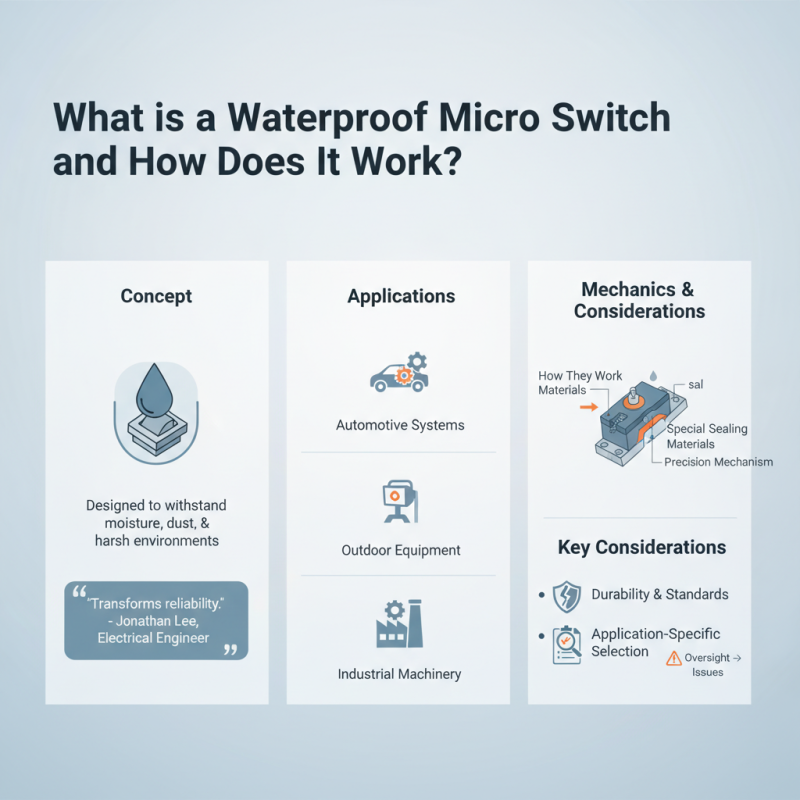
In the world of industrial applications, the term "Waterproof Micro Switch" is frequently mentioned. This crucial component plays a vital role in various devices. Jonathan Lee, an expert in electrical engineering, once stated, "A waterproof micro switch can transform the reliability of devices used in harsh environments."
Waterproof Micro Switches are designed to withstand moisture and dirt. They are commonly used in outdoor equipment, automotive applications, and industrial machinery. Their ability to function in adverse environments sets them apart from standard switches. These switches often utilize special materials and sealing techniques to maintain performance.
Despite their advantages, challenges remain. Not all waterproof micro switches meet high standards for durability. Some may fail under extreme conditions. Users must consider these factors to ensure reliability. It’s essential to choose the right switch for specific applications, keeping in mind that even a small oversight can lead to significant issues.
What is a Waterproof Micro Switch and Its Key Features
Waterproof micro switches are essential components in various applications. They are designed to operate reliably in harsh environments. These switches often feature an IP67 rating, meaning they can withstand immersion in water. This makes them ideal for use in outdoor equipment, automotive controls, and industrial machinery.
Key features include their robust construction. Materials such as stainless steel and engineered plastics provide durability. According to industry reports, the global waterproof switch market is expected to grow by 6% annually. This growth signifies a rising demand for durable components across sectors like manufacturing and automotive. The tactile feedback they provide is critical for user experience, especially in handheld devices.
However, not all waterproof micro switches perform equally. Some may degrade faster than expected when exposed to extreme conditions. Factors like temperature fluctuations and exposure time play significant roles in their longevity. This shows the need for careful selection based on specific usage scenarios. Understanding these factors can enhance the effectiveness of your application.
What is a Waterproof Micro Switch and How Does It Work?
| Feature | Description |
|---|---|
| Definition | A waterproof micro switch is a type of electrical switch designed to operate reliably in wet or humid environments. |
| Key Features | Sealing against water, compact size, low operating force, high durability. |
| Applications | Used in various industries including automotive, medical devices, and consumer electronics. |
| Mechanism | Operates by using mechanical movement to open or close an electrical circuit. |
| Durability Rating | Typically rated for millions of operations under specified conditions. |
| IP Rating | Generally rated with an Ingress Protection (IP) rating such as IP67 or IP68 for water resistance. |

Common Applications of Waterproof Micro Switches in Industry
Waterproof micro switches are essential components in various industrial applications. Their design protects them from water and dust, ensuring reliable operation in harsh environments. These switches can withstand exposure to moisture, making them ideal for outdoor equipment or machinery in wet conditions.
In manufacturing, waterproof micro switches are commonly used in assembly lines. They control machinery operations while preventing water damage. They are often found in food processing plants, where hygiene and safety are priorities. Using these switches helps maintain consistent production levels. However, they can sometimes malfunction if not properly maintained or installed.
Another key application is in automotive sectors. Waterproof micro switches are utilized in vehicles for critical functions, such as door latching systems and safety features. Despite their robust design, challenges arise in extreme conditions. High-pressure water sprays can displace seals over time. Regular inspections are necessary to ensure their continued effectiveness. In some cases, users may discover that even waterproof switches are not entirely immune to failure.
Waterproof Micro Switch Applications in Industry
Design and Construction: Materials Used for Waterproof Micro Switches
Waterproof micro switches are essential in many devices. They excel in environments exposed to moisture or dust. The design and construction of these switches focus on durability and reliability. Various materials ensure protection against water and particulate intrusion.
Commonly used materials include silicone, rubber, and specific plastics. Silicone seals can effectively block water while maintaining switch functionality. The plastic housing often has protective coatings for additional waterproofing. This design minimizes wear over time, enhancing the switch's longevity.
Tips: When choosing a waterproof micro switch, consider the environment. Ensure the materials used meet your needs for moisture resistance. Regular maintenance can also extend the switch's life.
Not every design is perfect. Some switches may fail if not installed properly. Misalignment can occur, causing water to seep in. Testing the switch in its intended environment before final installation is important. This helps avoid future issues.
How Waterproof Micro Switches Operate: Mechanisms and Types
Waterproof micro switches are crucial in industries where moisture is a concern. They are designed to withstand harsh conditions, making them suitable for outdoor equipment, kitchen appliances, and automotive applications. Their operation relies on a sealed housing that protects the internal components from water and dust. This design ensures reliability despite environmental challenges.
The mechanisms within waterproof micro switches often include a snap-action feature. This allows for quick response times. The two main types are sealed and potting types. Sealed switches use O-rings to provide water resistance, while potting switches are encased in a protective resin. According to industry reports, waterproof micro switches can significantly reduce failure rates in humid environments, potentially cutting them by up to 70%.
Despite the advantages, there are some considerations. Not all waterproof micro switches are equally effective. Variations in manufacturing quality can lead to discrepancies in performance. Testing under different conditions is essential to ensure their reliability. Additionally, the cost can be a barrier for budget-conscious projects. Striking a balance between quality and affordability remains a challenge in selecting the right product.
Industry Standards and Ratings for Waterproof Micro Switches
Waterproof micro switches are essential in various industries. They prevent moisture and dust from affecting performance. Understanding industry standards helps users select the right switch.
Different ratings indicate a switch's level of waterproofing. The IP (Ingress Protection) rating is commonly used. An IP67 rating, for example, means it can withstand submersion in water up to one meter. This is crucial for outdoor applications. Many switches may not meet these standards, resulting in failures. Testing and certifications are vital. Over time, wear and tear can diminish their effectiveness.
Choosing the right waterproof micro switch can be complex. Not every application requires the highest ratings. Some may need basic protection, while others demand robust standards. Proper installation is also critical. Even a small mistake can compromise a switch's waterproof features. Therefore, understanding needs is necessary for success.
Article Source:

Whether your solution requires a single pumping application or an expansive engineered system,
CheckPoint is committed to becoming your partner in excellence.


