



What is Wastewater Flocculant and How Does it Work?
Wastewater Flocculants play a crucial role in water treatment processes. They help separate solids from liquids, improving water clarity and safety. According to a report by the World Health Organization, effective flocculation can reduce suspended solids by up to 90%. This is essential for industries facing stringent discharge regulations.
Expert Dr. Jane Thompson, a leading figure in wastewater management, stated, “The choice of a wastewater flocculant can significantly influence treatment efficiency.” Her insights underline the importance of selecting the right flocculant based on specific wastewater characteristics.
As we navigate the complexities of water treatment, it is clear that not all flocculants are created equal. Each type has its advantages and limitations. Understanding these nuances is vital for optimizing processes. While technology has advanced, challenges remain. Continuous innovation is necessary to meet evolving environmental standards and demands.
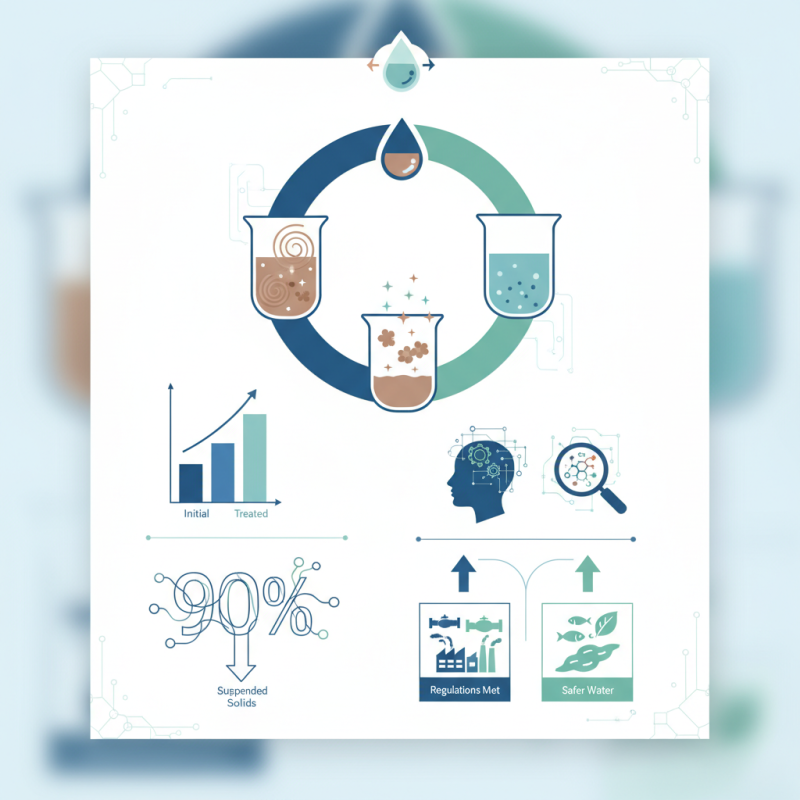
Definition of Wastewater Flocculant and Its Purpose
Wastewater flocculants play a crucial role in water treatment. These agents help bind suspended particles together. This process allows for easier removal during filtration. The primary purpose is to clarify water and reduce contaminants. Often, they are made from natural or synthetic polymers.
According to industry reports, the global flocculant market is expected to reach over $4 billion by 2025. This growth reflects an increasing focus on environmental sustainability and clean water access. In municipal wastewater treatment, flocculants can remove more than 90% of suspended solids. However, finding the right type for specific conditions can be challenging. Not all flocculants work well in every situation.
Some facilities may see inconsistent results. It's essential to adjust dosage and monitor performance closely. Miscalculating can lead to insufficient purification. This highlights the importance of ongoing research in flocculant efficiency. Balancing cost-effectiveness and performance poses a real challenge for many operators. It's an area requiring continuous improvement and innovation.

Types of Wastewater Flocculants Commonly Used in Treatment
Wastewater flocculants play a crucial role in the treatment of wastewater. There are various types of flocculants, each designed for specific situations. Some are synthetic, while others come from natural sources. Common types include polyacrylamides, sodium alginates, and chitosan. These agents help aggregate suspended particles, making them easier to remove.
Polyacrylamides are widely used in industrial settings. They work by neutralizing charges on particles. This process helps form larger clumps, known as flocs. Sodium alginates, derived from seaweed, are biodegradable. They are effective in treating dairy and food waste. Chitosan, made from crustacean shells, is also a natural option. It has antimicrobial properties, which can be beneficial.
Tips: Always test flocculants in small batches. This ensures compatibility with your specific wastewater type. Adjust dosages carefully to avoid excessive usage. Too much flocculant can lead to complicated sludge handling.
Monitoring is vital. Keeping an eye on the process ensures optimal performance. This way, you can make adjustments in real time. Effective treatment is a balance, often requiring tweaks along the way.
The Mechanism of Action: How Flocculants Operate
Flocculants play a vital role in wastewater treatment. They are substances that aid in the aggregation of fine particles. This aggregation results in larger particles, or 'flocs', which can be easily removed from water. The process begins when flocculants are added to the wastewater. They interact with the suspended particles, neutralizing their charges and encouraging them to clump together.
When particles aggregate, they form a network that becomes heavy enough to settle down. This settling process is essential for cleaning wastewater effectively. However, not all flocculants are equally effective in every situation. Some may work well with specific types of pollutants but fail with others. This inconsistency can lead to reflections on optimal usage. It raises questions about the choice of flocculants in varying conditions.
After floc formation, the removal process can become complex. Operators need to ensure that the flocs are adequately separated without losing valuable water. Monitoring this balance can be tricky, and inefficiencies here could result in higher costs and environmental impacts. Despite these challenges, the potential of flocculants in improving water clarity remains significant. Their operation hinges on the understanding of particle interactions, which is still an area for further exploration.
Applications of Wastewater Flocculants in Various Industries
Wastewater flocculants play a crucial role in treating industrial wastewater. They help aggregate suspended particles, making it easier to remove them. Different industries rely on various flocculants tailored to specific needs. For instance, in the mining sector, around 30% of wastewater is treated with flocculants to separate valuable minerals from the sludge. This process is essential for minimizing environmental impact.
In the food processing industry, flocculants are used to clarify waste streams. According to recent reports, nearly 25% of processing plants adopt flocculants for effective solids removal. These substances ensure that effluents comply with safety regulations. However, not all flocculants are equally effective. Some can lead to inefficient treatment and increased costs, forcing industries to reconsider their choices.
The textile industry also utilizes wastewater flocculants, significantly reducing dye pollutants. Data indicates that 40% of wastewater treatment plants in this sector use these agents. Yet, the effectiveness can vary due to water chemistry changes. This inconsistency can complicate treatment processes. Each application presents unique challenges, prompting industries to constantly evaluate their flocculant strategies.
What is Wastewater Flocculant and How Does it Work? - Applications of Wastewater Flocculants in Various Industries
| Industry | Flocculant Type | Application Purpose | Benefits |
|---|---|---|---|
| Municipal Wastewater Treatment | Anionic Polymers | Clarification and sludge dewater | Improved settling rates, reduced sludge volume |
| Mining | Cationic Polymers | Flotation and sedimentation | Enhanced recovery of minerals, clear effluents |
| Paper Production | Non-ionic Polymers | Wet end process and water recycling | Reduced fiber losses, cost savings |
| Food Processing | Starch-based Flocculants | Liquid clarification and waste reduction | Non-toxic, biodegradable options |
| Textiles | Chitosan-based Flocculants | Wastewater treatment and recycling | Eco-friendly, effective in removing dyes |
Benefits and Challenges of Using Flocculants in Wastewater Treatment
Flocculants play a vital role in wastewater treatment. These chemicals help bind tiny particles together. This process creates larger clusters, or flocs, which settle out of the water more easily. This method can significantly improve water clarity. However, the use of flocculants comes with its own set of challenges.
One key benefit of flocculants is the efficiency they bring. They can speed up the sedimentation process. This leads to faster treatment times in wastewater facilities. Clearer water can be achieved in less time. Yet, the choice of flocculant is crucial. Some may harm the environment or cause unwanted reactions.
Thinking of using flocculants? Here are some tips. Test different options to find the best fit. Monitor the impact on your wastewater system. Always consider the long-term effects. Remember, not all flocculants are created equal. Even small amounts of the wrong type can lead to problems. Be cautious and informed.
Benefits and Challenges of Using Flocculants in Wastewater Treatment
Article Source:

Whether your solution requires a single pumping application or an expansive engineered system,
CheckPoint is committed to becoming your partner in excellence.


