



How to Use Cetearyl Alcohol as an Emollient?

Emollient Cetearyl Alcohol is a practical ingredient for creams, lotions, conditioners, and cleansing products. It is not a liquid alcohol. Instead, it is a waxy blend of cetyl alcohol and stearyl alcohol. In a formula, it softens skin, reduces moisture loss, and improves texture.

The details matter.

Grand View Research estimates that the global emollients market reached approximately USD 1.5 billion in 2023. Its report also projects steady growth through 2030, supported by skincare and haircare demand. Market figures vary between analysts. That difference deserves attention. It often reflects changing product definitions, regions, and research methods.

The Cosmetic Ingredient Review has assessed cetearyl alcohol as safe for cosmetic use under established formulation practices. The ingredient can create a smooth, cushion-like feel between the fingers. It also helps stabilize emulsions by supporting the structure around oil and water phases. However, more is not always better. Excessive use may produce drag, waxiness, or a heavy after-feel.

Cosmetic chemist Perry Romanowski explains, “Fatty alcohols are not the same as drying alcohols.” This distinction helps prevent a common formulation mistake. Cetearyl alcohol should be evaluated by function, concentration, skin feel, and the complete ingredient system. Supplier specifications, stability testing, and compatibility checks remain essential.

A well-designed emollient formula feels soft, not greasy. It spreads evenly across dry skin. It should also remain stable after temperature changes and storage.

This guide explores how to use Emollient Cetearyl Alcohol effectively, including its benefits, typical formulation roles, practical handling, and limitations. Real-world testing still matters. Small laboratory adjustments can change the final sensory result.
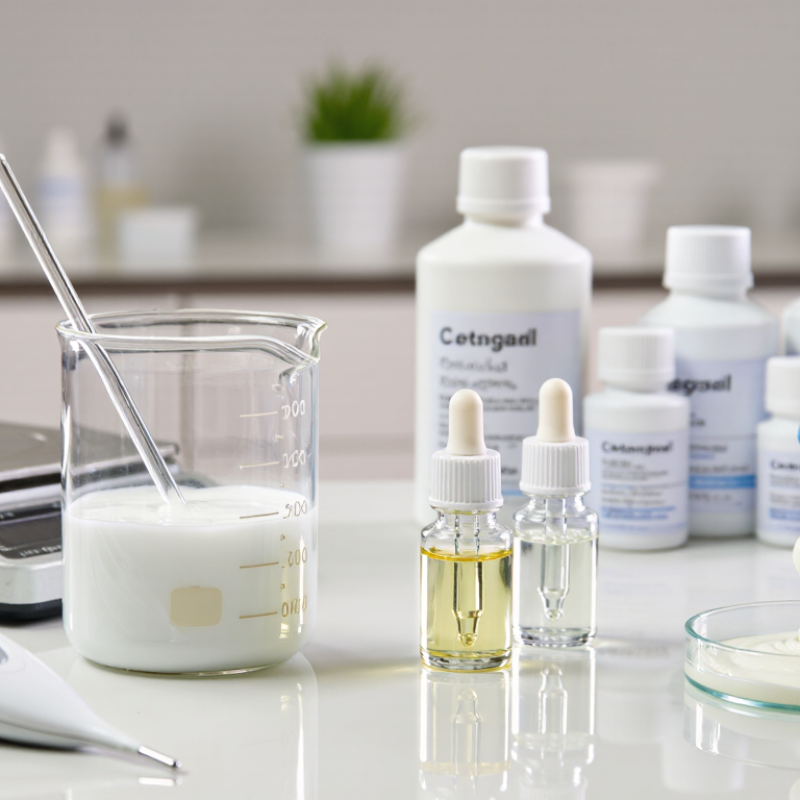
How to Use Cetearyl Alcohol as an Emollient?

What Is Cetearyl Alcohol and Why Is It Used as an Emollient?

Cetearyl alcohol is a waxy blend of cetyl alcohol and stearyl alcohol. Despite its name, it is not the same as drying alcohol. It is a fatty alcohol used in creams, lotions, conditioners, and cleansing products. Its main role is emollience. It helps soften rough skin by filling tiny spaces between surface cells. The skin may feel smoother and less tight. Cetearyl alcohol also adds body, helping a lotion spread with a soft, cushiony finish.

Tips: Add it to the heated oil phase when making an emulsion. Common use levels vary, often around 1–10%, depending on the formula. Follow the supplier’s technical guidance. Too little may provide limited structure. Too much can feel waxy or drag across the skin. Check the final texture after cooling, not only while it is warm.

Cetearyl alcohol also supports emulsion stability as a thickener and co-emulsifier. This helps keep oil and water phases together during storage. However, it cannot rescue every unstable formula. I have found that texture depends on the complete system, including oils, emulsifiers, water content, and mixing. Skin response matters too. Most people tolerate it well, but sensitive users may still notice discomfort. A small-area patch test is sensible before wider use. Its performance is useful, but not magical.

How Cetearyl Alcohol Softens and Conditions the Skin

How to Use Cetearyl Alcohol as an Emollient?

Cetearyl alcohol is a blend of fatty alcohols that helps skin feel smoother and more comfortable. Unlike drying alcohols, it has a soft, waxy texture. In a cream, it settles between rough skin flakes and fills tiny surface gaps. This reduces friction during application. Skin then feels less tight, especially after cleansing.

It also supports the skin’s moisture barrier. Cetearyl alcohol can form a light, protective layer that slows water loss from the surface. It does not add water like a humectant. It mainly helps keep existing moisture from escaping too quickly.

For this reason, formulators often combine it with water-binding ingredients and lightweight oils. A practical starting range may be around 1–10%, depending on the product’s texture and structure.

Use care with the amount. Too little may produce a thin, unstable cream. Too much can create drag, waxiness, or a heavy after-feel. The result depends on the full formula, not one ingredient alone.

A simple test is to apply a small amount to dry skin and check the feel after ten minutes. Does the surface stay flexible, or does it feel coated? That answer matters.

Even gentle ingredients can feel unsuitable for some people, so patch testing remains sensible.

How to Choose the Right Cetearyl Alcohol Formulation

Choosing cetearyl alcohol starts with its physical form, not its label. Flakes, pellets, and pastilles can share the same INCI name, yet melt differently. Review the certificate of analysis for the cetyl-to-stearyl ratio, melting range, acid value, and odor. These details influence slip, cushion, and final viscosity. A higher stearyl fraction often gives a firmer, more structured cream. More cetyl character may feel silkier and less draggy. That is a useful guide, not a promise.

Texture matters. For a light lotion, select a low-use, fast-melting grade and pair it with a fluid emollient. For a body butter, choose a higher-structuring grade and test crystallization after cooling.

Use it in the oil phase, commonly around 2–8% during initial trials. This range is practical, not universal. Heat until fully melted, usually near the supplier’s stated melting range, and maintain sufficient shear during emulsification. Poor dispersion can create waxy beads or a chalky after-feel. The 2012 International Journal of Toxicology report, Safety Assessment of Fatty Alcohols as Used in Cosmetics, found these ingredients safe under reported cosmetic use conditions. However, that conclusion does not replace product-specific assessment. The SCCS Notes of Guidance, 12th revision, published in 2023, supports exposure-based safety evaluation. Check preservative compatibility, pH drift, viscosity at 5°C and 40°C, and three freeze–thaw cycles. Do not guess. Pilot it. A formula can look elegant in a beaker and still feel heavy on skin.

How to Use Cetearyl Alcohol in a Skincare Formula

Cetearyl alcohol works best when treated as a formula-building material, not merely a moisturiser. It softens the skin surface and improves slip, while also increasing cream body. The Cosmetic Ingredient Review (CIR) Expert Panel’s published safety assessment considers cetearyl alcohol safe in cosmetic use when products are properly formulated and non-irritating. EU CosIng also lists it as an emollient, stabiliser, and viscosity-control ingredient.

In a 100-gram emulsion, begin with 1–3 grams of cetearyl alcohol. Technical formulation guides commonly place it within a broader 1–5% working range. Add it to the heated oil phase, usually around 70–75°C, until the waxy pellets fully melt. Keep mixing during emulsification. At 2%, the cream may feel light and spreadable. At 5%, it can feel richer, firmer, or slightly waxy. Too much can reduce elegance.

Texture needs testing. A 3% starting point is not magic. Pairing it with a suitable emulsifier can improve stability, but cetearyl alcohol does not replace a complete emulsifying system. Check viscosity after 24 and 48 hours, because the structure may continue developing. Test the formula through temperature changes and centrifugation when possible. In practice, a small adjustment of 0.5% can noticeably change drag and after-feel. That detail is easy to underestimate. Final decisions should reflect skin feel, stability results, preservative performance, and irritation testing.

How to Use Cetearyl Alcohol as an Emollient? — How to Use Cetearyl Alcohol in a Skincare Formula
Formulation Dimension Typical Data Practical Use in a Skincare Formula
INCI name Cetearyl Alcohol List it in the ingredient declaration using the recognized INCI name. It is a mixture of predominantly cetyl alcohol and stearyl alcohol.
Material type Solid, wax-like fatty alcohol Use it as a structuring ingredient in creams, lotions, balms, body butters, cleansing products, and other semi-solid emulsions.
Primary emollient effect Softens and smooths the skin surface It helps reduce a dry, rough feel and contributes a creamy, cushiony after-feel. Its sensory effect is usually richer than that of a light liquid ester.
Secondary functions Consistency agent, viscosity booster, co-emulsifier, and stabilizer It supports the body and texture of an emulsion and can improve the stability of oil-in-water creams when used with a suitable primary emulsifier.
Typical use level for emollience Approximately 1–5% of the total formula Start around 1–2% for a lighter lotion and increase gradually when a more substantive, protective, or creamy skin feel is needed.
Typical use level for texture and viscosity Approximately 2–5% of the total formula Higher levels generally produce a thicker, waxier texture. The final result depends on the oil phase, emulsifier system, electrolytes, polymers, and processing conditions.
Rich cream or balm use Approximately 3–8%, depending on the product structure Suitable for richer creams, body butters, and balms. At the upper end, evaluate drag, waxiness, and possible soaping during application.
Recommended phase Oil phase Add it to the oil phase and heat until fully melted before combining with the water phase. It is not normally added directly to the cool-down phase.
Melting behavior Commonly melts within approximately 49–56°C; the exact range varies by grade and composition Heat the oil phase sufficiently to achieve complete melting and uniformity. Avoid unnecessary overheating or prolonged exposure to high temperatures.
Emulsifier role Usually a co-emulsifier, not a complete emulsification system by itself Combine it with a primary emulsifier appropriate for the desired emulsion type. Do not rely on cetearyl alcohol alone to stabilize a conventional oil-in-water cream.
Compatibility with oil phase Compatible with many cosmetic oils, esters, butters, and waxes Use it to build structure alongside plant oils, hydrocarbon emollients, esters, or other lipid materials. Check the finished texture because different oils change its perceived richness.
Effect on viscosity Generally increases viscosity and body Increase the level stepwise rather than making a large adjustment at once. Excessive use may produce a stiff, draggy, or waxy product.
Skin-feel profile Creamy, smooth, substantive, and moderately occlusive Useful when the target is a moisturized and protected feel. For a lighter finish, pair it with low-viscosity emollients and use a lower cetearyl alcohol level.
Processing temperature Typically processed in a heated oil phase above its melting range A common workflow is to heat the oil and water phases separately, combine them at a suitable emulsification temperature, homogenize or mix, then cool with controlled agitation.
Cooling considerations Texture develops as the fatty alcohol crystallizes during cooling Control the cooling rate and mixing profile to reduce graininess, uneven viscosity, or an unstable final structure. Evaluate the product after 24–48 hours.
Suitable product formats Facial creams, body lotions, hand creams, barrier creams, cleansing creams, balms, and conditioners Select the use level according to the required spreadability, richness, packaging format, and target skin feel.
Common formulation risk Excessive waxiness, drag, whitening, or soaping during rub-in Reduce the level, adjust the emulsifier-to-oil ratio, modify the oil blend, or improve the processing and cooling profile if these effects occur.
pH considerations Generally compatible across the mildly acidic to mildly alkaline pH range used in many skincare products Cetearyl alcohol is not normally used to adjust pH. Set the final pH according to the complete formula, preservative system, skin-use target, and product type.
Formula testing Evaluate stability, viscosity, appearance, odor, spreadability, and sensory feel Run accelerated stability, freeze–thaw where relevant, centrifuge, packaging compatibility, and microbial preservation testing before commercialization.
Practical starting point 2–3% in a standard oil-in-water cream Use this as a development starting point, then optimize based on the primary emulsifier, total oil phase, desired viscosity, and sensory evaluation.
The stated use levels are typical formulation starting ranges rather than universal limits. Always confirm the specification of the selected raw material and comply with the cosmetic regulations applicable to the intended market.

How to Assess Safety, Compatibility, and Product Performance

How to Use Cetearyl Alcohol as an Emollient?

How to Assess Safety, Compatibility, and Product Performance

Cetearyl alcohol is a waxy blend of fatty alcohols used to soften skin and improve texture. It is not the same as drying alcohol. In a cream, it can reduce roughness and create a smooth, cushiony feel.

Start with a small laboratory batch. Record the percentage, heating temperature, mixing speed, and cooling time. These details often explain later changes.

Safety assessment should consider the full formula, not cetearyl alcohol alone. Review the supplier’s specification, impurity limits, and recommended use range. Check the finished product’s pH, preservative system, and packaging compatibility.

A basic skin compatibility test can reveal irritation or unexpected redness, but it cannot replace a qualified safety review. Claims should match the available evidence.

Compatibility testing matters because cetearyl alcohol may change viscosity and emulsion stability. Compare formulas after heating, cooling, centrifugation, and several weeks of storage. Watch for separation, graininess, odor changes, and surface cracking.

A cream may feel excellent on day one. It may fail after temperature cycling.

That happened in one of my early trials. I had focused too much on immediate slip and ignored long-term structure. Repeating the test with slower cooling improved the texture, but not perfectly. More testing was still necessary.

Whether your solution requires a single pumping application or an expansive engineered system,
CheckPoint is committed to becoming your partner in excellence.