

How to Use a Back Stretcher Board Safely?
A Back Stretcher Board can make a gentle back stretch feel simple: lie back, let your shoulders settle, and breathe slowly. But a curved board is not a treatment plan, and a deeper arch is not automatically better. Mayo Clinic sports medicine specialist Dr. Edward Laskowski gives a useful stretching rule: “You should feel tension while you're stretching, not pain.” Keep that distinction in mind before your first session.
Place the board on a firm, level surface, and follow its instructions for positioning and use. Start with the least pronounced arch and a brief session. Keep your movements controlled; avoid dropping onto the board or forcing your lower back into a sharper curve. A mild stretch may feel unfamiliar. Sharp pain, numbness, tingling, or pain traveling down a leg is different. Stop if these occur, and seek medical guidance, especially if you have a back condition, recent injury, or unexplained symptoms. Small steps matter.
This guide explains how to set up a Back Stretcher Board, choose a cautious starting position, and notice warning signs. It also covers common mistakes, including stretching through pain and assuming that one routine suits everyone. The honest caveat: a board may feel soothing for some people, yet it can aggravate symptoms for others. Your response is the useful evidence—not how far you can bend.
Assess Whether a Back Stretcher Board Is Suitable for You
Before using a back stretcher board, consider your health history and what you want it to do. The curved surface presses against your back and encourages an arch, which may feel uncomfortable or aggravate some conditions. If you have osteoporosis, a recent spinal injury or surgery, or a diagnosed back condition, ask a healthcare professional whether this type of stretching is appropriate. Seek advice as well if pain travels down your leg, or comes with numbness or weakness. These symptoms deserve more than a home stretching experiment.
Think about ordinary movement, too. Can you lower yourself onto the board and get up without twisting or losing balance? A hard floor, nearby support, and comfortable clothing can make a trial safer. Start with the board’s least intense position and a short session. A gentle stretch may be acceptable; sharp pain, tingling, or worsening symptoms are reasons to stop. No need to force a dramatic arch. The board can feel awkward at first, and that is worth noticing rather than pushing through. If discomfort lingers afterward, pause use and discuss it with a qualified clinician.
| Assessment factor | What to consider | Practical guidance | Suitability indication |
|---|---|---|---|
| Current symptoms | A gentle stretch may feel comfortable for some people with mild, occasional back tightness. A board is not a treatment for an undiagnosed cause of pain. | Start only if the position feels comfortable, and follow the device instructions. Stop if pain increases. | May be reasonable with caution |
| New or severe back pain | Sudden, severe, worsening, or unexplained pain may need assessment before using an extension device. | Avoid self-treatment with the board until you have received appropriate medical advice. | Get medical advice first |
| Pain spreading into a leg | Pain, tingling, numbness, or weakness that travels into a leg can have causes that need clinical assessment. | Check with a healthcare professional before trying a back stretcher board, especially if symptoms are new or worsening. | Get medical advice first |
| Weakness or changes in sensation | New or progressive leg weakness, numbness, or difficulty walking should not be managed with stretching alone. | Seek prompt medical advice. Sudden major weakness or loss of bladder or bowel control requires urgent medical attention. | Do not use without assessment |
| Known spinal condition | Conditions such as osteoporosis, a spinal fracture, spinal stenosis, or a disc-related problem may affect whether extension is appropriate. | Ask your clinician or physical therapist whether this type of movement is suitable for your specific condition. | Professional guidance recommended |
| Recent surgery or injury | Healing tissues may be sensitive to pressure or spinal extension after surgery, a fall, or another injury. | Wait for clearance from the treating clinician before using the board. | Get clearance first |
| Pregnancy or balance concerns | Getting on and off a curved board may be uncomfortable or unsteady for some people, particularly later in pregnancy or with balance difficulties. | Ask a healthcare professional about safer options, and do not use the board if you cannot get on and off it securely. | Use only with suitable guidance |
| First-time use | A larger arch or longer session is not necessarily better. Comfort and control matter more than reaching a particular stretch. | Use the lowest setting and a brief session as directed by the manufacturer. Increase gradually only if it remains comfortable. | Proceed gently |
| During or after use | Sharp pain, increasing pain, new tingling, numbness, dizziness, or symptoms spreading farther are warning signs. | Come off the board carefully and stop. Seek medical advice if symptoms persist, recur, or are severe. | Stop if symptoms worsen |
This table is general information, not a diagnosis or substitute for professional care. Follow the instructions for your specific device and consult a qualified healthcare professional if you are unsure whether a back stretcher board is appropriate for you.

Inspect the Board and Prepare a Safe, Stable Space
Before using a back stretcher board, inspect it in good light. Look for cracks, bent supports, loose parts, worn grips, or adjustment pins that do not lock fully. Run your hand along the edges; rough spots can catch clothing or skin. Set the board on a hard, level floor, not a loose rug or glossy surface. Leave clear space around it, away from stairs, furniture, and pets. Press down gently to check for rocking. It should feel steady. Check the stated weight limit and setup instructions, too.
The CDC reports that more than 14 million U.S. adults aged 65 and older report falling each year, about one in four. That figure is not specific to stretching boards, but it underlines why a stable setup matters. The World Health Organization estimated that 619 million people lived with low back pain in 2020; this is not evidence that a board treats pain. Use these figures as context, not a reason to stretch through discomfort.
Keep the floor dry, and make sure your hands can reach a stable support if needed. If a part looks slightly damaged, replacing it is safer than guessing. Small flaws are easy to dismiss. Check again before each session.
Position Your Body Correctly on the Board
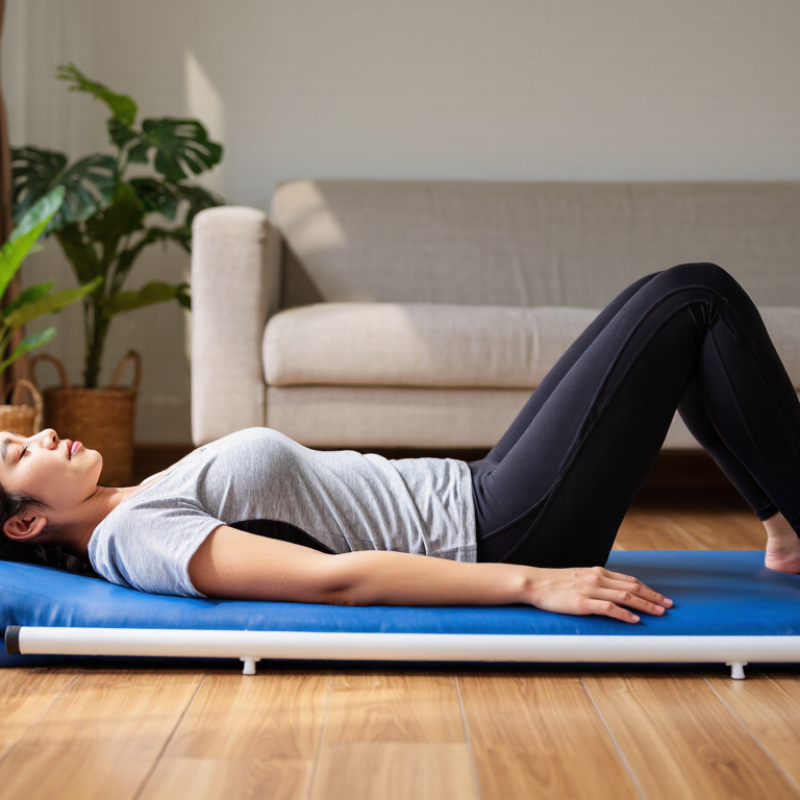
Place the back stretcher board on a firm, level floor, and check that it cannot slide. Choose its gentlest arch setting if it adjusts. Sit beside the board, then lower yourself slowly, guiding your back onto the center. Your spine should follow the curve without being forced into it. Keep your head supported and your neck relaxed; do not let your chin jut upward.
Bend your knees and keep both feet flat, about hip-width apart. Let your lower back rest against the board, with your weight shared evenly rather than pressed into one sharp point. Keep your arms by your sides at first. Breathe normally. No bouncing. Stay only briefly while you learn how the position feels, and use your hands to help you sit up slowly. Mild stretching may feel noticeable, but sharp pain, tingling, numbness, or dizziness means you should stop. The fit can feel awkward at first; adjust your position instead of pushing through discomfort. If you have a back injury, osteoporosis, recent surgery, or ongoing symptoms, ask a qualified healthcare professional before using the board.
Begin With a Gentle Stretch and Increase Gradually
How to Use a Back Stretcher Board Safely?
Begin With a Gentle Stretch and Increase Gradually
Start with the board at its lowest setting, on a stable floor. Lie down slowly, keeping your knees bent and feet flat if that feels comfortable. Try one or two minutes, breathing normally. A mild pulling sensation may be acceptable; sharp pain, tingling, numbness, or pain spreading down a leg is a reason to stop. Do not force your back to arch.
The 2023 Global Burden of Disease analysis in The Lancet Rheumatology estimated that 619 million people had low back pain in 2020, with the number projected to reach 843 million by 2050. That burden is significant, but it does not prove that a stretcher board treats back pain.
If the first session feels comfortable, add time gradually over several sessions before changing the board’s arch. Follow the device instructions, and avoid bouncing or holding your breath. People with recent back injuries, osteoporosis, pregnancy, or ongoing symptoms should ask a qualified health professional before use.
A cautious pace can feel almost too slow. That may be a useful check, not a failure.
Monitor Your Response and Stop if Pain or Symptoms Occur
Use each session as a gentle check-in, not a test of how far you can bend. Set the board on a stable surface, lower yourself slowly, and keep your knees bent if that feels more comfortable. Start with a brief session and follow the board’s instructions; don’t force a deeper arch. Notice what changes while you stretch and after you stand up. Mild, temporary tension may be different from sharp, spreading, or worsening pain. Stop immediately if you feel numbness, tingling, weakness, dizziness, or pain traveling into a leg. Get medical advice if symptoms persist or return.
Pay attention to your body’s response. The World Health Organization’s 2023 low-back-pain fact sheet reports that about 619 million people experienced low back pain in 2020, based on Global Burden of Disease estimates. That scale makes careful self-monitoring important, but it does not mean a back stretcher is suitable for everyone. Keep a simple note of session length and symptoms; memory can be unreliable, and a diary is not a diagnosis. If you have a spinal condition, recent surgery, osteoporosis, or unexplained symptoms, ask a qualified health professional before using the board. Stop and seek prompt care for new severe weakness or loss of bladder or bowel control.
How to Use a Back Stretcher Board Safely?
Monitor how you feel before, during, and after use. Stop if pain or new symptoms occur.
How to read this guide: The numbered bars show an order of response, not a medical severity score. Stop using the board if you feel pain or develop new symptoms. If symptoms persist or recur, contact a healthcare professional. Seek urgent medical care for serious warning signs, including new bowel or bladder problems, numbness around the groin, or severe or worsening weakness.
Article Source:

Whether your solution requires a single pumping application or an expansive engineered system,
CheckPoint is committed to becoming your partner in excellence.


