



Top Well Drilling Equipment Manufacturers Worldwide?

Choosing the top Well Drilling Equipment manufacturers worldwide is not as simple as comparing catalog prices. Drilling contractors work in very different conditions, from dry Australian fields to fractured mountain sites in South America. A rig that performs well in soft soil may struggle in hard granite. Mud pumps, drill pipes, compressors, rotary heads, and control systems must match the project’s depth, geology, and daily production goals.

Real-world experience matters here. Reliable manufacturers usually provide more than machines. They offer testing records, operator training, spare-parts support, maintenance guidance, and responsive technical service. These details become important when a hydraulic leak stops a rig beside a remote access road. Brands with established engineering teams often invest in safer designs, fuel efficiency, noise reduction, and easier component replacement. However, reputation alone is not enough. Product performance can vary between models, dealers, and regional service networks.

This guide examines respected manufacturers through practical criteria, including build quality, drilling capacity, innovation, after-sales support, and documented industry experience. It also considers customer feedback and the realities of ownership. No ranking is permanent. Markets change, technologies improve, and one overlooked weakness can affect a buyer’s decision. That uncertainty deserves attention. The strongest choice is not always the largest brand. It is the manufacturer that fits the ground, budget, workforce, and long-term maintenance plan. Clear specifications matter. So does honest evaluation.
Top Well Drilling Equipment Manufacturers Worldwide?

Defining Well Drilling Equipment and Its Main Applications

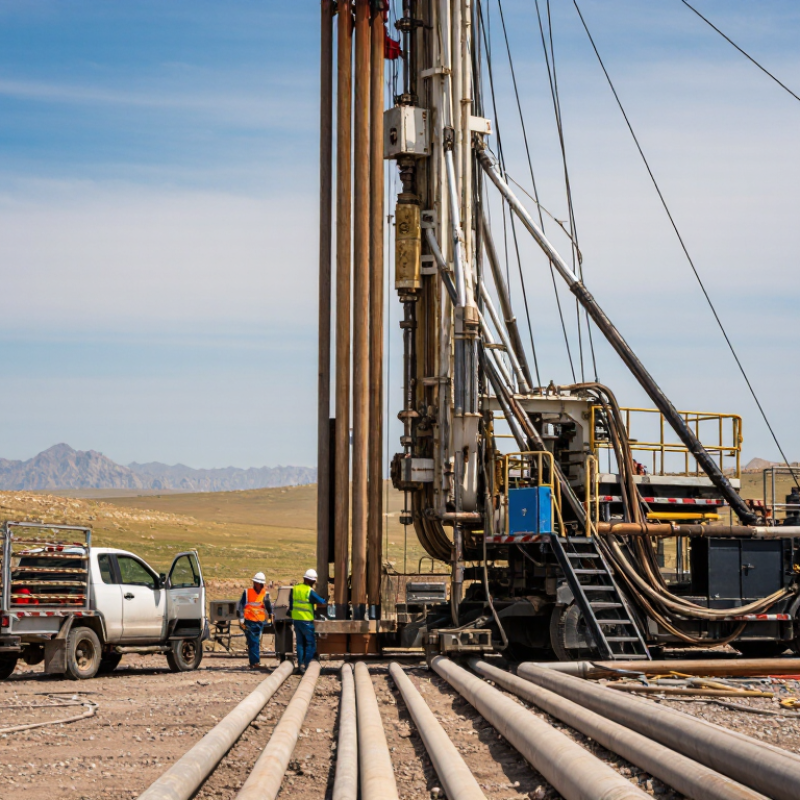
Well drilling equipment includes the machines and tools used to create, stabilize, and inspect a borehole. A typical system may contain a rotary rig, drill pipes, a mud pump, casing, screens, and lifting equipment. Air compressors power down-the-hole hammers in hard rock. Rotary systems often use drilling fluid to cool the bit and carry cuttings upward. Cable-tool rigs work more slowly, but they can suit shallow formations and smaller projects. Each component affects drilling speed, hole stability, water quality, and worker safety.

The main applications include household water wells, agricultural irrigation, groundwater monitoring, geothermal systems, and construction dewatering. On a rural site, an operator may use a compact rig to pass through soil, gravel, and fractured rock. In a monitoring project, accurate casing placement matters more than fast penetration. Geothermal work usually demands deeper drilling, stronger pipes, and careful temperature control. I have seen project plans fail when equipment was chosen from depth alone. Ground conditions matter more. A powerful rig can still perform poorly with the wrong bit, insufficient air, or weak site access. Operators should review geological records, expected borehole diameter, water conditions, transport limits, and maintenance support before mobilization. Small details count. A worn drill bit may increase vibration, fuel use, and drilling time. Field judgment remains essential, because underground formations rarely match the first report perfectly.

Well Drilling Equipment and Its Main Applications

The chart maps major equipment categories to their core applications in land and offshore well construction. Each colored segment represents one applicable function; it is not a market-share or manufacturer ranking.

Key applications include drilling and hoisting, directional drilling, fluid circulation, solids control, well control, and completion or workover operations.

Key Technologies Used in Modern Well Drilling Systems

Modern well drilling is no longer only a steel-and-mud operation. It is a connected control system.

Rotary steerable systems guide the bit through complex formations with fewer corrective trips. Measurement-while-drilling tools transmit inclination, direction, and vibration data while drilling. Logging-while-drilling sensors identify porosity, pressure, and fluid changes near the bit. Automated pipe handling also reduces manual exposure around the rig floor. Managed-pressure drilling helps maintain safer limits in narrow pressure windows. The IEA’s Global Methane Tracker 2024 estimated that fossil fuel operations emitted about 120 million tonnes of methane in 2023. Real-time pressure and gas monitoring can support earlier leak detection. But sensors drift, and poor calibration can mislead crews.

Leading equipment manufacturers now compete through integration, not isolated hardware.

Their strongest systems connect downhole tools, rig controls, cloud analytics, and maintenance records. Digital twins can model torque, drag, and expected equipment wear before a failure occurs. Edge analytics can flag abnormal vibration within seconds. Remote operations reduce travel and improve access to difficult locations. The World Bank’s Global Gas Flaring Tracker Report 2024 recorded 148 billion cubic metres of gas flared globally in 2023. Better power management and closed-loop monitoring may reduce unnecessary losses during drilling and completion. However, automation is not automatically sustainable. Cybersecurity, training, and data quality remain weak points. Field experience still matters. I would not treat every algorithmic alert as truth. A dashboard cannot replace a disciplined crew checking the well, the instruments, and the assumptions.

How to Evaluate Global Well Drilling Equipment Manufacturers

Choosing among top well drilling equipment manufacturers worldwide requires more than comparing catalog prices. A reliable evaluation begins with the drilling conditions: formation hardness, expected depth, borehole diameter, water availability, and transport limits. Equipment designed for soft soil may struggle badly in fractured rock. Ask for performance data from projects with similar geology. Practical evidence matters more than polished brochures.

Examine the manufacturer’s engineering depth and production controls. Check material certificates, factory testing procedures, quality-management records, and compliance with relevant regional standards. Review the rig’s torque, feed force, mud-pump capacity, fuel use, and maintenance access. Small design details matter. A protected hydraulic line can prevent costly downtime in rough terrain. Request service intervals, spare-parts lead times, training options, and remote technical support. A low purchase price may hide expensive ownership problems.

Speak with operators, not only sales representatives. Ask whether the machine starts reliably in cold conditions, handles dust, and allows quick tool changes. Inspect reference projects carefully. One impressive installation proves little. No checklist is perfect. I have seen technically strong equipment fail because local technicians lacked training. That weakness deserves attention before signing a contract. Compare warranty terms, documented testing, delivery history, and the manufacturer’s response to previous complaints. Independent inspection can reveal gaps that specifications do not show. Evaluate the whole support network, not just the machine.

Top Well Drilling Equipment Manufacturers Worldwide? - How to Evaluate Global Well Drilling Equipment Manufacturers

Evaluation Dimension Suggested Weight Information to Verify Reliable Evaluation Benchmark Suggested Score
Product Portfolio and Application Coverage 15% Availability of land rigs, truck-mounted rigs, crawler rigs, rotary tables, top drives, drawworks, mud pumps, hoisting systems, drill pipes, and auxiliary equipment. A strong global supplier should provide equipment suited to the intended application, including water wells, geotechnical drilling, mining, geothermal drilling, or oil and gas operations. Product specifications should clearly state depth capability, torque, pullback force, pump capacity, and operating limits. 0–10 points
Technical Performance 15% Rated drilling depth, maximum torque, rotary speed, hook load, pullback force, mast capacity, mud-pump pressure, and power configuration. Compare equipment under the same drilling method, formation conditions, borehole diameter, depth range, and duty cycle. Avoid comparing headline specifications without checking continuous operating ratings. 0–10 points
Compliance with International Standards 15% Applicable conformity documents, inspection records, material certificates, welding qualifications, pressure-test records, and certificates for safety-critical components. For relevant oilfield equipment, verify applicable API and ISO requirements, such as API Spec 4F for drilling and well-servicing structures, API Spec 7K for drilling and well-servicing equipment, and API Spec 8C for hoisting equipment. Electrical systems may also require IECEx or ATEX compliance where hazardous-area operation applies. 0–10 points
Quality Management System 10% Valid quality-management certification, production-control procedures, incoming inspection, nonconformance management, traceability, and final inspection records. A certified ISO 9001 quality-management system is a useful baseline, but it should be supported by product-specific inspection plans and traceability for pressure-bearing, lifting, rotating, and structural components. 0–10 points
Safety and Risk Control 12% Emergency-stop systems, guards, interlocks, blowout-prevention interfaces where applicable, load-monitoring systems, hydraulic protection, operator-access controls, and safety manuals. The equipment should include documented risk assessments, clearly marked safe working loads, emergency procedures, maintenance intervals, and protection against foreseeable mechanical, hydraulic, electrical, and pressure-related hazards. 0–10 points
Reliability and Service Life 10% Operating references, equipment uptime data, preventive-maintenance requirements, mean time between failures where available, critical spare-parts history, and component service intervals. Prioritize documented field performance in drilling environments similar to the buyer’s application. Reliability claims should be supported by verifiable customer references, inspection records, or operating histories rather than promotional statements alone. 0–10 points
After-Sales Support and Spare Parts 10% Regional service coverage, response-time commitments, spare-parts availability, remote diagnostics, field technicians, training, commissioning, and warranty terms. A competitive supplier should provide technical documentation, recommended spare-parts lists, parts identification, troubleshooting support, and a defined process for warranty and emergency service. 0–10 points
Customization and Integration Capability 8% Ability to adapt chassis, mast height, drilling package, power source, control system, mud system, automation level, and environmental protection. Customization should be based on documented engineering calculations, interface drawings, load cases, hydraulic and electrical schematics, and formal change-control procedures. 0–10 points
Manufacturing Capacity and Delivery Control 8% Production facilities, testing equipment, manufacturing lead time, project-management process, supply-chain resilience, and factory-acceptance testing capability. Assess whether the supplier can meet the required quantity, delivery schedule, inspection plan, packaging requirements, and export documentation without compromising quality or commissioning support. 0–10 points
Total Cost of Ownership 7% Purchase price, transport, installation, commissioning, energy consumption, consumables, planned maintenance, spare parts, downtime exposure, and resale or residual value. Select equipment using life-cycle cost rather than purchase price alone. A lower initial price may be outweighed by higher fuel consumption, shorter component life, limited parts availability, or extended downtime. 0–10 points
Recommended evaluation method: assign each criterion a score from 0 to 10, multiply it by the suggested weight, and compare suppliers only after confirming that the equipment is technically suitable and compliant with the regulations of the operating country.

Leading Manufacturers and Their Specialized Equipment

Leading well drilling equipment manufacturers compete through specialization, not identical product catalogs. They develop rotary tables, mud pumps, drill pipes, top drives, hoisting systems, and directional drilling tools for different ground conditions. Surface rigs suit accessible land sites, while compact hydraulic rigs work better in urban or environmentally sensitive areas. Deep formations demand high-torque drives, stronger tubulars, and precise pressure control.

The International Energy Agency reported approximately USD 570 billion in global upstream oil and gas investment for 2024. That spending supports continued demand for reliable drilling systems, but equipment selection remains highly site-specific. A manufacturer experienced in hard-rock geothermal drilling may not excel in loose alluvial formations. The details matter. Buyers should compare torque range, rated depth, mud-flow capacity, automation, spare-part access, and maintenance records. A polished specification sheet is not enough.

Fortune Business Insights estimated the global oilfield equipment market at roughly USD 28 billion in 2023, with continued growth projected through the next decade. Such forecasts indicate opportunity, not certainty. Regional regulations, project delays, steel prices, and skilled-labor shortages can quickly change purchasing decisions. Field experience often exposes weaknesses that factory testing misses, including vibration, seal wear, and difficult transport. Some manufacturers offer impressive automation, yet operators may still prefer simpler controls in remote areas. That choice is not outdated. It reflects risk, training, and local conditions. A responsible evaluation should include verified field data, independent inspection, and realistic lifecycle costs.

Industry Trends Shaping the Future of Well Drilling Equipment

Top Well Drilling Equipment Manufacturers Worldwide?

Industry Trends Shaping the Future of Well Drilling Equipment

Well drilling equipment is becoming a connected field system, not simply a steel rig. The strongest global manufacturers now integrate pressure sensors, automated torque controls, and digital maintenance logs. On a remote site, these tools can reveal a failing pump before the crew loses a shift. That practical value matters more than impressive software screens. Field evidence still wins.

Technicians increasingly expect modular rigs that move easily between shallow water wells and deeper formations. Electric and hybrid power systems are also gaining attention where fuel delivery is expensive or unreliable. Lower noise helps crews communicate beside the mast, although battery performance can weaken in cold, dusty environments.

Another important trend is predictive maintenance. Vibration data, hydraulic temperature, and drilling rate can expose wear earlier than weekly inspections. Still, data quality is uneven. Poor calibration creates confident but misleading alerts. Manufacturers with transparent testing methods, accessible spare parts, and clear operator training deserve closer attention.

Cybersecurity is also becoming part of equipment reliability, particularly when rigs connect to cloud platforms. Offline controls remain essential when networks fail. That detail is easy to overlook.

Water stewardship is reshaping equipment design. Closed-loop fluid systems can reduce waste and make drilling records easier to audit. Compact treatment units help contractors work near homes, farms, and protected areas. Yet greener equipment is not automatically better.

Manufacturers should publish realistic energy figures, service intervals, and component lifecycles. Buyers need verified field performance, not only catalog specifications. I would question any promise of zero downtime. Ground conditions change.

Whether your solution requires a single pumping application or an expansive engineered system,
CheckPoint is committed to becoming your partner in excellence.