

What Are the Top Solar Pumps for Global Buyers?

Choosing the top solar pumps for global buyers is not a simple brand comparison. A reliable choice depends on water depth, daily demand, sunlight, terrain, and maintenance access.

A shallow well near a small farm may need a surface pump. A deep borehole usually needs a submersible model. Brushless DC motors can reduce maintenance, while AC systems may suit sites with existing electrical equipment. Some advanced solar pumps include MPPT controllers, dry-run protection, remote monitoring, and variable-speed operation.

Still, features can distract buyers.

Water-policy researcher Aditi Mukherji has warned, “Solar irrigation is a double-edged sword.” Her statement reflects a practical concern. Cheap solar energy can improve water access, but uncontrolled pumping may stress groundwater reserves. The best system must match the local water source, not only the available sunlight.

This guide compares solar pumps through real purchasing criteria. These include flow rate, total dynamic head, panel efficiency, controller quality, warranty terms, spare-part availability, and installer experience. A pump lifting water 80 meters needs very different performance from one filling a storage tank beside a shallow well.

Certification also matters. Buyers should examine test reports, ingress protection, electrical safety, and regional compliance requirements. Yet paperwork alone cannot guarantee field performance. Dust, heat, sand, voltage variation, and poor installation can reduce service life.

There is no universal winner. A premium pump may be wasteful for a small household, while a low-cost model may fail under heavy agricultural use. The right answer is usually less dramatic: accurate sizing, honest specifications, and dependable after-sales support.
What Are the Top Solar Pumps for Global Buyers?

What Are Solar Pumps and How Do They Work?

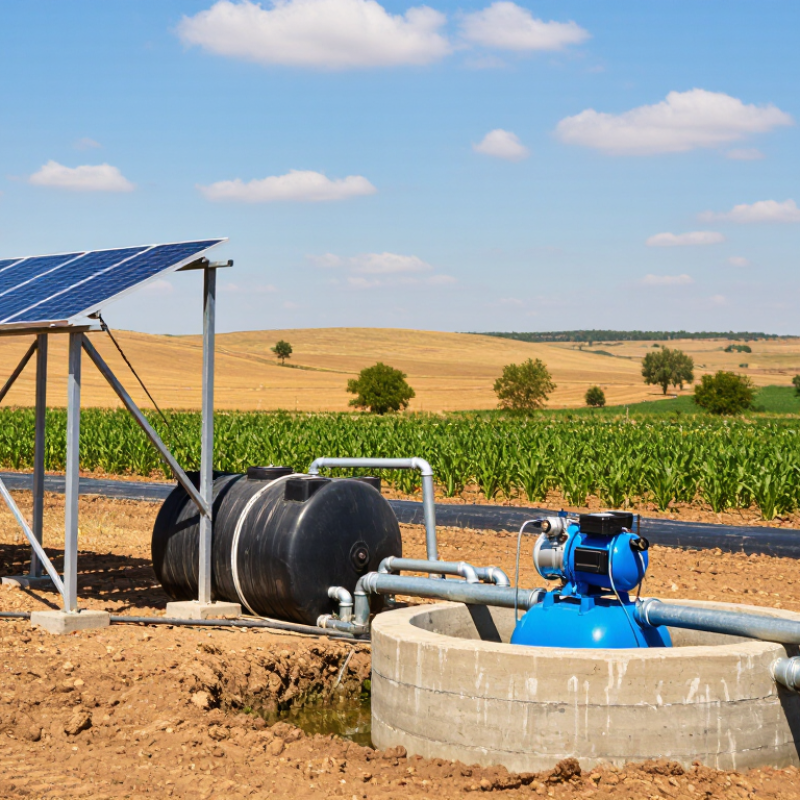
Solar pumps convert sunlight into moving water. Their core parts are photovoltaic panels, a controller, a motor, and a pump. Some systems also include batteries or elevated storage tanks.

During daylight, panels produce direct-current electricity. The controller regulates voltage and protects the motor. A submersible pump lifts water from a borehole. A surface pump draws water from a shallow reservoir, pond, or canal. Water then travels through pipes toward fields, homes, or livestock troughs.

This technology matters because agriculture uses about 70% of global freshwater withdrawals, according to FAO AQUASTAT data. IRENA’s Renewable Capacity Statistics 2024 recorded around 1,419 GW of global solar photovoltaic capacity at the end of 2023.

That expanding supply chain can support more affordable pumping equipment, but affordability is not guaranteed. The World Bank’s ESMAP research warns that cheaper pumping may increase groundwater use without proper controls. A pump can work perfectly and still damage a water source. That detail deserves more attention.

Tips: Match pump head, flow rate, and daily water demand before purchase. “More power” is not always better. Check dry-run protection, controller quality, pipe diameter, and local repair access. Battery storage helps after sunset, but a storage tank often costs less and needs less maintenance. Test the water depth during dry months, not only after rain. Some sizing decisions remain uncertain without seasonal measurements.

Which Types of Solar Pumps Serve Different Water Needs?

Solar pumps are not one-size-fits-all equipment. The right type depends on water depth, required flow, daily sunlight, and storage needs. FAO AQUASTAT reports that agriculture accounts for roughly 70% of global freshwater withdrawals, making efficient pumping especially important for farms and livestock systems.

Submersible pumps suit deep boreholes, where water may sit 30 metres below ground. They push water directly into an elevated tank, reducing surface pipe losses. Surface centrifugal pumps work better for shallow wells, ponds, and irrigation channels. They are easier to inspect, but suction height limits performance.

For narrow boreholes or variable water levels, a helical-rotor pump can deliver steady flow at lower speed. Diaphragm pumps may suit small household systems, though their moving parts need regular inspection.

Direct-solar systems usually pump during daylight and store water in tanks. Battery systems provide evening access, but batteries add replacement costs and maintenance.

IRENA’s Renewable Power Generation Costs report shows solar PV costs fell about 90% between 2010 and 2023, improving pump affordability. Still, low panel prices do not solve poor sizing.

A dusty panel, salty water, or an undersized pipe can quietly reduce output. This is where many buying guides oversimplify.

A practical design should match pump head, flow rate, seasonal sunlight, and local repair skills. Field conditions are rarely perfect.

What Features Define the Best Solar Pumps for Global Buyers?

The best solar pumps for global buyers match water demand, depth, and sunlight conditions. A strong pump should state flow rate, total head, power range, and daily output clearly. These figures help buyers compare systems without relying on vague marketing language. A pump producing high flow at shallow depth may fail in a deep borehole. Field reality differs.

Reliable models use efficient motors and controllers that adjust performance during changing sunlight. Maximum power point tracking can improve energy use under passing clouds. Protection against dry running, overheating, overvoltage, and blocked outlets also matters. An IP-rated enclosure helps protect electrical parts from dust and water. However, buyers should verify the actual protection level and installation requirements. Details matter.

Good solar pumps should include practical controls, such as float switches for storage tanks and restart functions after low-voltage events. Stainless or corrosion-resistant components can extend service life in mineral-rich or coastal water. Replaceable cables, accessible filters, and clear fault indicators make maintenance easier for local technicians. Certification from recognized testing bodies strengthens confidence, but paperwork cannot replace field testing. A careful buyer should request performance data at the intended head and inspect warranty conditions, spare-part access, and technical support. Some systems still perform poorly when installers ignore pipe friction or seasonal water changes. That weakness deserves honest attention before purchase.

What Are the Top Solar Pumps for Global Buyers? - What Features Define the Best Solar Pumps for Global Buyers?

Solar Pump Type Typical Solar Array Typical Flow Rate Typical Total Head Best Applications Key Selection Features Important Buyer Checks
Submersible DC Pump 200 W–2.2 kW 0.5–15 m³/h 10–150 m Boreholes, wells, rural water supply, livestock tanks High head capability, stainless-steel or corrosion-resistant wetted parts, dry-run protection Well diameter, static water level, seasonal drawdown, sand content and cable length
Surface DC Pump 100 W–1.5 kW 1–25 m³/h 5–50 m Open tanks, ponds, irrigation channels and shallow wells Easy maintenance, self-priming capability where required, inlet filtration and low-voltage operation Maximum suction lift, pipe losses, foot-valve requirements and protection from flooding
Solar Booster Pump 200 W–3 kW 1–20 m³/h 10–80 m Pressurizing buildings, drip irrigation and water distribution networks Variable-speed drive, constant-pressure control, soft start and automatic restart Required pressure, simultaneous outlets, surge protection and compatibility with storage tanks
Solar Irrigation Pump 750 W–7.5 kW 5–80 m³/h 10–100 m Drip, sprinkler and small-to-medium agricultural irrigation systems High daily water output, MPPT controller, overload protection and programmable schedules Crop water demand, irrigation method, operating hours, pipe diameter and water storage strategy
Solar AC Pump with Inverter 1.5–15 kW 10–150 m³/h 15–200 m Large farms, municipal water systems and commercial installations Three-phase motor compatibility, broad DC input range, grid or generator backup and remote monitoring Motor voltage, inverter sizing, harmonics, electrical protection and local grid requirements
Solar Fountain or Aeration Pump 20–500 W 0.2–8 m³/h 1–15 m Ponds, aquaculture, decorative water features and oxygenation Low power consumption, continuous-duty motor, clog-resistant inlet and optional battery operation Required spray height, water quality, debris protection, noise level and nighttime operating needs
Global Buyer Guidance: Actual output varies with solar irradiance, pump efficiency, water level, pipe diameter, fittings and total dynamic head. Compare certified pump curves at the required operating point rather than relying on maximum flow or maximum head alone. A well-sized system should also include dry-run, overload, over-voltage, under-voltage and surge protection.

How Should Buyers Compare Solar Pump Performance and Cost?

The top solar pumps are not chosen by panel wattage alone. Buyers should compare delivered water, measured at the required total dynamic head.

A pump producing 20 cubic metres daily at 40 metres head may outperform a larger unit with poor matching. Check flow curves, motor efficiency, controller limits, dry-run protection, and seasonal output. IEC 62253 provides a useful framework for photovoltaic pumping system performance tests. Ask for test conditions, not attractive brochure figures.

Cost comparison should use lifecycle cost per cubic metre. Include panels, structure, wiring, drilling, storage, maintenance, and replacement parts. IRENA’s Renewable Power Generation Costs in 2023 reported utility-scale solar electricity at about US$0.044 per kilowatt-hour globally.

That figure is not a pump tariff, but it shows why solar energy can reduce long-term operating exposure. The World Bank and ESMAP’s Solar Pumping for Water Supply report stresses correct sizing and water-resource planning.

Oversizing is wasteful.

Undersizing is frustrating.

Battery storage may improve reliability, yet it adds replacement risk and capital cost. In practice, a tank can sometimes provide cheaper resilience than batteries. That assumption still needs site testing.

Irradiance, borehole depth, sand content, and seasonal demand can change the result sharply. Ask for a five-year cost model and independent commissioning records.

What Installation and Maintenance Factors Affect Solar Pump Selection?

Selecting solar pumps starts with the installation site, not the catalogue. Measure the static water level, pipe length, elevation, and required daily flow. A pump lifting water 40 meters needs different pressure from one filling a shallow tank. Pipe friction also matters, especially with narrow pipes and many bends. I have seen systems underperform because installers measured well depth but ignored the delivery height. That mistake is expensive to correct.

Solar exposure must be checked across the year. Nearby trees may cast shadows during critical morning hours. Panel capacity should match the pump motor and controller, with safe voltage margins. Dust, heat, and loose connections can reduce output noticeably. Use weather-resistant cables and secure mounting hardware. Proper grounding protects equipment during storms and supports safer operation. Battery storage may help, but it adds weight, cost, and replacement work.

Maintenance access should influence pump selection. A removable pump, clear filters, and visible control indicators save time in remote areas. Inspect screens, cables, pipe joints, and mounting bolts regularly. Sediment can damage impellers, while dry running can quickly overheat a motor. Actual water demand may also differ from the original estimate. A spreadsheet can look precise, yet farmers often change irrigation schedules. Leave practical adjustment capacity, but avoid excessive oversizing. More power is not always better.

Solar Pump Selection: Typical Total Dynamic Head Ranges

Total dynamic head includes the vertical lift, pipe friction, and required outlet pressure. Surface centrifugal pumps are commonly used for shallow sources, while submersible centrifugal and helical-rotor pumps are better suited to deeper wells. Diaphragm pumps are often selected for low-to-moderate head applications. Final selection should also consider required flow, well depth, water quality, solar-array capacity, intake filtration, cable protection, and routine maintenance access. The ranges shown are representative engineering ranges and vary by pump size, system design, and site conditions.

Whether your solution requires a single pumping application or an expansive engineered system,
CheckPoint is committed to becoming your partner in excellence.