


2026 Best Types of Solar LED Flood Lights for Global Buyers

Choosing the best Solar Led Flood Lights in 2026 requires more than comparing brightness, price, and battery size. Global buyers must examine solar panel efficiency, lithium battery quality, ingress protection, operating temperature, beam control, and after-sales support. A light mounted above a dusty warehouse gate faces different demands from one installed beside a humid coastal walkway.

The International Energy Agency reported that global solar PV additions approached 400 gigawatts in 2023, confirming solar’s expanding role in modern energy systems. IRENA’s Renewable Capacity Statistics 2024 recorded 345.5 gigawatts of new solar capacity during the same year. These figures support stronger supply chains, but they do not guarantee dependable outdoor lighting. Product quality still varies widely. Sometimes, the cheapest unit becomes the most expensive choice after one rainy season.

Energy-access advocate Damilola Ogunbiyi has said, “Energy access is not a luxury; it is a basic human right.” Her point matters here. Efficient Solar Led Flood Lights can improve safety, visibility, and basic services where grid power remains unreliable. The World Bank and Lighting Global also emphasize quality assurance for off-grid solar products, including battery performance, durability, and truthful product information. This guide compares the leading types for global buyers, including all-in-one, split-type, motion-sensor, remote-controlled, and high-lumen commercial models. It considers real installation conditions, not only laboratory claims. Standards differ across markets, and buyer expectations can be imperfectly matched. Careful verification remains essential.
2026 Best Types of Solar LED Flood Lights for Global Buyers

Solar LED Flood Lights: Definition, Structure, and Operating Principles

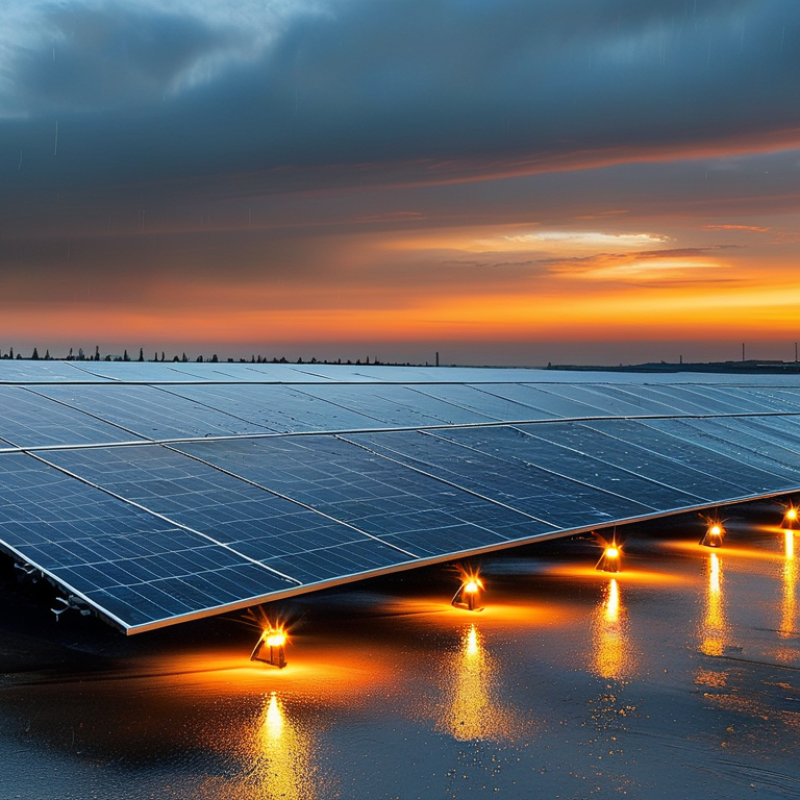
Solar LED flood lights combine a photovoltaic panel, rechargeable battery, LED array, controller, housing, and mounting bracket. The panel converts sunlight into electrical energy during daylight hours. The controller manages charging and protects the battery from excessive current. At night, a light sensor activates the LEDs automatically.

The battery usually stores energy in a lithium-based or other rechargeable cell. Its capacity affects runtime, especially during cloudy weather. The LED array produces focused, wide-angle illumination through lenses or reflectors. A sealed housing helps resist dust and rain, but sealing quality can decline after years outdoors. Check the stated IP rating and inspect cable joints before installation.

Tips: Place the panel away from tree shade and building shadows. Aim the light toward the working area, not directly into nearby windows. Match battery capacity with local sunlight conditions and required nighttime hours. In field use, rated brightness can look impressive, yet poor panel positioning may reduce actual performance. This is an easy detail to underestimate. Clean the panel regularly, because dust and bird residue can noticeably reduce charging efficiency. Also, review temperature limits before choosing a model for very hot or cold regions.
Main Types of Solar LED Flood Lights for Global Buyers

Solar LED flood lights generally fall into three practical types: all-in-one, split-type, and hybrid systems. All-in-one units place the panel, battery, controller, and LEDs inside one housing. They install quickly and suit gardens, entrances, and small commercial areas. Split-type models separate the panel from the lamp. This allows better panel positioning, especially beside shaded walls or under irregular rooflines. Hybrid systems combine solar charging with grid or backup input. They fit sites where lighting reliability matters more than complete energy independence.

The market is expanding with solar deployment. IRENA reported 1,419 GW of global solar capacity at the end of 2023, after approximately 346 GW of new additions. That growth supports wider access to solar lighting components, but it does not make every flood light suitable for every climate. A humid coastal site needs strong enclosure protection, corrosion-resistant hardware, and careful cable sealing. Dry regions demand dust-resistant housings and batteries that tolerate high temperatures.

Battery design separates attractive specifications from dependable performance. NREL research commonly uses about 0.5% annual PV degradation as a planning benchmark, yet battery aging can be faster under heat and deep discharge. Buyers should compare usable watt-hours, lighting duration, charging conditions, and replacement access. Look for clear test documentation, not only claimed lumens. Real sites are messier. A bright lamp with poor winter charging may disappoint, while a lower-output split system can perform better after months of use.

Key Performance Factors: Brightness, Battery, Panels, and Durability

For global buyers, brightness should be judged beyond headline lumens. A narrow beam can create a harsh white patch, while a wider beam improves coverage near gates, walls, and loading areas. Check candela, beam angle, mounting height, and motion settings. The U.S. Department of Energy notes that LED efficacy has improved greatly, but real performance still depends on optics and thermal management. A bright first-night test can mislead.

Battery capacity determines reliability after cloudy weather. Calculate usable energy with voltage multiplied by amp-hours, then allow for controller losses and cold temperatures. Two or three nights of autonomy is a practical target for many outdoor sites. NREL’s widely cited degradation review reports a median crystalline-silicon decline of about 0.5% annually. The IEA PVPS Trends 2024 report also recorded global solar capacity above 1.6 terawatts by the end of 2023, showing the technology’s expanding maturity, not guaranteed product quality. I still distrust any claim without test conditions.

Tips: Choose a panel with a clear charging angle and verify winter exposure. Prefer batteries with published cycle data and replaceable access. An IP65 enclosure resists dust and water jets, but it is not designed for immersion. Look for impact protection, sealed cable glands, corrosion-resistant hardware, and operating temperatures suited to your region. Then inspect the lamp after heavy rain, not only in a showroom.

2026 Best Types of Solar LED Flood Lights for Global Buyers

Key Performance Factors: Brightness, Battery, Panels, and Durability

This chart compares representative specifications for common non-branded solar LED flood-light configurations. Integrated all-in-one units are compact and easy to install, split-panel systems generally provide better panel positioning, compact motion-sensor lights prioritize low energy use, and high-output split systems are designed for larger outdoor areas. Actual performance depends on LED efficiency, sunlight conditions, battery chemistry, temperature, installation angle, and operating schedule.

How to Select Solar LED Flood Lights for Different Applications

Selecting solar LED flood lights starts with the application, not the advertised wattage. A security entrance needs controlled illumination and reliable motion sensing. A construction yard needs wider coverage and stronger impact resistance. For gardens, lower brightness may protect nighttime visibility and reduce glare. The U.S. Department of Energy reports that LED lighting uses at least 75% less energy and lasts up to 25 times longer than incandescent lighting. However, solar performance depends on the complete system, not the LED chip alone.

Check the site’s sunlight, operating hours, weather, and mounting height. IEA Renewables 2024 reports that solar power remains the fastest-growing renewable technology, but local conditions still decide daily output. Choose a panel with suitable power, a battery with usable capacity, and a controller that prevents deep discharge. In cloudy regions, oversizing the panel and battery may be more useful than choosing higher lamp wattage. Small details matter. Test winter performance.

For coastal areas or heavy rain, look for verified IP65 or higher protection, corrosion-resistant housing, and documented temperature ranges. IP ratings do not measure battery quality. Ask for photometric data, illumination uniformity, battery cycle information, and test reports under recognized standards. Motion sensors can extend runtime, although their detection angle may miss people approaching from the side. That weakness is easy to overlook. The Global Solar Power Tracker and IEA data both show rapid solar expansion, yet product selection still requires cautious field validation. A short nighttime trial can reveal glare, shadows, and unexpected battery loss before large-scale purchasing.

Global Standards, Installation Requirements, and Maintenance Practices

Choosing solar LED flood lights for global projects requires more than comparing brightness. Integrated units suit pathways and small compounds. Split-panel systems perform better where the light and panel need different positions. Motion-sensor models can reduce energy use near warehouses, farms, and remote entrances.

Check internationally recognized safety requirements before purchase. Lighting should match relevant IEC standards, including requirements for outdoor luminaires, electrical safety, and electromagnetic compatibility. An IP65 rating protects against dust and water jets. IP66 offers stronger water protection. Certification alone is not enough. Verify test reports and local approval requirements. Installation must also follow regional electrical codes, especially for grounding, cable protection, and mounting height. Keep panels away from roof shadows, trees, and tall walls. A few hours of shade can reduce nighttime performance.

Tips: Clean the panel with a soft cloth every few months. Inspect brackets after storms. Check battery capacity before winter. Replace damaged seals quickly.

In practical installations, dirt is often underestimated. It can quietly reduce charging efficiency. Battery performance also falls in cold climates, although product specifications may not show the full effect. A perfect installation is uncommon. Record nighttime runtime during the first month, then adjust the panel angle or lighting schedule when results disappoint. Maintenance teams should inspect LEDs, sensors, fasteners, and drainage points twice yearly. These small checks often prevent expensive field repairs.

Whether your solution requires a single pumping application or an expansive engineered system,
CheckPoint is committed to becoming your partner in excellence.