


Top SMT Reflow Oven Manufacturers for Global Buyers
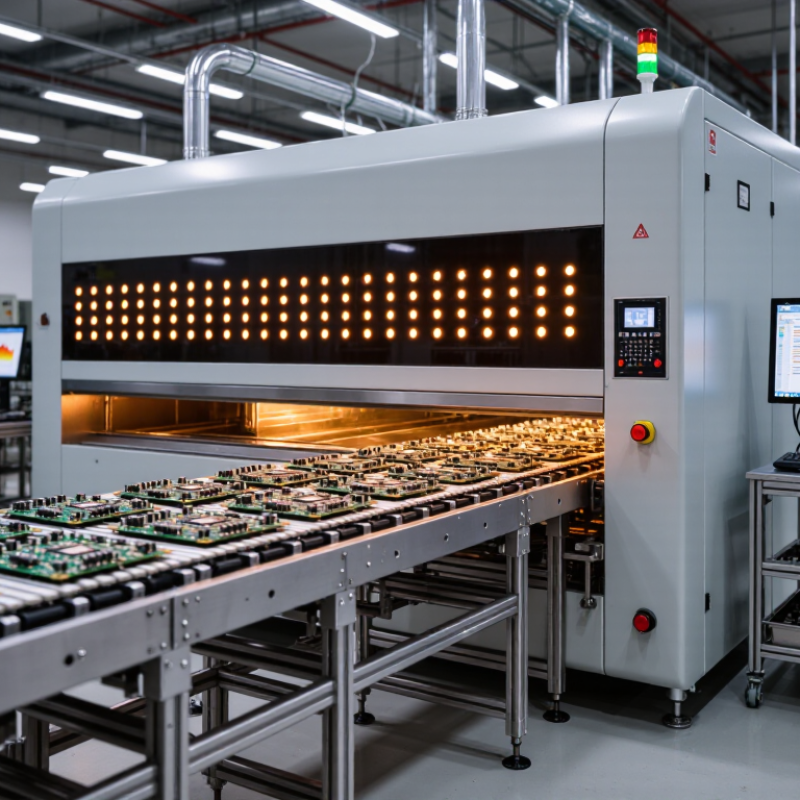
Choosing among the top SMT reflow oven manufacturers requires more than comparing heating zones or catalog prices. A dependable Smt Reflow Oven must produce stable thermal profiles across changing board sizes, component densities, and solder pastes. It should handle demanding lead-free assemblies, including SAC305, fine-pitch QFNs, and 0201 components. Small temperature differences matter.
Ray Prasad, a recognized SMT technology author and process expert, has described reflow soldering as “a thermal process, not merely a heating process.” That view remains practical on today’s production floor. Buyers should examine temperature uniformity, conveyor accuracy, nitrogen control, cooling performance, and software traceability. A machine with twelve zones may still disappoint if its airflow creates uneven heating near large connectors. Details reveal quality.
This guide compares leading manufacturers through an international buyer’s lens. It considers engineering experience, equipment reliability, after-sales support, spare-parts access, and operator training. Service response matters when a production line stops at midnight. Energy consumption also deserves attention, especially for factories running multiple shifts. Some manufacturers offer impressive specifications, but published numbers do not always match factory conditions. That is worth questioning.
No ranking is flawless. Buyer priorities differ.
A high-volume automotive plant may need advanced profile control and remote diagnostics. A smaller contract manufacturer may value simple operation and affordable maintenance. Regional voltage standards, import requirements, installation support, and language capabilities can influence the final decision. The strongest Smt Reflow Oven manufacturer is not always the cheapest or most famous. It is the supplier that consistently supports your actual process, not merely your purchasing target.
SMT Reflow Oven Fundamentals: IPC-7530 Profiles and 8–20 Heating Zones
Top SMT Reflow Oven Manufacturers for Global Buyers
SMT Reflow Oven Fundamentals: IPC-7530 Profiles and 8–20 Heating Zones
For global buyers, IPC-7530 offers a practical framework for developing and verifying reflow profiles. It focuses on measurable thermal conditions, not attractive machine specifications. A reliable profile records ramp rate, soak time, peak temperature, and time above liquidus. Technicians attach thermocouples to critical board locations, including large copper areas and small components. The resulting graph shows how the assembly actually experiences heat.
An eight-zone oven can suit simpler boards with stable thermal demand. A 20-zone system provides finer control for dense assemblies, mixed component sizes, and lead-free processes. More zones do not automatically create better solder joints.
Zone length, airflow, conveyor speed, and insulation also affect results. Small changes matter. During trials, one connector area may remain cooler than the board center. Engineers may need to adjust airflow or add a controlled soak zone.
Experienced teams profile each product family instead of copying one recipe. They check thermocouple attachment, board orientation, and measurement repeatability. I have seen profiles accepted too quickly after one successful run. That approach is convenient, but weak. Boards, paste batches, and seasonal factory temperatures can change the outcome. Record the profile, compare it with process limits, and repeat testing after major material or equipment changes. A clear data trail supports purchasing decisions and helps buyers compare ovens on process control rather than zone count alone.
Global Manufacturer Comparison: Throughput, ±1°C Uniformity, and Energy Use
For global SMT buyers, throughput must be measured beside thermal uniformity and energy use. A fast conveyor is useless when solder joints leave the process window. IPC-7530 recommends profiling loaded boards, not empty chambers, because components and pallet mass change heat transfer. Buyers should request profiles at minimum, typical, and maximum loading.
A credible comparison records peak temperature spread across the working width. The ±1°C claim needs boundaries: board surface, air zone, or sensor location. Profiles can lie. A practical factory test should use multiple thermocouples, repeated runs, and defined conveyor speeds. It should also report boards per hour, not only belt speed. The U.S. Department of Energy’s 2022 Industrial Decarbonization Roadmap identifies process heating as 51% of industrial energy use, making thermal efficiency a serious purchasing metric.
Energy data should show kWh per operating hour and kWh per board. The DOE Manufacturing Energy and Carbon Footprint tool supports this type of process-level analysis. Ask whether standby power, warm-up energy, nitrogen use, and exhaust losses are included. Some quotations omit them. That omission can distort global operating costs, especially where electricity prices and production schedules vary. A lower purchase price may still create higher lifetime expense. I would also challenge perfect ±1°C results: real boards, uneven loading, maintenance intervals, and sensor tolerances make the claim harder to sustain.
Nitrogen Reflow Selection: Oxygen Levels Below 1,000 ppm for High Reliability
For global buyers, nitrogen reflow ovens deserve careful evaluation when high reliability matters. Oxygen below 1,000 ppm creates a cleaner soldering environment. It limits oxidation on pads, leads, and molten solder. This can improve wetting and reduce early joint-related failures.
In production, engineers should verify oxygen levels inside the reflow chamber, not only at the gas inlet. A calibrated sensor should record readings across heating, peak, and cooling zones. Door seals, conveyor openings, and maintenance panels can introduce unexpected leaks. Even a small leak may raise oxygen levels during peak temperature. Nitrogen flow should match chamber design, board loading, and production speed. More gas is not always better.
The display may show 700 ppm, yet the joints can still look poor. Solder paste storage, stencil condition, pad design, and thermal profiling remain important. A reliable selection process includes trial runs with real boards and difficult components. Inspect solder spread, fillet shape, voiding, and post-reflow discoloration. Record oxygen trends over several shifts. This is where some purchasing decisions become uncomfortable: a low reading without stable process evidence proves little. For demanding assemblies, buyers should request alarm limits, sensor calibration records, leak-test procedures, and service training. The target is not merely a number. It is repeatable solder performance under changing production conditions.
Buyer Due Diligence: J-STD-020 Compatibility, Warranty, Service, and Spare Parts
Top SMT Reflow Oven Manufacturers for Global Buyers
A serious buyer should test J-STD-020 compatibility before comparing oven prices. This standard guides moisture sensitivity and reflow exposure for surface-mount components. Ask the manufacturer to demonstrate stable temperature control across the full conveyor width. Request sample profiles at your actual board size, solder paste, and peak temperature. Review logged data, not only a colorful brochure. Profile repeatability matters.
Check whether the system supports multiple heating zones, controlled cooling, and traceable data records. Confirm thermocouple accuracy and calibration procedures. Small errors can damage moisture-sensitive packages. Ask how operators handle floor life, bake requirements, and profile changes. Written instructions should match the supplied software. They often do not.
Warranty language deserves close inspection. Confirm coverage for heaters, fans, controllers, sensors, and conveyor parts. Ask about exclusions, labor costs, response times, and commissioning support. Service quality becomes visible at 2 a.m., when a production line stops.
Require local technicians, remote diagnostics, and clear escalation contacts. Spare parts should include thermocouples, heating elements, filters, motors, and control boards. Check stock locations and realistic delivery times.
A low-cost oven may become expensive when one sensor waits six weeks. I would also request two customer references from similar climates and production volumes. One weakness remains: even excellent documentation cannot replace trained operators and disciplined maintenance.
Total Cost Analysis: Capacity, Power Consumption, Maintenance, and ROI by Region
A reflow oven’s purchase price is only the visible cost. Capacity matters more when production grows. An eight-to-twelve-zone convection oven may process roughly 1,500–3,000 boards per hour, depending on board size and thermal requirements. Higher capacity can reduce labor pressure, but oversized equipment wastes floor space and standby energy.
Published equipment specifications commonly show connected loads near 20–40 kW, while real consumption is often lower after thermal stabilization. A 10 kW average load running 4,000 hours yearly uses about 40,000 kWh. At €0.17 per kWh, close to the Eurostat 2024 EU non-household average, electricity costs reach about €6,800 annually. Regional tariffs can change this calculation sharply. The IEA’s Electricity 2025 report also records strong global demand growth, making energy efficiency increasingly important. Maintenance adds another layer: filters, fans, heaters, sensors, and calibration can create recurring costs, especially where qualified service engineers are scarce. A simple ROI model should include purchase price, installation, energy, downtime, spare parts, and resale value. Perfect forecasts do not exist.
Tips: Compare energy use at actual production speed, not only maximum ratings. Ask for annual maintenance estimates and local service response times. For high-cost electricity regions, prioritize insulation, standby control, and heat recovery. For lower-cost regions, uptime and spare-part availability may deliver faster returns. The cheapest oven is not always the lowest-cost oven.
Article Source:

Whether your solution requires a single pumping application or an expansive engineered system,
CheckPoint is committed to becoming your partner in excellence.


