



Top 10 Mirror Finish Steel Types for Global Buyers

Mirror Finish Steel sits where metallurgy, surface engineering, and visual design meet. Buyers often search for a flawless shine, yet “mirror finish” describes surface condition, not a single steel grade. Stainless grades, polishing routes, thickness, and protective films can change the final result.

The International Stainless Steel Forum reported global stainless steel crude production at approximately 58.4 million tonnes in 2023. The World Steel Association recorded about 1.85 billion tonnes of crude steel production worldwide during the same year. These figures show the scale behind a highly specialized surface market. They do not, however, identify how much steel receives a mirror polish. That limitation matters.

Markus Moll, an International Stainless Steel Forum expert, has described stainless steel as “a material for the future.” The statement reflects durability, recyclability, and long service life. It does not guarantee every polished sheet will perform equally. Buyers still need to verify grade chemistry, finish designation, flatness, roughness, and inspection standards.

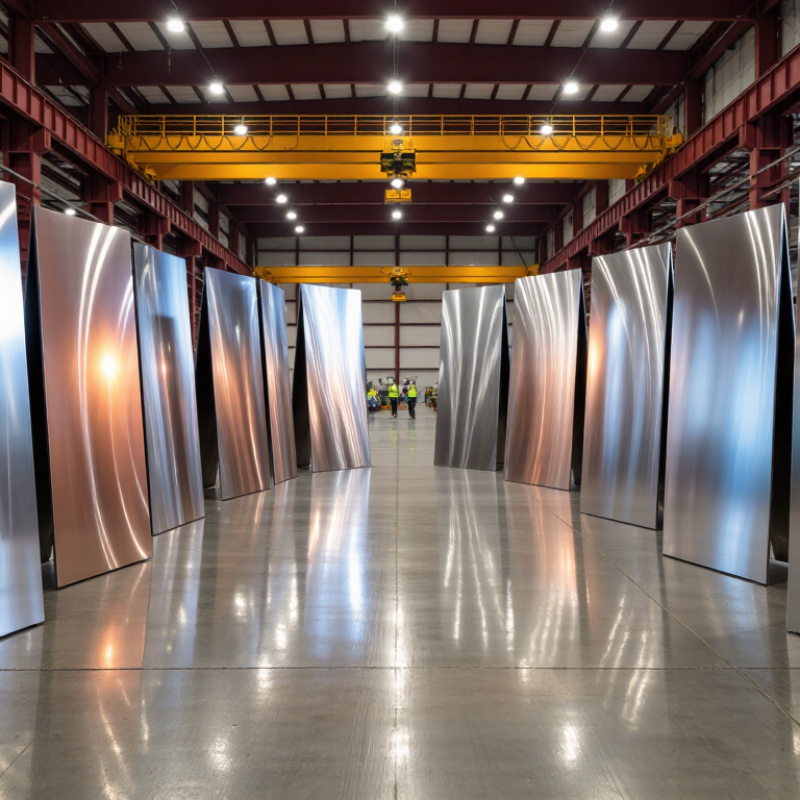
Small details become visible under bright warehouse lights. Fingerprints reveal uneven polishing. A protective film may hide fine scratches until installation. Grade 304 can suit many interior applications, while 316 often offers stronger resistance in chloride-rich environments. Duplex and ferritic options may offer different cost and performance balances.

This guide compares ten widely traded Mirror Finish Steel types for global buyers. It considers appearance, corrosion resistance, fabrication behavior, availability, and practical buying risks. Some rankings remain debatable. That is useful. A surface that looks perfect may still fail the application. Always match the finish to the environment, process, and maintenance plan.
Top 10 Mirror Finish Steel Types for Global Buyers

Mirror Finish Steel Defined: Ra Targets and ASTM A480 Surface Standards

Top 10 Mirror Finish Steel Types for Global Buyers

Mirror Finish Steel Defined: Ra Targets and ASTM A480 Surface Standards

Mirror finish steel is not one universal surface grade. It describes reflected brightness, polishing quality, and measured roughness. For global buyers, Ra is usually the clearest technical starting point. Many polished stainless steel surfaces target Ra 0.4 micrometres or lower. High-reflection applications may require Ra 0.2 micrometres or below. These figures must match the product drawing.

ASTM A480 provides widely used surface finish descriptions for stainless steel sheet and strip. No. 7 and No. 8 finishes are commonly associated with polished, mirror-like surfaces. However, ASTM A480 does not make one Ra value mandatory for every mirror finish. This detail is often missed. Buyers should request the finish designation, Ra limit, measurement direction, cutoff length, and inspection method together.

A practical comparison may include 304, 304L, 316, 316L, 430, 439, 441, 201, 301, and duplex stainless steel. Their polishing response differs. Austenitic grades often produce consistent reflections, while some ferritic grades can show directional variation. Surface preparation matters greatly. A No. 8 finish can look uneven under warehouse lighting if grinding lines remain beneath the polish. I have seen samples pass visual review but fail Ra testing. That is why an agreed reference panel, calibrated instrument, and documented sampling location are valuable. Still, even this process is not perfect. Edge zones, weld repairs, and protective film removal can change the final reading.

Stainless Grade Classification: EN 10088 Chemistry, Strength, and Corrosion Data

Top 10 Mirror Finish Steel Types for Global Buyers

Stainless Grade Classification: EN 10088 Chemistry, Strength, and Corrosion Data

Mirror polish starts with grade selection, not abrasive choice. EN 10088 classifies stainless steels by chemistry and product condition. The most common austenitic options include 1.4301 and low-carbon 1.4307, containing about 18% chromium and 8–10.5% nickel. Their typical minimum yield strength is 230 MPa. Grade 1.4541 adds titanium for improved weld stability. Grades 1.4401, 1.4404, and 1.4406 contain roughly 2–3% molybdenum, improving resistance in chloride exposure. Grade 1.4539 offers higher alloy content for more demanding environments.

Ferritic grades 1.4016 and 1.4521 provide economical mirror surfaces, although their corrosion margin is narrower. Duplex 1.4462 combines approximately 22% chromium, 5% nickel, and 3% molybdenum. EN 10088 data lists a typical minimum yield strength near 500 MPa for duplex products. That strength helps thinner panels, but forming and polishing require tighter process control. Grade 1.4116 is also used where hardness matters, though it is not always the easiest mirror-finishing choice.

Use PREN as a screening tool, not a guarantee. The industry formula is %Cr + 3.3(%Mo) + 16(%N), as referenced in Euro Inox technical guidance. Surface defects, iron contamination, and poor cleaning can still cause staining. They are often overlooked. Product data from the World Stainless Association shows stainless demand remains globally diversified, so climate, salt exposure, and fabrication practice deserve equal attention. EN 10088 chemistry is a reliable starting point, but site testing should confirm the final grade.

Top 10 Mirror Finish Steel Types: 304, 316L, 430, 904L, and More

Mirror finish steel is not a single grade. It is steel polished until the surface reflects light like glass. The grade still controls corrosion resistance, strength, magnetism, and cost. For global buyers, 304 remains the practical all-rounder for kitchens, interiors, and general fabrication. 316L performs better near saltwater and chemical exposure. 430 offers a bright appearance at a lower price, but it is magnetic and less resistant to corrosion. 904L provides exceptional resistance in severe environments, though its high cost limits everyday use.

Other useful options include 201 and 202, which can reduce purchasing costs but need careful quality checks. 301 offers strong work-hardening behavior for formed parts.

409 suits heat-resistant applications, while 410 and 420 provide higher hardness after heat treatment. Their mirror surfaces can look impressive, but their corrosion resistance is usually lower than 304 or 316L. Surface quality also depends on polishing, cleaning, and protective film. A strong grade cannot hide poor finishing.

Tips: Confirm the grade, thickness, finish number, and tolerance before ordering. Request a sample under natural light. Check for pinholes, polishing lines, edge waviness, and protective-film marks. Ask for a material certificate and corrosion requirements. In practice, buyers sometimes select 904L for ordinary indoor panels, which is unnecessary spending. Conversely, choosing 430 near coastal air may create early staining. No grade is perfect. Procurement decisions should match the environment, appearance target, forming method, and maintenance plan.

Surface Finishes Compared: 2R, BA, No. 4, and No. 8 Under ISO 9445

Global buyers often compare mirror-finish stainless steel by grade and surface condition. Common choices include 304, 304L, 316, 316L, 321, 310S, 430, 409, 410, and 2205. However, a suitable grade does not guarantee a suitable appearance. Corrosion exposure, forming requirements, and cleaning methods also matter. From practical sourcing experience, 304 and 316L are widely selected for architectural and food-contact applications. Duplex 2205 offers higher strength, but it may require more controlled polishing.

Under ISO 9445, 2R describes a bright annealed surface with strong reflectivity and low roughness. BA is a common commercial term, often used for a similar bright annealed appearance. Confirm the supplier’s inspection standard, because BA is not always applied consistently. No. 4 has visible directional brushing. It hides light scratches well, but it is not a true mirror finish. No. 8 is mechanically polished to a highly reflective surface. It can look mirror-like, although polishing quality may vary across coils, sheets, and welded areas. Small differences matter.

Tips: Request samples under the intended lighting. Check roughness, reflectivity, protective film, and edge quality. Ask whether No. 8 is tested before or after polishing. Inspect welded zones separately. A perfect sample can mislead. Packaging damage is another overlooked risk. Specify ISO 9445, grade, thickness, tolerance, and acceptance photos in the purchase document. Recheck the finish after forming; bending can reduce reflectivity and expose uneven polishing.

Top 10 Mirror Finish Steel Types for Global Buyers

Surface Finishes Compared: 2R, BA, No. 4, and No. 8 Under ISO 9445

The chart compares indicative midpoint surface roughness values, Ra in micrometres (µm), for commonly selected stainless steel grades used in bright, polished, or decorative applications. Lower Ra indicates a smoother surface. Values are representative purchasing benchmarks rather than guaranteed specification limits. ISO 9445 primarily identifies cold-rolled stainless steel finishes such as 2R; BA is commonly used as a commercial equivalent term, while No. 4 and No. 8 are widely used polished-finish designations outside the ISO 9445 surface classification.

Global Buying Criteria: Thickness Tolerances, ASTM Grades, and End Uses

Top 10 Mirror Finish Steel Types for Global Buyers

Global buyers should evaluate mirror-finish steel by grade, thickness, tolerance, and service environment. Common choices include 304, 304L, 316, 316L, 430, 201, 321, 310S, 2205 duplex, and 904L. ASTM A240 defines chemical and mechanical requirements for stainless plates and sheets, while ASTM A480/A480M covers general tolerances, flatness, and surface conditions. Buyers should request the exact tolerance table, not accept “standard tolerance” without details. A 1.0-millimeter sheet for decorative panels needs different control from a 6.0-millimeter sheet for equipment.

Finish alone proves little.

A bright No. 8 surface may show scratches, waviness, or polishing lines under warehouse lighting. For food equipment, 304L often suits routine corrosion exposure. Coastal or chloride-heavy locations usually justify 316L, although the final choice depends on temperature and chemical concentration. Duplex 2205 can offer higher strength, but it may require stricter forming controls. ASTM A240 certification, heat numbers, mechanical test results, and third-party inspection improve traceability. EN 10088-2 tolerances may also matter when European fabrication rules apply.

Market scale adds context. World Stainless reported approximately 58.4 million tonnes of stainless steel production in 2023. Yet volume does not guarantee consistency. Buyers should compare thickness measurements at several points, record gloss uniformity, and test the protective film before shipment. One practical weakness remains: mirror finish claims are not always measured with identical gloss methods. Specify the measurement method, inspection lighting, and acceptable defect size in the purchase contract.

Top 10 Mirror Finish Steel Types for Global Buyers - Global Buying Criteria: Thickness Tolerances, ASTM Grades, and End Uses

No. Stainless Steel Type Common ASTM / UNS Designation Typical Mirror Finish Common Commercial Thickness Range Typical Buyer-Specified Thickness Tolerance* Key Characteristics Typical Global End Uses Important Purchasing Checks
1 304 / 304L Austenitic Stainless Steel ASTM A240; UNS S30400 / S30403 No. 8 mirror, BA, or electropolished 0.30–6.00 mm sheet and plate Approximately ±0.03 to ±0.15 mm, depending on ordered thickness, width, and ASTM A480 requirements General-purpose chromium-nickel stainless steel with good corrosion resistance, formability, and weldability. 304L is the lower-carbon welding grade. Architectural panels, kitchen equipment, food-processing equipment, elevators, interior trim, appliances, and decorative metalwork Confirm surface roughness, polishing direction, protective film, flatness, edge condition, and whether the order requires 304 or 304L chemistry
2 316 / 316L Austenitic Stainless Steel ASTM A240; UNS S31600 / S31603 No. 8 mirror, BA, or electropolished 0.40–6.00 mm sheet and plate Approximately ±0.03 to ±0.15 mm, subject to ASTM A480 dimensional tolerances and the selected mill condition Molybdenum-bearing stainless steel offering better resistance to chlorides and many chemical environments than 304. 316L is preferred for welded fabrication. Marine interiors, pharmaceutical equipment, chemical-processing equipment, coastal architecture, medical equipment, and premium food facilities Specify chloride exposure, annealed or cold-rolled condition, weld requirements, corrosion testing, and resistance to tea staining in coastal locations
3 321 Stabilized Austenitic Stainless Steel ASTM A240; UNS S32100 No. 8 mirror or polished decorative finish 0.50–6.00 mm sheet and plate Approximately ±0.04 to ±0.15 mm, depending on thickness and product form Titanium-stabilized grade designed to reduce chromium-carbide precipitation during elevated-temperature service. Maintains useful corrosion resistance after welding. Aircraft and aerospace components, heat-resistant panels, exhaust systems, thermal equipment, and high-temperature fabricated parts Verify service temperature, titanium stabilization, weld procedure, surface discoloration limits, and whether a decorative mirror appearance is technically required
4 347 Stabilized Austenitic Stainless Steel ASTM A240; UNS S34700 No. 8 mirror or polished finish 0.50–6.00 mm sheet and plate Approximately ±0.04 to ±0.15 mm, depending on thickness and product form Columbium/niobium-stabilized grade with good resistance to intergranular corrosion after exposure to elevated temperatures. High-temperature piping components, aerospace parts, heat exchangers, chemical equipment, and power-generation applications Check heat-treatment condition, elevated-temperature design requirements, weldability, grain structure, and surface inspection criteria
5 430 Ferritic Stainless Steel ASTM A240; UNS S43000 BA, No. 8 mirror, or bright-polished 0.30–3.00 mm sheet and coil Approximately ±0.03 to ±0.10 mm for common cold-rolled gauges Chromium-based ferritic stainless steel with magnetic properties, good oxidation resistance, and lower nickel content than common austenitic grades. Appliance trim, kitchen equipment, automotive decorative parts, elevator interiors, commercial displays, and indoor architectural panels Confirm magnetic response, forming radius, surface reflectivity, humidity exposure, and suitability for outdoor or coastal service
6 439 Ferritic Stainless Steel ASTM A240; UNS S43035 Bright-polished or No. 8 mirror 0.40–3.00 mm sheet and coil Approximately ±0.03 to ±0.10 mm for common cold-rolled gauges Titanium-stabilized ferritic grade with improved weldability and resistance to stress-corrosion cracking compared with some conventional ferritic grades. Automotive exhaust trim, appliance components, food-service equipment, architectural interiors, and fabricated enclosures Specify stabilization requirements, weld appearance, forming performance, salt-spray exposure, and decorative surface uniformity
7 410 Martensitic Stainless Steel ASTM A240; UNS S41000 Polished mirror or bright-polished 0.50–6.00 mm sheet and plate Approximately ±0.04 to ±0.15 mm, depending on thickness and heat-treatment condition Heat-treatable stainless steel with good strength, hardness, wear resistance, and moderate corrosion resistance. It is magnetic. Cutlery, valves, pump components, fasteners, kitchen hardware, mechanical parts, and wear-resistant decorative components State annealed or hardened condition, required hardness, polishability, corrosion environment, edge quality, and post-polishing heat treatment
8 2205 Duplex Stainless Steel ASTM A240; UNS S31803 / S32205 Polished mirror or electropolished 0.80–6.00 mm sheet and plate Approximately ±0.05 to ±0.15 mm, depending on thickness and ASTM A480 product tolerances Duplex ferritic-austenitic stainless steel combining high strength with strong resistance to chloride stress-corrosion cracking and pitting. Offshore equipment, desalination systems, chemical tanks, pressure vessels, marine fittings, and process piping components Verify duplex grade, phase balance, solution-annealed condition, ferrite limits, impact requirements, weld procedure, and pitting-resistance requirements
9 904L Super-Austenitic Stainless Steel ASTM A240; UNS N08904 No. 8 mirror, bright-polished, or electropolished 0.50–6.00 mm sheet and plate Approximately ±0.04 to ±0.15 mm, depending on ordered thickness and product form Highly alloyed stainless steel containing nickel, chromium, molybdenum, and copper for demanding sulfuric-acid and chloride-containing environments. Chemical-processing equipment, pharmaceutical systems, pollution-control equipment, seawater-related components, and specialty tanks Confirm chemical compatibility, weld qualification, corrosion-test requirements, surface cleanliness, material certificates, and total lifecycle cost
10 17-4 PH Precipitation-Hardening Stainless Steel ASTM A693; UNS S17400 Polished mirror or precision bright-polished 0.50–6.00 mm sheet and plate Approximately ±0.04 to ±0.15 mm, depending on thickness, condition, and applicable ASTM product requirements Martensitic precipitation-hardening stainless steel offering high strength, hardness, and useful corrosion resistance after aging treatment. Aerospace hardware, shafts, valves, pumps, molds, medical instruments, precision machinery, and high-strength decorative components Specify solution-treated or aged condition, required hardness and tensile strength, dimensional change after aging, magnetic properties, and polishing sequence

*Thickness tolerances shown are practical purchasing ranges for commonly ordered cold-rolled sheet and plate, not universal guaranteed limits. Final acceptance should reference the applicable ASTM product specification, ASTM A480/A480M dimensional tolerances where applicable, the ordered width and thickness, delivery condition, and the supplier’s inspection certificate. “Mirror finish” is a commercial description; buyers should additionally specify gloss or reflectivity, surface roughness, polishing direction, pinholes, scratches, waviness, and protective-film requirements.

Whether your solution requires a single pumping application or an expansive engineered system,
CheckPoint is committed to becoming your partner in excellence.