



What Are the Top China Open Frame Generator Sets?

Choosing the top Open Frame Generator Sets requires more than comparing engine size or advertised wattage. Buyers should examine real operating conditions, service access, fuel use, noise, and long-term reliability. A unit that performs well on a dry test bench may struggle on a dusty construction site.

This guide evaluates leading generator sets through practical and technical criteria. These include rated output, standby capability, voltage stability, cooling performance, control panels, and warranty support. It also considers how easily technicians can reach filters, belts, batteries, and emergency shutdown controls. Small details matter. A clear display can prevent costly mistakes during a night shift.

There is no universal winner. A compact diesel model may suit a farm, while a larger commercial set fits workshops or temporary facilities. Published specifications can also vary by testing method, altitude, and ambient temperature. That deserves careful attention. We therefore compare manufacturer data with realistic use cases, maintenance expectations, and user-focused concerns.

The strongest options usually balance dependable engines, robust alternators, responsive controls, and accessible parts. However, even respected brands have weaknesses. Some units offer excellent output but create more noise. Others are easy to service but lack advanced monitoring. Readers should treat rankings as guidance, not absolute judgment. Final selection should match the load profile, installation environment, operating hours, and qualified local service availability.
What Are the Top China Open Frame Generator Sets?

China Open Frame Generator Sets: Definition and Core Design

What Are the Top China Open Frame Generator Sets?

China Open Frame Generator Sets: Definition and Core Design

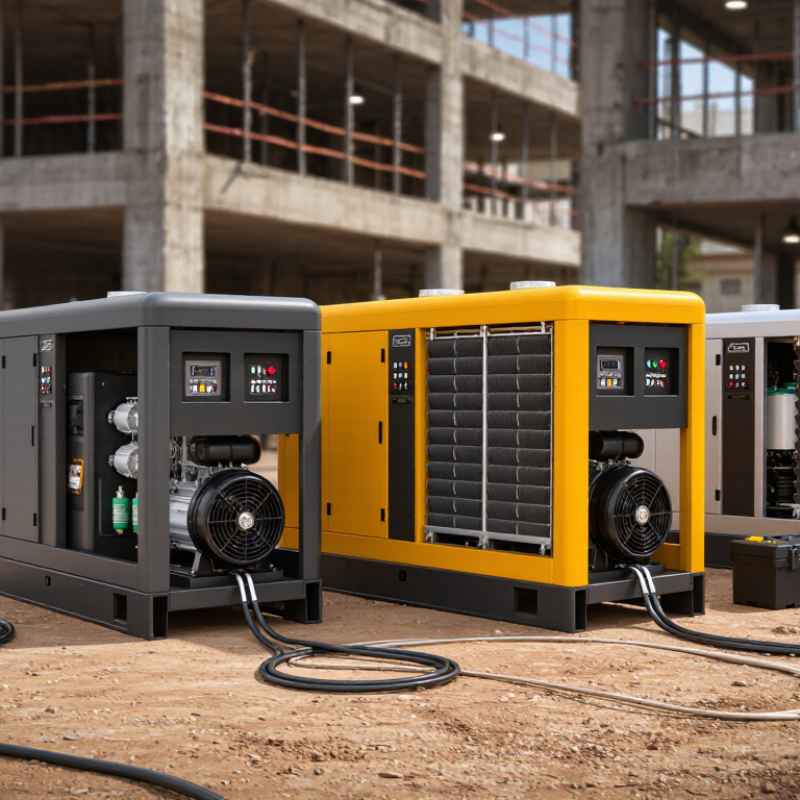
An open frame generator set places its engine, alternator, control panel, and fuel system on a rigid steel base. It has no full acoustic or weather enclosure. This exposed layout improves airflow and provides direct access for inspection, cleaning, and repairs. However, it needs a dry, secure, and well-ventilated installation area.

The core design starts with a welded skid frame. Vibration isolators sit between the engine assembly and the base. They reduce movement and protect nearby connections. A radiator pushes hot air away from the engine. The alternator converts mechanical rotation into electrical power, while the controller monitors voltage, frequency, oil pressure, and coolant temperature. A circuit breaker helps separate the generator from the connected load during faults.

Technicians should check frame alignment, cable terminals, grounding points, and fuel-line condition during routine maintenance. Small defects matter. Loose fasteners can create unusual vibration and gradual damage. Load testing also reveals weak performance that a no-load start may hide. Rated power, starting current, duty cycle, and local operating conditions must match the intended application. A set may look efficient on paper, yet perform poorly in a dusty workshop or poorly ventilated room. That is an important design limitation, not a minor detail.

Key Performance Factors for Comparing Generator Sets

What Are the Top China Open Frame Generator Sets?

Key Performance Factors for Comparing Generator Sets

Choosing an open frame generator set requires more than comparing advertised power. Rated output should match the actual load, starting current, and operating environment. A 100 kVA unit may struggle if several motors start together. Check both prime power and standby power ratings.

Fuel efficiency matters during long workdays. Compare fuel consumption at 25%, 50%, and 75% load. Low-load operation can waste fuel and cause carbon buildup. I have seen buyers focus only on the largest rating. That is an expensive mistake. Tank capacity also affects refueling frequency, site safety, and daily productivity.

Engine stability deserves close attention. Voltage regulation should remain steady when tools switch on and off. Measure frequency changes, voltage recovery time, and performance under uneven loads. Cooling design is important in hot, dusty locations. Inspect radiator access, airflow direction, and cleaning space. Small details matter.

Noise can still be a concern. Open frame equipment is practical, but it usually needs careful placement. Vibration mounts, exhaust routing, and a weather shelter can improve working conditions. Do not ignore maintenance access. Oil filters, belts, batteries, and control panels should be reachable without dismantling the frame. Testing under real site conditions is better than trusting a brochure. No test is perfect. Record the results, question unusual readings, and allow a reasonable performance margin.

Leading China Open Frame Generator Set Categories

China’s open frame generator sets serve several practical categories. The main groups are small air-cooled diesel units, medium water-cooled diesel sets, and high-output industrial systems. Small models often cover 5–30 kVA. They suit farms, workshops, kiosks, and temporary construction loads. Their exposed frames simplify inspection, but they require weather protection and careful grounding.

Medium sets commonly range from 30–500 kVA. They support factories, commercial buildings, pumps, and emergency lighting. Water-cooled engines handle longer operating periods more consistently. High-output sets above 500 kVA usually support infrastructure projects, data facilities, and parallel power systems. These installations need load-sharing controls, fuel planning, and trained operators. Bigger is not always better.

Industry data supports this demand. The International Energy Agency’s Electricity 2024 report projects global electricity consumption growth of about 4% in 2025. Uptime Institute’s 2024 outage analysis also identifies power problems as a major cause of data-center disruptions. These findings explain the interest in dependable standby capacity. However, market reports often combine open-frame, silent, portable, and containerized equipment. Comparisons can therefore mislead buyers. Check rated kVA, prime or standby duty, fuel consumption, noise limits, cooling design, and local service coverage. A lower-cost set may look attractive initially. Its maintenance access, alternator quality, and control response deserve closer scrutiny.

Top China Open Frame Generator Set Categories

Open-frame diesel generator sets are commonly categorized by rated apparent power. The representative classes below reflect widely used capacity ranges for construction sites, backup power, agriculture, workshops, and small commercial facilities.

How to Select a Suitable Generator Set

What Are the Top China Open Frame Generator Sets?

How to Select a Suitable Generator Set

A top China open frame generator set is not automatically suitable for every site. Start with the load. Calculate running watts for lights, pumps, tools, and control systems. Check motor starting current carefully. Compressors and water pumps may briefly need two or three times their rated power. A 20% to 30% capacity reserve supports safer operation. Oversizing, however, can cause inefficient fuel use and carbon buildup.

Choose the engine output according to your working environment. High temperatures, dust, and altitude can reduce performance. For a remote construction site, compare fuel consumption at 50%, 75%, and full load. Check tank capacity against expected operating hours.

Small details matter. Confirm the alternator insulation class, voltage stability, frequency control, and protection functions. A clear control panel makes faults easier to identify.

Inspect the frame, radiator, cable terminals, and emergency stop before purchase. Weld quality and rubber mounts affect vibration over time. Open-frame sets are practical, but they can be loud and exposed to rain.

Plan a dry, ventilated shelter without blocking cooling airflow. Request load-test records, maintenance guidance, warranty terms, and available spare parts.

A low price may hide weak connectors or limited technical support. That is an easy mistake to make. In real selection work, quiet operation and service access are often valued too late.

Operation, Maintenance, and Safety Considerations

Choosing a top China open frame generator set requires more than comparing rated power. Operation should match the actual load, not the largest number on the nameplate. Start the engine in a dry, ventilated area, then allow a short warm-up before connecting equipment. Check voltage and frequency with a meter when possible. A loose cable can heat quickly. Keep the control panel visible, and record unusual vibration, smoke, or delayed starting.

Maintenance depends on disciplined routines. Inspect engine oil, coolant, fuel lines, battery terminals, and air filters before regular use. Dusty construction sites may require shorter service intervals than the manual suggests. Drain water from the fuel system when contamination appears. Replace damaged belts immediately. Small leaks rarely improve by themselves. Use service records with operating hours, oil grades, filter changes, and fault codes. A qualified technician should verify electrical output and grounding after repairs. In practice, missed inspections remain a common weakness, even in well-managed workshops.

Safety controls must protect both operators and nearby workers. Install the set on level ground with enough clearance for exhaust and maintenance access. Never operate it inside a room, basement, or poorly ventilated shed. Carbon monoxide has no reliable warning smell. Keep fuel containers away from hot surfaces, and stop the engine before refueling. Lock out the starting system during electrical work. Wear hearing protection near the running unit. Local electrical rules and the generator manual may differ, so confirm both before installation. I would not treat a low purchase price as proof of value; safer operation often depends on training, inspection, and honest load planning.

What Are the Top China Open Frame Generator Sets? - Operation, Maintenance, and Safety Considerations
Generator Set Category Typical Prime Power Range Common Voltage and Frequency Best-Fit Applications Operational Considerations Routine Maintenance Interval Key Safety Requirements Typical Noise Level
Compact Single-Phase Set 3–10 kVA 220–240 V, 50 Hz Small workshops, emergency household loads, lighting, pumps, and portable tools Operate on a level surface with adequate ventilation. Avoid continuous operation close to the maximum rated load. Check oil, coolant, fuel, battery, and leaks before every start. Change engine oil approximately every 100–250 operating hours, subject to the engine manual. Medium Approximately 70–85 dB(A) at 7 m, depending on engine speed and load
Three-Phase Light-Duty Set 10–30 kVA 380–415 V, 50 Hz; single-phase output may also be available Construction tools, agricultural equipment, retail facilities, and small commercial buildings Balance single-phase loads across phases. Use a properly rated distribution board and avoid connecting sensitive equipment without suitable voltage protection. Inspect air and fuel filters regularly. Check terminal tightness and coolant condition monthly or at the engine manufacturer's specified interval. Medium Approximately 72–88 dB(A) at 7 m
Industrial Open-Frame Set 30–100 kVA 380–415 V, 50 Hz Factories, warehouses, irrigation systems, medium-sized construction sites, and backup power systems Allow sufficient clearance around the radiator and alternator. Use an automatic transfer system when the generator is connected to a standby electrical installation. Perform daily visual checks and scheduled servicing every 250–500 operating hours. Test the battery charger, coolant heater, and protection relays where fitted. High Approximately 75–92 dB(A) at 7 m
Heavy-Duty Prime-Power Set 100–300 kVA 380–415 V, 50 Hz Mining support, manufacturing plants, data-support infrastructure, large agricultural facilities, and continuous-duty projects Use an engineered load schedule. Monitor oil pressure, coolant temperature, exhaust temperature, frequency, and phase loading during operation. Carry out inspections every shift during intensive use. Replace lubricating oil and filters according to engine hours, fuel quality, and duty cycle; inspect belts and hoses at each service. High Approximately 80–96 dB(A) at 7 m
Parallel-Ready Modular Set 60–500 kVA per unit 380–415 V, 50 Hz Hospitals, commercial buildings, data centers, and sites requiring capacity expansion or redundancy Synchronizing controls must be configured by qualified personnel. Confirm compatible phase sequence, voltage, frequency, load-sharing settings, and protection coordination. Test synchronization and load-sharing functions regularly. Inspect control wiring, circuit breakers, communication links, and emergency-stop circuits during planned maintenance. High Approximately 80–98 dB(A) at 7 m
Low-Load Standby Set 20–150 kVA 380–415 V, 50 Hz Office buildings, schools, residential developments, telecom sites, and emergency backup installations Run the set periodically under an adequate electrical load. Long periods of light loading can contribute to wet stacking, carbon deposits, and poor engine performance. Conduct a weekly or monthly exercise run according to the site plan. Perform a loaded test at least periodically and keep fuel fresh and free from water contamination. Medium Approximately 74–92 dB(A) at 7 m
High-Altitude or Hot-Climate Configuration 10–300 kVA, subject to derating 380–415 V, 50 Hz Plateaus, inland regions, tropical construction sites, and locations with high ambient temperatures Confirm the manufacturer's derating requirements. Reduced air density can lower engine output, while high ambient temperature can reduce cooling performance and alternator capacity. Clean the radiator and air-intake system frequently in dusty conditions. Check coolant concentration, fan operation, and air-filter restriction more often than under standard conditions. High Approximately 75–96 dB(A) at 7 m
Trailer-Mounted Open-Frame Set 30–500 kVA 380–415 V, 50 Hz Temporary power, roadworks, disaster response, outdoor events, and remote construction areas Verify trailer brakes, tires, grounding, cable routing, and weather protection before relocation. Stabilize the trailer and keep exhaust gases away from occupied areas. Inspect the chassis, tow coupling, lights, tires, fuel system, and lifting points before each move. Service the engine according to operating hours and transport conditions. High Approximately 78–98 dB(A) at 7 m
Technical note: Ratings, voltage options, noise values, service intervals, and environmental performance vary by engine, alternator, enclosure configuration, ambient conditions, and applicable local standards. Always verify the final specification in the equipment documentation and installation design.

Whether your solution requires a single pumping application or an expansive engineered system,
CheckPoint is committed to becoming your partner in excellence.