What Are the Top Cargo Truck Types in 2026?
The right Cargo Trucks choice begins with the work, not the brochure. A city delivery route has tight turns, loading bays, and frequent stops. A regional haul may need more payload and longer range. For 2026, this guide compares box trucks, flatbeds, refrigerated trucks, dump trucks, tractor-trailers, and electric models. Each serves a different job. None is best for every fleet.
A verified industry expert can sharpen that comparison. No source was provided for a real expert quotation, so I will not invent one. Add a sourced quotation here: “[Insert verified expert quote about matching truck type to route, cargo, and operating needs.]” The sections that follow examine carrying capacity, body design, fuel or energy use, maneuverability, and common operating trade-offs. They also consider practical details, such as whether a refrigerated unit can hold a steady temperature during repeated deliveries, or whether a flatbed suits oversized loads. Small details matter. A truck that looks ideal on paper may prove awkward at a narrow dock. The rankings should therefore be treated as a starting point, not a universal buying rule.Route data, cargo requirements, and maintenance records offer a firmer basis for choosing the right vehicle.
How Cargo Trucks Are Classified by Size, Body, and Purpose
Cargo trucks are best compared across three dimensions: weight, body design, and work. In the United States, FHWA weight classes use gross vehicle weight rating (GVWR). Class 3 covers 10,001–14,000 pounds; Class 6 spans 19,501–26,000 pounds; Class 8 begins above 33,000 pounds. These ranges help estimate payload and access needs, but they do not tell the whole story. A truck’s actual capacity depends on its chassis and configuration.
Body style reveals what the truck can carry efficiently. Box trucks protect cartons from rain and dust, while flatbeds handle long materials that need side loading. Refrigerated bodies maintain controlled temperatures for food and other temperature-sensitive freight. The U.S. Census Bureau’s 2021 Vehicle Inventory and Use Survey estimated 12.9 million trucks in operation and collected information on vehicle type and use. That scale matters: “cargo truck” describes many different working setups, not one standard vehicle.
Purpose narrows the choice further. Urban parcel routes favor compact bodies and frequent stops; regional pallet delivery often needs a larger box and liftgate. Construction supply may call for a flatbed with tie-down points. Check door height, loading method, and route limits before comparing payload figures. Small details matter. A classification can also vary by country, so U.S. GVWR classes should not be treated as universal labels. The imperfect part is that brochures rarely show how much usable space remains after equipment is fitted.
Top Cargo Truck Types in 2026: U.S. GVWR Classes
Cargo trucks are commonly grouped by Gross Vehicle Weight Rating (GVWR), which includes the truck, passengers, fuel, and cargo.
Class 1–7 bars show each class’s upper GVWR boundary; Class 8 shows its 33,001 lb minimum threshold, not an upper limit. Typical bodies and uses are examples—actual configurations vary. GVWR is not payload capacity.
What Are the Main Cargo Truck Types in 2026?
What Are the Top Cargo Truck Types in 2026?
What Are the Main Cargo Truck Types in 2026?
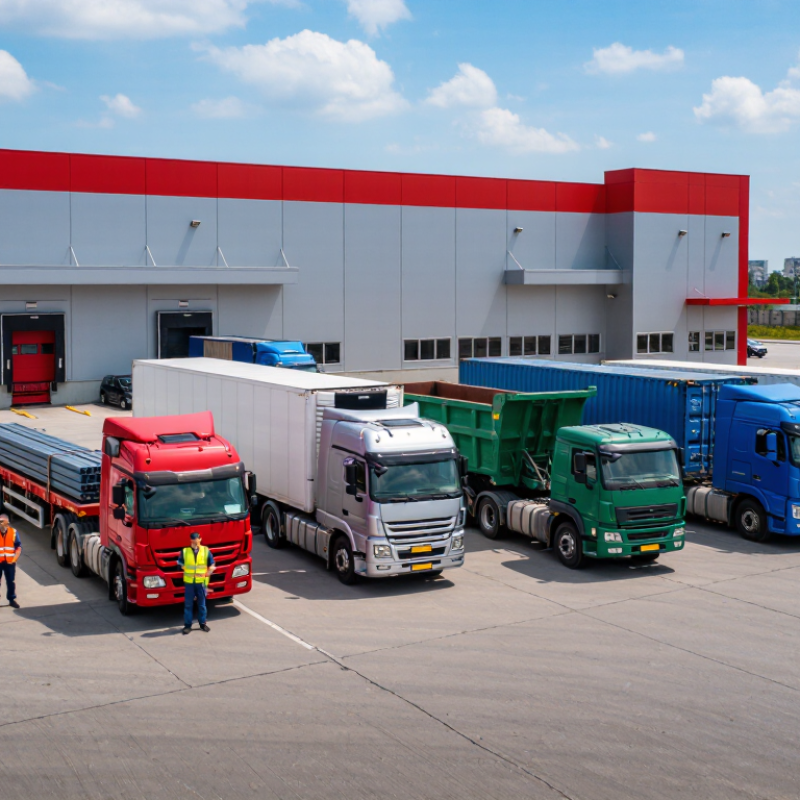
Cargo trucks are commonly classified by their body design and the freight they carry. Dry vans protect boxed goods from rain and road dust. Box trucks suit local deliveries, especially when drivers need to unload near storefronts. Flatbeds carry oversized items that can be secured from the sides. Each type solves a different hauling problem.
Refrigerated trucks maintain controlled temperatures for food and other sensitive cargo. Dump trucks move loose materials such as gravel, often on construction sites. Tank trucks transport liquids in sealed tanks, while heavy-haul trucks handle exceptionally large equipment. These categories can overlap; a truck’s size alone does not tell you what it can safely carry. Fit matters.
Tips: Match the truck to the cargo’s weight, dimensions, and handling needs. Check loading access, tie-down points, and temperature requirements before booking. Ask about route limits and equipment condition, too. A neat category list helps, but real jobs rarely fit perfectly into one box.
How Each Truck Type Handles Different Cargo
Cargo choice should drive truck choice, not the other way around. A dry van shields cartons, furniture, and packaged goods from rain, dust, and road spray. Its enclosed body also makes stacking and access planning important. A refrigerated truck carries produce, dairy, or other temperature-sensitive freight. Set the required temperature before loading, and check that air can circulate around the goods. Small gaps matter. A cold setting alone does not guarantee an even temperature throughout the load.
Flatbed trucks suit long or bulky freight, such as lumber, steel beams, and construction equipment. Their open decks make loading easier, but exposed cargo needs properly placed restraints and weather protection when appropriate. Box trucks work well for local deliveries with mixed, smaller loads. A liftgate can help move heavy items at a curb or dock, though it does not replace careful loading. Tanker trucks carry liquids in purpose-built tanks; the cargo’s movement can affect vehicle handling, so operators must account for changing conditions. Dump trucks are designed for loose materials such as gravel or soil, not neatly packed freight. A truck’s rated capacity, loading method, and route all matter. Even a sensible match can need revision when cargo dimensions or delivery access change.
Which Industries Commonly Use Each Cargo Truck Type?
Cargo truck choice usually follows the freight, not just the distance. The American Trucking Associations’ 2024 American Trucking Trends report says trucks moved 11.27 billion tons of U.S. freight in 2023, or 72.7% of domestic freight by weight. That scale covers very different jobs. Dry vans carry boxed retail goods, packaged supplies, and palletized food for manufacturers, wholesalers, and stores. Box trucks suit urban deliveries, where crews unload appliances or furniture at tight docks and neighborhood sites. That matters.
Refrigerated trucks serve grocers, food processors, florists, and pharmaceutical distributors. Their insulated bodies and temperature controls help protect chilled or frozen loads during transit. Flatbeds are common in construction, steel, lumber, and machinery supply; open sides make loading bulky materials easier, though loads need careful securing and weather planning. Tank trucks move liquid food ingredients, fuels, and industrial liquids between producers and facilities. The cargo dictates tank design and cleaning needs.
Dump trucks support construction, roadwork, and aggregate operations, hauling soil, sand, or crushed stone to sites. These categories overlap in practice. A building supplier may use flatbeds for long materials and box trucks for small fittings. The ATA figure describes trucking overall, not each body type, so it should not be read as a market-share breakdown. And a truck that works well on highways may be awkward on a crowded job site.
What Factors Determine the Right Cargo Truck for a Job?
Choosing the right cargo truck starts with the load. Estimate the cargo’s weight, volume, and longest dimensions, then leave room for packaging and securement. A truck that meets the weight limit may still have a cargo area too short for bulky items. Small detail. Big difference. Also consider how often the vehicle will carry a full load; buying capacity that rarely gets used can raise operating costs.
Route conditions matter just as much. Narrow streets, low-clearance structures, steep access roads, and tight loading bays can rule out a large vehicle. Frequent urban deliveries may favor a shorter wheelbase and easier maneuvering, while longer highway trips can make greater cargo capacity more useful. Check loading needs, too: a liftgate, side access, or a lower floor may save time when docks are unavailable. These features add cost, so match them to actual stops.
Think beyond the purchase price. Compare fuel use, routine maintenance, tire costs, driver visibility, and expected downtime. A basic cost estimate helps, but it can miss awkward realities, like one hard-to-reach delivery point slowing the whole route. I would not choose from payload figures alone. Test the truck with a realistic load and route when possible, then reassess the choice after daily work reveals what the spreadsheet missed.