



Top 10 Calcium Carbonate Stone Manufacturers Worldwide

Calcium Carbonate Stone appears in many familiar forms, from pale limestone blocks to polished marble slabs. Its color, veining, density, and finish can change dramatically from one quarry or product line to another. For architects, builders, and buyers, choosing a manufacturer involves more than finding an attractive surface. Consistent quality matters. So do documented sourcing, fabrication capacity, product information, and dependable delivery.

This guide introduces ten manufacturers and suppliers operating across the global stone market. It considers practical factors such as material range, processing capabilities, quality controls, and the markets each company serves. These details can help readers prepare useful questions before requesting samples or quotations. A showroom sample may look different from a large installed surface. Lighting, sealing, and maintenance also affect the final result.

There is no perfect ranking. Company scale and product availability can shift, while regional expertise is difficult to compare fairly. Some firms focus on quarrying; others specialize in cutting, finishing, or distribution. That distinction matters. Buyers should confirm current specifications, origin information, lead times, and care requirements directly with each supplier. This overview offers a starting point, not a substitute for due diligence. Stone is natural, and variation is part of its character—but it can also complicate a project.
Top 10 Calcium Carbonate Stone Manufacturers Worldwide

What Calcium Carbonate Stone Manufacturers Produce and Supply

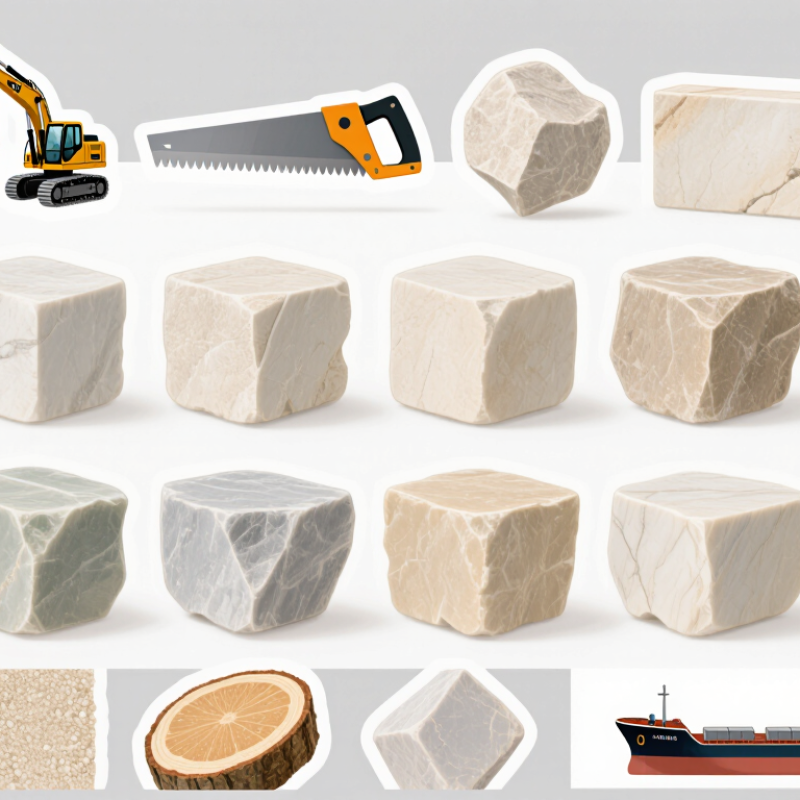
Calcium carbonate stone manufacturers turn limestone and marble into materials for construction, interiors, and industrial use. Their work may begin with quarrying, followed by block selection, sawing, surface finishing, and sizing. The finished range can include slabs, floor and wall tiles, stair treads, window sills, and custom-cut pieces. Some producers also supply crushed stone or calcium carbonate powder, depending on their equipment and market.

Details matter. A polished slab may show fine veins, small cavities, or color shifts that are less visible in a sample. Buyers often request dimensions, finish options, and information about water absorption or strength. Manufacturers commonly pack stone in protective crates and coordinate shipment by pallet or container. Still, natural variation is hard to eliminate. That can complicate matching pieces across a large project. A careful supplier should explain batch differences before production, though specifications alone may not capture every visual change. Ask for current photographs of the actual material. Small checks help. A little caution is sensible.

How to Assess the World’s Leading Manufacturers

Assessing a calcium carbonate stone manufacturer starts with the intended application, not a glossy catalog. Ask for technical data on particle size, whiteness, moisture, and chemical composition. For stone slabs or architectural surfaces, inspect samples under natural light and check for visible variation, chips, and uneven polish.

Look closely. A capable supplier should explain how material is quarried, processed, and checked between batches. Request recent test reports, and confirm that the methods and units match your project requirements. A certificate alone cannot prove that every shipment will be consistent.

Evaluate production reliability as well as product quality. Ask about monthly capacity, typical lead times, packaging, and how complaints or damaged deliveries are handled. If possible, compare a sample with material from a delivered batch; small differences can matter in a large installation. Review quarry access and transport arrangements, since weather or distance may affect supply.

These details are easy to overlook. Still, test figures can look neat while a shipment varies. That is why independent testing and clear written specifications are useful, especially for long-term contracts.

A comparison is never perfectly tidy: manufacturers may use different test methods, and published figures may not be directly comparable. Record your questions, verify important claims, and judge each supplier against the same practical criteria.

Regional Overview of the Global Calcium Carbonate Stone Industry

Regional patterns in the calcium carbonate stone industry reflect geology as much as demand. Limestone and marble deposits support quarrying across Asia, Europe, and North America, while transport costs often favor nearby processing.

The USGS Mineral Commodity Summaries 2025 estimates U.S. crushed-stone output at about 1.5 billion tons in 2024; limestone and dolomite made up roughly 70 percent. Much of this material serves construction, not decorative stone.

That distinction matters.

Asia-Pacific has a broad resource base and strong demand from construction and manufacturing.

Europe’s established quarries supply building stone and industrial feedstock, but environmental controls and land-use pressures can constrain expansion.

In North America, extensive deposits and local markets help sustain high-volume production.

The USGS figures describe crushed stone, not finished calcium carbonate products, so they should not be read as a direct measure of stone-manufacturing capacity.

The regional picture is useful, but incomplete: deposit quality, cutting losses, water use, and access to ports can change a quarry’s competitiveness.

Even a rich deposit may be commercially difficult to work.

Profiles of Ten Major Calcium Carbonate Stone Manufacturers

Major calcium carbonate stone manufacturers differ in geology, processing capacity, and product focus. A European quarry operator may supply pale stone for architectural finishes. An Asian integrated producer can combine extraction with fine grinding. A North American supplier may prioritize consistent grades for coatings and plastics. A Turkish processor often works with dense, bright deposits. Local stone matters.

An Indian manufacturer may serve construction markets with crushed and screened material. A Japanese producer might focus on controlled particle sizes for industrial uses. In the Middle East, some operations pair quarrying with nearby processing plants. A South American supplier can draw on large regional reserves. An African producer may emphasize building stone and regional distribution. An Oceanian operator often serves domestic projects, where freight costs shape product choices. These profiles are broad, not a verified ranking. Buyers should check quarry origin, particle-size data, whiteness, moisture, and delivery records. Numbers can look precise; sampling conditions still matter. Small differences count. Processing also changes performance, so a polished sample alone tells little about long-term consistency.

Production Methods, Product Grades, and Quality Standards

Calcium carbonate stone moves through distinct production routes. Ground calcium carbonate is quarried, crushed, milled, and classified by particle size. Precipitated calcium carbonate is produced through a controlled chemical process, allowing manufacturers to shape particle size and form more closely. Grades may differ in calcium carbonate content, whiteness, moisture, and residue. Buyers should check test methods, not just a grade name. That distinction matters. USGS Mineral Commodity Summaries 2025 estimated U.S. crushed-stone output at about 1.5 billion metric tons in 2024. This broad category includes many rock types, so it is not a measure of calcium-carbonate production alone.

Quality checks connect production choices to end use. Fine, bright material may suit paper or coatings, while coarser grades can serve construction and agricultural applications. Iron-bearing impurities can reduce brightness; excess moisture can complicate storage and dosing. ISO 3262-5 specifies test requirements for natural calcium carbonate used as a paint extender. It offers a useful reference, though one standard cannot cover every customer specification. In practice, request a recent certificate of analysis and confirm particle-size distribution, chemical assay, and sampling method. Results can vary between shipments. That deserves attention.

Tip: Compare samples under the same test conditions. Ask suppliers to define tolerances for whiteness, moisture, and particle size, then verify them against your application. A polished specification can still miss handling problems, so trial the material on actual production equipment.

Whether your solution requires a single pumping application or an expansive engineered system,
CheckPoint is committed to becoming your partner in excellence.