China Top 10 Component Terminal Block Manufacturers
Choosing a Component Terminal Block manufacturer involves more than comparing prices or catalog sizes. Buyers need to match each product to its real operating conditions. A control cabinet, for example, may require a specific wire range, mounting style, rated current, and insulation material. Small details matter. A terminal that fits the drawing may still be unsuitable for heat, vibration, or repeated maintenance.
This guide introduces ten manufacturers in China and offers a practical starting point for supplier research. It considers product range, technical documentation, manufacturing experience, quality controls, and the clarity of available specifications. Where possible, buyers should verify certifications, test reports, production capacity, and traceability directly with each company. Requesting samples can also reveal details that a catalog cannot show, such as clamping feel, finish, and marking legibility. A neat product photo is not enough.
The list should not be treated as a universal ranking. Supplier capabilities can vary by product series, order size, and application, and published information may not capture every change. That limitation matters. Compare specific models against your drawings and requirements, then confirm the details with the manufacturer before making a sourcing decision. A careful review takes time, but it can reduce costly surprises later.
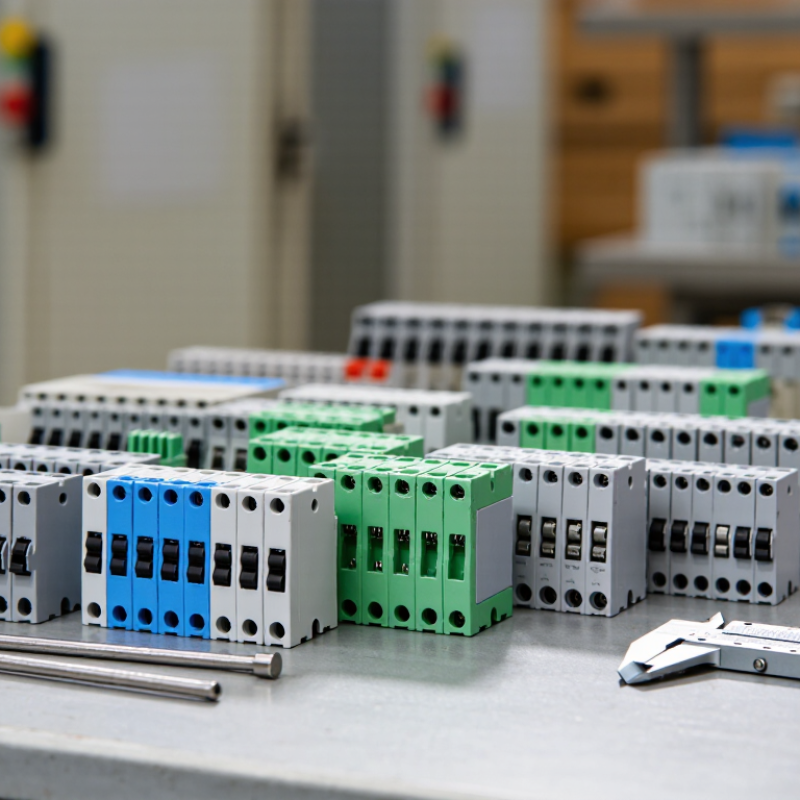
What Component Terminal Blocks Are and How They Work
Component terminal blocks are compact connectors that join field wires to a circuit board. Their insulating housing keeps conductive parts separated, while a metal contact carries current between a wire and the board. You may see them on control panels, power supplies, and industrial equipment. Small parts, important job.
To make a connection, an installer inserts a stripped wire into an opening and secures it with a screw or spring clamp. The clamp presses the conductor against a metal contact, which is soldered or otherwise connected to the circuit board. When the screw is tightened, the wire should stay firm without being crushed. That detail matters. A loose connection can heat up or interrupt a signal.
Selection depends on wire size, current, voltage, pitch, and the environment around the equipment. A block with the right spacing may still be unsuitable if its rating is too low. Check the manufacturer’s technical data, and follow the board’s assembly instructions. For example, a vibration-prone machine may benefit from a connection style designed to resist loosening. No single design fits every job. Even experienced technicians can overlook clearance around a wire, so inspect the finished connection and test it before normal operation.
China’s Terminal Block Industry and Manufacturing Landscape
China’s terminal block industry sits within a broad electrical manufacturing base. China’s National Bureau of Statistics reported that manufacturing value added grew 5.0% in 2023, while electrical machinery and equipment manufacturing rose 12.9%. These figures describe the wider sector, not terminal blocks alone. Still, they help explain the depth of local capabilities, from copper-alloy stamping and plastic molding to automated assembly and inspection.
On the factory floor, production often involves small but critical details: consistent screw torque, clean contact surfaces, and reliable insulation between adjacent poles. Suppliers serve control cabinets, power distribution equipment, building systems, and industrial automation. A terminal block may look simple. Its tolerances are not. The NBS figures show growth, but output growth does not prove uniform quality across manufacturers. Buyers should compare test records, material specifications, and traceability practices, rather than relying on capacity claims alone.
China’s manufacturing landscape also benefits from dense component networks and established logistics. This can shorten sourcing cycles, though it does not remove risks such as material variation or changing lead times. The International Electrotechnical Commission’s IEC 60947-7-1 standard provides a technical reference for terminal blocks used in industrial equipment. It is useful, but certification details and test scope still need checking. The data is broad; terminal-block-specific public statistics remain limited. That gap deserves attention.
Key Criteria for Evaluating Terminal Block Manufacturers
China Top 10 Component Terminal Block Manufacturers
Key Criteria for Evaluating Terminal Block Manufacturers
A manufacturer’s catalogue is only a starting point. Fortune Business Insights estimated the global terminal block market at USD 4.46 billion in 2024, with a forecast of USD 6.92 billion by 2032. This growth reflects broad demand, not proof that any supplier makes reliable products. Compare rated voltage and current, wire range, temperature limits, and short-circuit performance against your actual application. A block used inside a warm control cabinet faces different demands from one mounted near vibration or dust.
Ask for traceable test reports, material specifications, and production inspection records. IEC 60947-7-1 sets requirements for terminal blocks for copper conductors, making it a useful reference when checking conformity claims. Request samples and inspect screw torque consistency, clamping stability, marking legibility, and housing fit. Small details matter. A clean datasheet cannot replace testing with your wire type and installation conditions. I would also check how clearly the supplier handles design changes; this is easy to overlook.
Tips: Request reports tied to the exact product model, not a similar series. Confirm how batch numbers link to inspection records. Test several samples, not just one. Keep written approval for substitutions, because a minor material change can affect heat or vibration performance.
Profiles of China’s Top 10 Component Terminal Block Manufacturers
Profiles of China’s top 10 component terminal block manufacturers reveal different strengths, not one universal leader. Some focus on compact screw-clamp blocks for control cabinets; others produce push-in designs for faster wiring. Their product ranges may include feed-through, grounding, and multi-level terminals. A useful profile looks beyond catalogue photos. It checks conductor sizes, rated current, insulation materials, and mounting compatibility. Small details matter. A terminal that fits a dense rail can still be awkward to wire.
Manufacturing capability is another key comparison. Look for clear information about tooling, material inspection, production traceability, and electrical testing. Ask how samples are checked and whether test conditions match your application. Published specifications are useful, but they are not the whole story. Factory claims should be confirmed with current documents and physical samples. I would be cautious about rankings that offer no selection method; even a polished profile can leave gaps.
Tips: Compare drawings, markings, and test reports before shortlisting suppliers. Check screw access and wire entry on a real sample. Record unanswered questions, too.
China’s Component Terminal Block Manufacturers: Conductor Size Context
Standard nominal conductor cross-sectional areas provide a useful, brand-neutral reference when comparing terminal block product ranges.
Values shown are standardized nominal conductor cross-sectional areas (mm²), based on sizes specified in IEC 60228. They are not manufacturer rankings or claims of terminal block compatibility; check each product’s specifications.
Applications, Standards, and Emerging Trends in Terminal Block Design
Terminal blocks connect field wiring to control equipment in factories, buildings, and power systems. In a control cabinet, they can organize sensor, motor, and supply conductors along a DIN rail. Clear separation helps technicians trace circuits and reduces wiring mistakes during maintenance. Small details matter: a readable marker, an accessible test point, and a secure conductor clamp can save time.
Selection should match the application, not just the rated current. Engineers check conductor size, voltage, temperature rise, short-circuit conditions, and the installation environment. IEC 60947-7-1 and UL 1059 are relevant references for terminal block requirements, but approval depends on the exact product configuration and intended market. Verify current documentation before specifying a part. A compact layout can save rail space, but it may leave too little room for inspection.
Design is moving toward higher-density connections, tool-free push-in wiring, and clearer identification. These features can speed assembly, especially in crowded panels. Yet smaller is not always better. Fine-pitch terminals may complicate field service, and tool-free connections still require correct wire preparation. Digital labels and condition monitoring are gaining attention, though many installations still rely on simple visual checks. Practical design remains a balance between space, safety, and maintainability.