Top 10 Bidet Toilet Types for Global Buyers?
Choosing a Bidet Toilet for international use is not simply a matter of selecting the most expensive model. Buyers must match technology with bathrooms, habits, climate, and local installation conditions. A sleek seat may look ideal in a showroom, yet fail when voltage, water pressure, or replacement parts differ at home.
Jamie Gold, a wellness design consultant and author, explains the broader principle clearly: “Wellness design works best when comfort and daily function meet.” That idea fits bidet toilets especially well. Warm water, adjustable spray position, heated seating, deodorizing systems, and automatic flushing can improve daily hygiene. However, useful features should remain easy to control. Too many buttons can confuse older users and first-time buyers.
This guide examines ten Bidet Toilet types for global buyers. It considers integrated smart toilets, electronic bidet seats, non-electric models, wall-hung designs, compact units, and accessibility-focused options. Each type has practical strengths. Each also has compromises.
Installation matters.
Some models need a nearby power outlet and a stable water connection. Others work without electricity but provide fewer comfort functions. Buyers should also check available space, ceramic dimensions, drain positioning, service support, warranty coverage, and region-specific safety requirements. Imported products may require adapters or professional installation, which can increase the final cost.
A perfect shortlist does not exist. A quiet model may be difficult to repair. A low-cost unit may lack dependable after-sales support. These limitations deserve honest attention. The best choice is the Bidet Toilet that performs reliably in the buyer’s real bathroom, not merely in a product photograph.
What Is a Bidet Toilet and How Does It Work?
A bidet toilet combines a flushing toilet with a built-in washing system.
After use, a slim nozzle extends beneath the seat and sprays a controlled stream of clean water. Users can adjust water pressure, temperature, and spray position. Many models also provide warm-air drying, heated seats, night lighting, and automatic flushing.
The process is simple, but the engineering is not. An internal valve regulates water flow, while sensors control nozzle movement and user safety. Some units require electricity for heating and electronic controls. Plumbing connections must match local water pressure and installation standards.
The WHO and UNICEF Joint Monitoring Programme reported that 3.5 billion people lacked safely managed sanitation in 2022. This figure shows why cleaner personal washing deserves practical attention. Still, a bidet toilet does not solve every sanitation problem. Maintenance, power supply, and correct installation remain important. I may be too optimistic about “hands-free” claims; users still need regular cleaning.
Tips:
Check nozzle self-cleaning, accessible filters, and emergency manual controls. Confirm the flush volume before purchase. The U.S. EPA WaterSense specification limits qualifying toilets to 1.28 gallons per flush.
However, integrated bidet models may differ by configuration. Read the technical sheet, not only the product image.
Use a certified electrical connection near the toilet, and keep the control panel dry.
Top Bidet Toilet Types by Design and Function
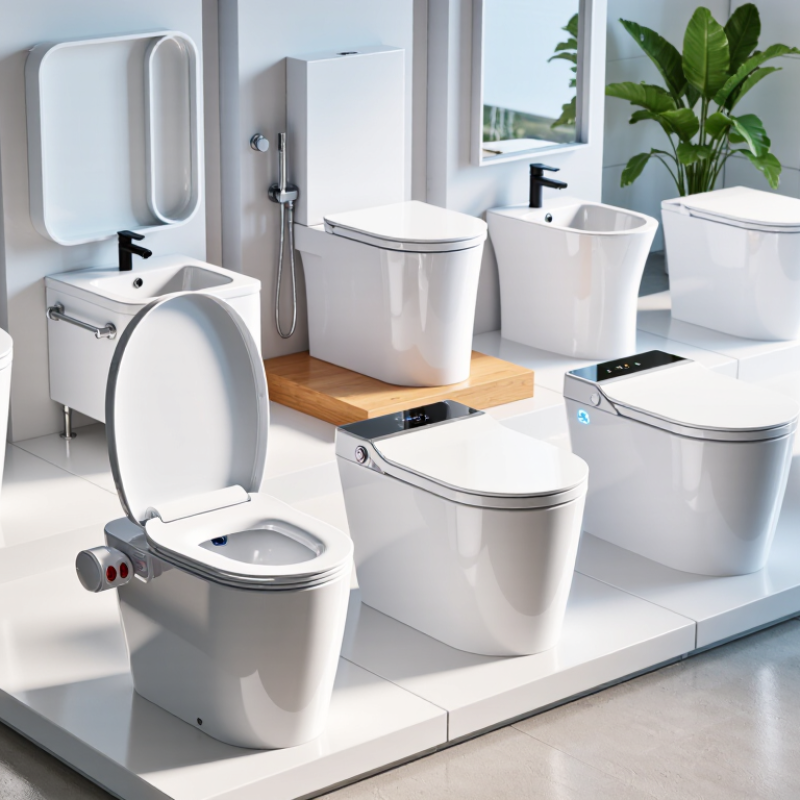
For global buyers, bidet toilets differ in design, installation, and daily comfort. Integrated smart bidet toilets combine the bowl, wash nozzle, heated seat, dryer, and control panel. They create a clean appearance, but repairs may require trained technicians. Electric bidet seats upgrade existing toilets with adjustable water pressure, temperature, and nozzle position. Non-electric Bidet Attachments use household water pressure and need no power outlet. They are affordable, though temperature control is limited. Wall-hung bidet toilets save floor space and simplify cleaning beneath the bowl. Floor-standing models usually offer easier installation and broader compatibility.
Design details also affect practical use. Rimless bidet toilets reduce hidden areas where residue can collect. Elongated bowls often provide more legroom, while round-front bowls suit compact bathrooms. Compact bidet toilets fit narrow rooms, but their smaller seats may feel less comfortable. Heated-seat models improve winter use, especially in colder regions. Warm-air drying systems reduce toilet paper use, although drying performance can vary with user position and airflow.
During product evaluation, check water connections, electrical safety, voltage, drainage, and local installation requirements. A quiet pump matters in bedrooms or shared homes. Child settings and adjustable spray positions can improve comfort. Self-cleaning nozzles sound useful, but they still need regular inspection. I would not choose a model by appearance alone. A sleek unit may have complicated maintenance. Room measurements, user habits, water quality, and service access deserve equal attention.
Key Features Global Buyers Should Compare
Top 10 Bidet Toilet Types for Global Buyers?
Key Features Global Buyers Should Compare
Global buyers should compare bidet toilet types by installation, water supply, and user comfort. Integrated models combine the toilet and bidet in one unit. Add-on seats fit existing toilets and usually simplify replacement. Wall-hung designs save floor space, while floor-standing models often suit older bathrooms. Non-electric versions can work where power access is limited.
Check voltage, frequency, plug configuration, and local electrical safety requirements before ordering. A dual-voltage system is not always suitable for every country. Water pressure also matters. Some models need a stronger supply, while others include a pump. Measure the inlet, drainage position, bowl height, and bathroom clearance carefully. Small measurement errors can delay installation.
Comfort features deserve practical testing. Compare nozzle adjustment, warm-water duration, seat heating, air drying, night lighting, and child settings. Stainless or self-cleaning nozzles may support easier maintenance, but cleaning still remains necessary. Look for accessible filters and replaceable parts. Remote controls are convenient, yet physical buttons can help older users. I have found that glossy panels show fingerprints quickly. A quieter unit may also feel more premium in a small bathroom. Check water-saving performance, warranty coverage, installation support, and documentation in the buyer’s language. Certification requirements vary by market, so local approval should be verified before purchase.
Installation, Plumbing, and Electrical Requirements
Top 10 Bidet Toilet Types for Global Buyers: Installation, Plumbing, and Electrical Requirements
Bidet toilets vary from integrated smart units and electronic seats to handheld sprays, bidet basins, wall-hung models, and non-electric attachments. Installation needs differ sharply.
Integrated units often require a floor flange, water shutoff, drainage alignment, and nearby power. Handheld systems usually need only a cold-water connection and a pressure-rated hose.
The U.S. Environmental Protection Agency’s WaterSense program identifies 1.28 gallons per flush as a high-efficiency toilet benchmark, but bidet functions can add electrical and maintenance demands.
Electrical safety deserves careful planning. A qualified electrician should verify local voltage, grounding, and bathroom-zone rules before installation.
Many electronic models need a grounded outlet protected by GFCI or RCD equipment, depending on national requirements. Keep outlets away from splash zones.
A dedicated circuit may be sensible for heated seats, dryers, and instant water heating. It is not always mandatory, though. Product manuals and local codes must decide.
Plumbing is less universal than online listings suggest.
Water pressure, inlet size, backflow protection, and drainage layouts vary by market. The International Code Council’s plumbing guidance emphasizes approved backflow prevention and accessible shutoff valves.
In practice, a concealed wall connection can look clean but complicate repairs. I would leave an access panel.
The UN-Water 2024 update reports that billions still lack safely managed sanitation, reminding buyers that basic drainage reliability matters more than novelty.
A perfect installation checklist still misses one issue: regional spare parts and trained service support.
How to Choose the Right Bidet Toilet for Each Market
Top 10 Bidet Toilet Types for Global Buyers?
Choosing the right bidet toilet starts with the market, not the product catalog. WHO and UNICEF’s 2023 JMP report found that 3.5 billion people lacked safely managed sanitation in 2022. In developing cities, a simple bidet seat may suit existing toilets better than a complete integrated unit. Check water pressure, drainage size, installation skills, and spare-part access. A low-cost choice can fail quickly.
For markets with stable electricity, heated seats, warm water, dryers, and night lighting can improve comfort. However, voltage and plug standards differ sharply between regions. Tankless models need reliable water flow, while tank-fed models may perform better during pressure drops. The U.S. EPA states that WaterSense toilets use 1.28 gallons per flush or less, making efficient flushing important where water costs are high. Not every “smart” feature deserves its energy use.
Climate and housing patterns also matter. UN DESA projects that about 68% of the global population will live in urban areas by 2050. Compact wall-hung designs may fit apartments, but floor-mounted models are often easier to repair. Public facilities need durable ceramic, manual controls, and vandal-resistant parts. I would not select a model from market size alone. Report data can hide local habits, after-sales limits, and uncomfortable cleaning routines. Test water temperature, seat stability, and odor control before large orders. Small details decide repeat purchases.
Top 10 Bidet Toilet Types for Global Buyers? - How to Choose the Right Bidet Toilet for Each Market
| Rank & Bidet Toilet Type | Core Configuration | Installation & Space | Typical Water / Power Requirements | Main Benefits | Key Limitations | Suitable Market Conditions | Buyer Selection Priority |
|---|---|---|---|---|---|---|---|
| 1. Integrated Electric Smart Toilet | A single unit combining the toilet bowl, bidet nozzle, heated seat, water-temperature control and electronic controls. | Usually floor-mounted; requires a suitable water inlet, drainage connection and nearby electrical outlet. | Commonly 220–240 V or 110–120 V, depending on the market; typical rated power is approximately 1,000–1,800 W. Exact requirements must match the local electrical system. | High comfort, multiple wash functions, warm air drying and a premium appearance in one product. | Higher purchase price; depends on electricity; electronic components require suitable protection and service support. | New residential projects, upscale apartments, hotels and markets with reliable electrical infrastructure. | Voltage, plug type, water pressure, certification, warranty coverage and after-sales service. |
| 2. Integrated Non-Electric Bidet Toilet | A combined toilet and bidet fixture using mechanical water control rather than electronic heating or powered functions. | Floor-mounted in most applications; installation is similar to a conventional toilet with an additional water connection. | No electrical connection required. Uses the building’s cold-water supply unless a separate tempered-water arrangement is designed. | Works during power outages, has simpler maintenance and is suitable for locations with limited electrical access. | No powered seat heating, warm-air drying or electronic deodorizing; water temperature may depend on the incoming supply. | Regions with unstable electricity, cost-sensitive housing, public facilities and renovation projects without nearby outlets. | Backflow protection, water-pressure range, hygiene design, spare parts and ease of cleaning. |
| 3. Electronic Bidet Seat | An electrically powered bidet seat installed on a compatible existing toilet bowl. | Fast retrofit option; requires dimensional compatibility, a water tee connection and an accessible grounded outlet. | Usually 220–240 V or 110–120 V; many models are approximately 800–1,500 W. Actual values vary by heating and drying functions. | Lower installation cost than a complete smart toilet; offers adjustable spray, heated seat and optional drying. | May not fit every bowl; adds visible height and can require bathroom electrical upgrades. | Existing homes, rental upgrades, mature bathroom markets and consumers seeking comfort without replacing the toilet. | Bowl shape, fixing-hole spacing, seat length, tank clearance, voltage and installation instructions. |
| 4. Mechanical Bidet Seat | A non-electric replacement seat with a manually operated water valve and spray nozzle. | Designed for retrofit installation on a standard toilet; normally needs only a water connection and basic hand tools. | No electricity required. Most units use the existing cold-water supply; pressure is controlled mechanically. | Affordable, simple to install, easy to operate and usable in areas with unreliable power. | Generally lacks heated water, heated seat, drying and advanced user controls. | Budget-conscious households, rental properties, remote areas and first-time bidet users. | Universal fit claims, water-inlet compatibility, leak prevention, nozzle position and cleaning access. |
| 5. Handheld Bidet Sprayer with Conventional Toilet | A manually directed spray hose mounted beside a standard toilet. | Requires wall or toilet-side mounting, a water connection and a shut-off valve; occupies very little floor space. | No electricity required. Uses the local cold-water line and available household water pressure. | Low cost, easy replacement, flexible positioning and strong suitability for basic sanitation applications. | Requires manual handling; spray temperature is not controlled; incorrect storage or pressure can increase leakage risk. | High-use households, apartments, hotels, religious facilities and markets where handheld washing is familiar. | Hose durability, shut-off valve quality, backflow prevention, mounting strength and local plumbing compatibility. |
| 6. Wall-Hung Electric Bidet Toilet | A wall-mounted toilet system with an electronic bidet seat or integrated bidet functions and a concealed cistern. | Requires a certified in-wall carrier, concealed tank, finished-wall access planning, water supply, drainage and electrical provision. | Commonly 220–240 V or 110–120 V; electronic functions may require approximately 800–1,800 W depending on configuration. | Creates an open floor area, supports easier floor cleaning and gives a modern appearance. | Higher construction complexity; concealed components must remain accessible for maintenance. | New-build apartments, premium hotels, accessible bathrooms and projects with planned wall infrastructure. | Carrier load rating, drainage height, service access, wall thickness, voltage and installer training. |
| 7. Dual-Flush Bidet Toilet with Mechanical Nozzle | A conventional dual-flush toilet combined with a non-electric integrated bidet nozzle or valve. | Usually floor-mounted and compatible with standard bathroom layouts; no dedicated electrical outlet is needed. | No electricity required. Dual-flush cisterns commonly use separate reduced and full flush volumes, with exact values determined by the design and local standards. | Combines basic water efficiency with bidet functionality and straightforward operation. | Fewer comfort features; flush performance depends on cistern design, water pressure and drainage conditions. | Residential developments, water-conscious markets and projects prioritizing simple, repairable products. | Flush-water volumes, trapway performance, inlet compatibility, nozzle hygiene and local water-efficiency requirements. |
| 8. Warm-Water Storage Bidet Toilet | An electric bidet toilet or seat using a small internal reservoir to store and heat wash water before use. | Suitable for standard floor-mounted or retrofit installations, provided water, drainage and electrical connections are available. | Typically 220–240 V or 110–120 V; commonly around 800–1,500 W. The reservoir may require a short recovery period between extended uses. | Provides warm washing with relatively stable temperature and can offer a comfortable user experience. | Reservoir capacity is limited; continuous use may reduce warm-water availability; requires regular descaling where water is hard. | Cold-climate homes, hospitality bathrooms and users who prioritize warm water over compact internal design. | Tank volume, heating recovery, anti-scald control, cleaning cycle, descaling procedure and energy consumption. |
| 9. Instant-Heating Bidet Toilet | An electric bidet system that heats water as it passes through the unit rather than storing a large volume of hot water. | Available as an electronic seat or integrated toilet; needs a compatible water supply and correctly rated electrical circuit. | Often requires approximately 1,000–1,500 W, with exact demand affected by inlet temperature, spray flow and heating settings; voltage must match the market. | Continuous warm-water capability, compact internal water storage and generally good suitability for repeated use. | Higher instantaneous electrical demand; performance can vary with water pressure and incoming-water temperature. | High-use households, commercial washrooms and markets that value continuous warm washing. | Circuit capacity, residual-current protection, temperature stability, flow rate, water pressure and safety certification. |
| 10. Portable Travel Bidet | A compact squeeze bottle or battery-powered personal washing device used with an existing toilet. | No permanent installation; designed for travel, temporary accommodation, camping or emergency use. | Manual models require no power; battery-powered models use replaceable or rechargeable batteries and do not connect permanently to household plumbing. | Highly portable, low infrastructure requirement and useful for users who frequently change locations. | Limited water capacity, manual operation and fewer hygiene or comfort features than fixed bidet systems. | Travel retail, outdoor use, healthcare support, temporary housing and areas without permanent plumbing changes. | Capacity, nozzle angle, leak resistance, battery runtime, cleaning method and portability. |
Global buyer checklist: Confirm local voltage and plug requirements, water pressure, inlet and drainage dimensions, backflow-prevention requirements, electrical safety rules, water-efficiency standards, bathroom space, installation skills and after-sales service capability before selecting a product type.
Technical ranges shown are indicative market-level values rather than specifications for a particular product. Final compliance and performance should be verified against the applicable national and regional standards.
Article Source:

Whether your solution requires a single pumping application or an expansive engineered system,
CheckPoint is committed to becoming your partner in excellence.