China Top 10 Aluminum Sunroom Manufacturers
China’s aluminum sunroom market offers buyers a wide range of designs, production capabilities, and project services. This guide introduces ten manufacturers worth evaluating. The list is a starting point, not a guarantee of quality or a universal ranking. A polished showroom photo cannot reveal how a frame handles water, wind, or repeated temperature changes.
Architect Louis Sullivan’s well-known design principle, “form ever follows function,” offers a useful lens. He was not discussing aluminum sunrooms, but the idea applies: attractive lines matter only when the structure performs. Look closely at frame profiles, glazing options, drainage channels, thermal breaks, and hardware. Ask for drawings, finish specifications, and project references. Details matter.
A dependable Aluminum Sunroom supplier should explain how its design suits the intended climate and installation site. A narrow roof gutter, for example, may struggle during heavy rain. A sample corner joint can reveal more than a brochure. Still, no single specification tells the whole story. Installation quality, after-sales support, and clear communication deserve equal attention.
This overview helps readers compare manufacturers with practical questions in mind. It also recognizes a limitation: product claims and capabilities can change, and published information may not show every project condition. Verify current specifications directly before making a decision. The right choice is not always the largest factory or the most elaborate showroom. It is the supplier whose evidence, design, and service match the real job.
Aluminum Sunrooms: Definition, Design, and Common Applications
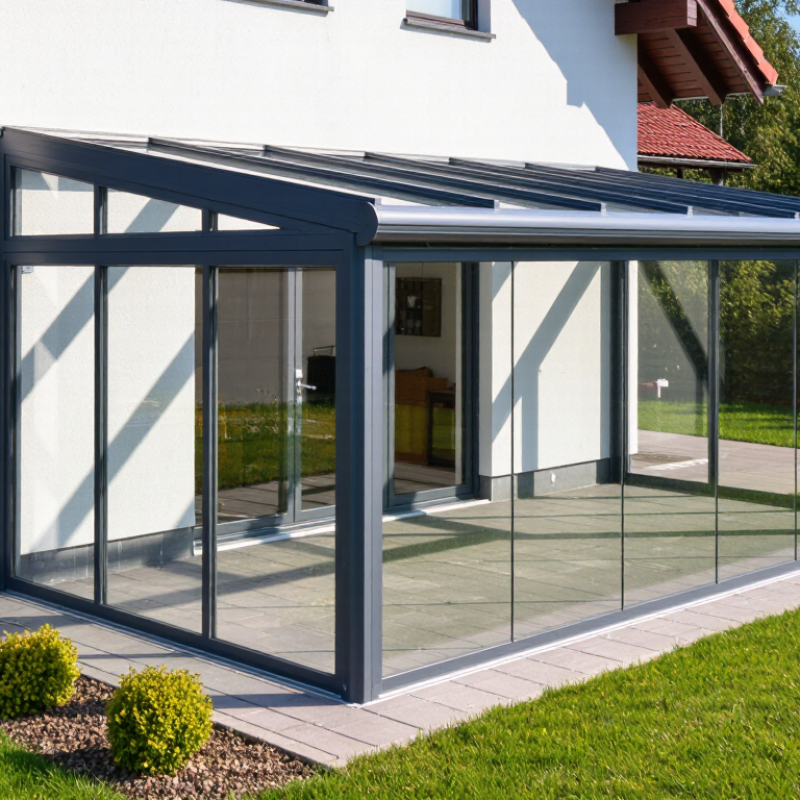
An aluminum sunroom is a glazed living space built with aluminum framing, attached to a home or set apart as a garden room. The frame supports glass or other glazing, while seals, roof panels, and drainage details help manage weather. Thermal breaks can reduce heat transfer through the metal. Aluminum is strong and relatively light, but the frame alone does not determine comfort.
Good design starts with the site. A south-facing room may gain winter sun, yet overheat on summer afternoons without shading or ventilation. Consider roof pitch, rainwater paths, opening windows, and how the new room connects to the existing structure. A narrow sill can look neat, but it may leave less room for effective drainage. Details matter. Ask a qualified professional to assess the foundation, glazing, and local building requirements before construction.
Common uses include a breakfast area, reading nook, plant room, or sheltered place for outdoor dining. For plants, check light levels and seasonal temperature changes; bright glass does not suit every species. For year-round use, insulation, solar control, and heating need to work together. A sunroom can feel open and bright, but it is not automatically a comfortable living room. That difference is easy to underestimate.
China’s Aluminum Sunroom Industry and Its Manufacturing Landscape
China’s aluminum sunroom industry draws on a vast domestic materials base, but aluminum output is not the same as sunroom production. The International Aluminium Institute reported approximately 41.5 million tonnes of primary aluminum production in China in 2023. This figure describes upstream supply, not the number or quality of finished enclosures. That distinction is easy to miss.
Manufacturers commonly turn extruded profiles, insulated glazing, and drainage components into made-to-measure structures. Their capabilities can differ in profile design, thermal-break options, coating durability, and installation support. A coastal project may need stronger corrosion protection; a cold-climate installation needs careful attention to condensation and thermal bridging. Factory capacity matters, but so do accurate site measurements and clear assembly drawings. The weakest detail can be a corner joint.
Tips: Ask suppliers for profile cross-sections, glass specifications, and documented water- and air-resistance test results. Check that test conditions match your project. A catalogue alone is not proof. Compare warranty coverage and installation responsibilities in writing, since these details are sometimes overlooked.
China’s Aluminum Industry in Global Context
Estimated primary aluminum production by leading producing countries, 2024 (thousand metric tons)
China’s large primary aluminum output provides important industrial context for its aluminum building-products sector, including sunrooms. This chart shows national aluminum production, not sunroom manufacturing output or company rankings. Source: U.S. Geological Survey, Mineral Commodity Summaries 2025; 2024 estimates.
Criteria for Identifying Leading Aluminum Sunroom Manufacturers
Choosing a leading aluminum sunroom manufacturer takes more than comparing attractive catalog photos. Start with the frame. Ask for the aluminum grade, profile dimensions, and coating specifications, then compare them with the project’s climate and design. Inspect sample corner joints for clean cuts and even seals. Small gaps matter. Ask how the manufacturer prevents water from collecting around tracks and roof connections.
Glass and roofing should suit the room’s exposure, not just its appearance. Request written details on glazing options, drainage design, and tested wind or water performance where available. Ask whether drawings include ventilation, flashing, and connections to the existing house. A credible manufacturer should explain these choices in plain language and provide project references or installation records. Check that the warranty clearly separates product coverage from installation coverage.
Experience is useful when it is visible in the details: accurate measurements, documented quality checks, and responsive technical support. If possible, inspect a completed installation and look at its seals after rain. One limitation: a polished showroom cannot prove long-term performance, and a checklist cannot replace an independent site assessment. Manufacturer comparisons are rarely perfectly even, so record unanswered questions before making a decision.
Profiles of Ten Notable Aluminum Sunroom Manufacturers in China
China’s ten notable aluminum sunroom manufacturers are best compared through their engineering and production capabilities, not showroom photos alone. The profiles should examine custom sizing, thermal-break frames, glazing options, drainage design, and installation support. Some companies focus on large-scale fabrication; others handle complex roof shapes or small residential projects. Details matter. China’s National Bureau of Statistics reported 41.594 million tonnes of primary aluminum output in 2023. This indicates a substantial materials base, but it does not prove that any individual supplier delivers consistent quality.
A useful profile also asks how manufacturers test air and water resistance, document alloy specifications, and manage fabrication tolerances. These questions matter because a sunroom combines exposed joints, glass, and aluminum framing. The International Energy Agency’s Buildings report notes that buildings account for about 30% of global final energy use. That figure is not specific to sunrooms, but it underlines why shading, glazing, and thermal performance deserve attention. One limitation: published company data can be uneven, so buyers should verify claims with test records and project references.
Tips: Request section drawings, glass specifications, and drainage details before comparing quotations. Check how the installer seals roof-to-wall connections. A polished render is not evidence of long-term performance.
Comparing Manufacturers by Products, Capabilities, and Market Focus
A useful comparison of China’s top aluminum sunroom manufacturers starts with product range. Some focus on modular rooms for standard patios, while others offer custom spans, sliding glass walls, or insulated roof systems. Check frame depth, glass options, drainage design, and available finishes. These details affect comfort, upkeep, and installation time. A polished catalog alone proves little.
Manufacturing capability matters just as much. Ask whether the supplier handles design drawings, profile cutting, surface treatment, and quality checks in-house. Request sample specifications and photos of completed projects with similar dimensions. Market focus also varies: some manufacturers mainly serve domestic projects, while others are experienced with export packaging and remote technical coordination. Confirm lead times and what installation guidance is included. A low quote may leave important work unclear.
Tips
Compare the same opening size, glass type, roof load assumptions, and finish across quotations. Ask for written tolerances and a packing list. Details matter. One limitation is easy to miss: project photos cannot confirm how well a room performs in your local climate. Use them as references, not as a substitute for technical documents.