7 Tips for Choosing Machine Guarding Doors
Choosing Machine Guarding Doors is not just a matter of closing an opening. The right door must help protect workers while allowing practical access for setup, cleaning, and maintenance. A hinged door may suit a compact cell, while a sliding design can save space near a busy aisle. Small details matter: the handle’s reach, the swing path, and whether a pallet blocks the opening. Miss one, and a well-designed guard can become frustrating to use.
For this guide, fictional machine-safety specialist Daniel Mercer offers an illustrative reminder: “A guard works best when protection and daily access are designed together.” The quote is written for this introduction, not presented as a sourced statement. That distinction matters. Good equipment choices should rest on verified specifications, site conditions, and qualified safety advice—not a catchy line alone.
The seven tips ahead consider door style, materials, visibility, interlocking, ease of access, maintenance, and fit with the machine’s layout. Check how operators actually approach the equipment. Watch where cables run and where chips or dust collect. Confirm that the selected door suits the machine’s hazards and the facility’s procedures. There is no perfect choice for every line. Sometimes, the first design looks right on paper but creates an awkward reach in the real work area. That is worth rethinking before installation. A careful review can help teams choose Machine Guarding Doors that are practical, durable, and appropriate for their application.
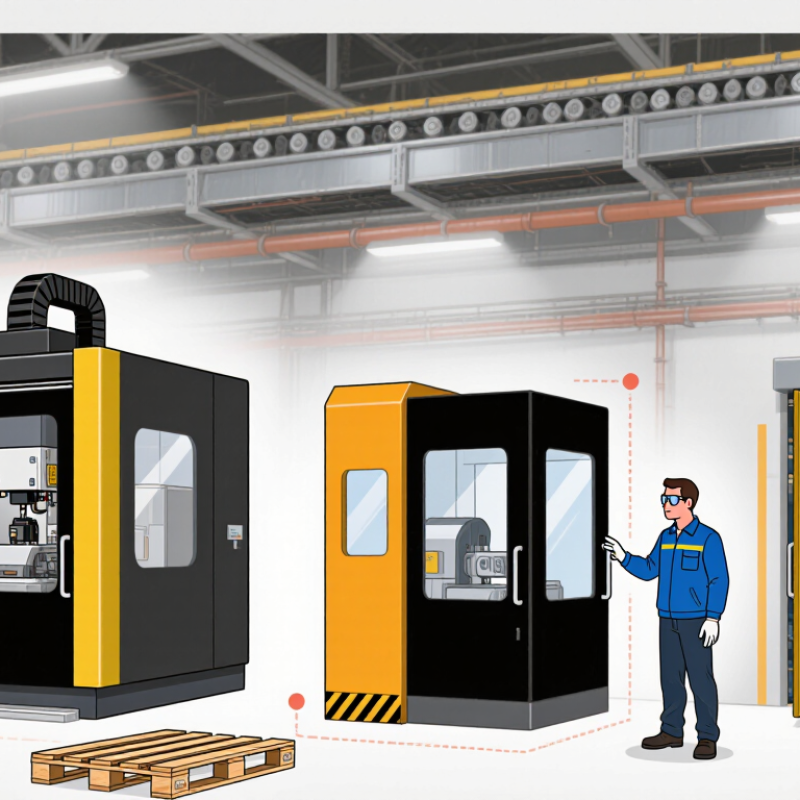
Identify Machine Hazards and Applicable OSHA Guarding Rules (29 CFR 1910.212)
Before selecting a machine guarding door, identify each hazard at the point of operation, drive components, and material feed. OSHA’s machine-guarding rule, 29 CFR 1910.212, requires guarding against hazards such as ingoing nip points, rotating parts, and flying chips. The guard must prevent access to danger zones and avoid creating a hazard itself. The Bureau of Labor Statistics reported 738 fatal work injuries in the broad “contact with objects and equipment” category in 2022; this figure is not limited to machinery. It is a useful reminder to assess exposure, not just equipment appearance.
Tip 1: Observe the machine during setup, operation, cleaning, and jam removal. Tip 2: Mark every reach-in point. Tip 3: Check whether a sliding or hinged door blocks access when closed. Tip 4: Evaluate the door’s interlock and stopping response. Tip 5: Look for gaps that fingers or tools could enter. Tip 6: Confirm the door withstands foreseeable impact and vibration. Tip 7: Include operators and maintenance staff in the review.
Record the hazard, the chosen guard, and how access is controlled. Verify the setup against the machine’s actual cycle and OSHA requirements; a drawing alone cannot show every reach path. A tidy risk map can still miss a hand reaching around an open door during a brief adjustment. Recheck after equipment changes. Sources: OSHA 29 CFR 1910.212; BLS, Census of Fatal Occupational Injuries, 2022.
Compare Door Designs Against ISO 14120:2015 Guard Requirements
Compare each door as part of the machine guard, not as a stand-alone product. ISO 14120:2015 sets general design and construction requirements for fixed and movable guards. Check that the door resists expected impact, stays securely attached, and leaves no hazardous access through gaps. Measure openings at the actual installation point; a drawing can miss a reach-through path. A neat-looking door can still be the wrong choice.
The standard does not replace a machine-specific risk assessment. Where a movable door needs an interlocking device, assess its selection and design against ISO 14119 as well. OSHA’s FY 2023 Top 10 Most Frequently Cited Standards report recorded 1,644 citations under its machine-guarding standard. That figure is not a measure of injuries, but it shows guarding remains a recurring inspection concern.
Tips: Compare mesh or panel openings with reachable hazards, inspect hinges and latches for wear, and verify the door cannot be easily bypassed. Test access during maintenance, not only during normal production. Small details matter. Document the checks, then revisit them after equipment changes; this step is easy to overlook.
7 Tips for Choosing Machine Guarding Doors
Compare Door Designs Against ISO 14120:2015 Guard Requirements
Illustrative layout example: The chart assumes a 1,000 mm-wide hinged or sliding panel and a 2,000 mm-high vertically translating panel. The values show approximate space needed for the panel’s movement, not ISO limits or compliance scores. ISO 14120:2015 gives general requirements for fixed and movable guards; assess each door for safe access, strength, secure fixings, and potential crushing or shearing hazards. Check applicable interlocking requirements separately.
Check Opening Sizes and Safety Distances Using ISO 13857
7 Tips for Choosing Machine Guarding Doors
Check opening sizes and safety distances using ISO 13857
Tip: Measure the clear opening, not just the door frame. For mesh, slots, and irregular gaps, record the narrowest accessible dimension. ISO 13857 relates opening size and reach direction to the distance needed between an opening and a hazard. The required distance varies with the opening’s shape and dimensions. Small gaps matter.
Measure from the accessible edge of the opening to the nearest hazard point. Check whether a hand, arm, or other body part could reach through or around the door. Use the relevant ISO 13857 tables for the opening type; do not estimate from a familiar example. Measure twice. One easy-to-miss detail is a moving component that enters the reachable area only during part of a cycle.
Tip: Treat the calculated distance as one design check, not a complete safety assessment. Consider the machine’s movement, stopping behavior, and how the door is used during normal work and maintenance. A drawing can make a gap look harmless, while the installed door reveals a different reach path. Verify measurements on the finished guard, and reassess them after changes to the door, opening, or machine layout.
Choose Interlocks in Line with ISO 14119:2024
Machine guarding doors must prevent access to hazardous movement without creating new risks. Choose interlocking devices in line with ISO 14119:2024, which addresses their design and selection alongside guards. Start with the risk assessment: consider how quickly a person could reach a danger point, whether machinery stops promptly, and how often the door opens. A door beside a fast-moving spindle needs different protection from an access panel opened only for occasional inspection. Small details matter.
Tip: Decide whether interlocking alone is sufficient or guard locking is needed. If hazardous motion continues after the door opens, guard locking can keep the door closed until the risk has passed. Base the choice on measured stopping time and access time, not a guess. Do not guess. Also consider foreseeable attempts to defeat the device; placement, mounting, and suitable coding can help reduce that risk. Avoid awkward layouts that invite workarounds.
Tip: Check the whole installation, not just the switch. Door sag, vibration, cleaning fluids, and repeated impacts can affect alignment and operation. Make sure the actuator cannot be easily damaged or displaced, and confirm that the control system responds as intended. Test the door under realistic operating conditions, including maintenance access. It is tempting to treat a compliant component as a complete solution; it is not. Document the selection rationale, verify the applicable standard edition, and reassess after changes to the machine or guard.
Plan Safe Access and Servicing Under OSHA Lockout/Tagout (29 CFR 1910.147)
7 Tips for Choosing Machine Guarding Doors
A guarding door should make routine service safer, not merely easier to reach. Under OSHA’s Control of Hazardous Energy standard, 29 CFR 1910.147, employers must establish energy-control procedures for applicable servicing and maintenance. A door interlock alone does not replace lockout/tagout. Plan for workers to isolate energy, apply personal locks, and verify zero energy before entering a danger zone.
OSHA estimates that proper lockout/tagout practices prevent about 120 fatalities and 50,000 injuries each year. Those figures show why access planning matters.
Check whether the door opens fully beside the machine, whether a technician can reach isolation points without leaning past moving parts, and whether locks can be applied without obstruction. Keep the path clear. A narrow opening can turn a simple adjustment into awkward work.
Consider visibility, hinge direction, and how the door behaves during a power loss. A clear panel may help an operator spot a jam, but it is not a substitute for safe isolation during servicing. Document the energy sources, including pneumatic and stored mechanical energy, and test the procedure with the people who perform the work. On paper, the layout may look fine. On the floor, a hose or tool cart can block access; that detail is easy to miss, and worth checking again.