



What Is Sodium Sulfite Powder Used For?
Sodium Sulfite Powder is a white, water-soluble inorganic compound used in several commercial and technical settings. Its reducing properties help explain many of its applications. In some food-processing contexts, sulfites can limit oxidation or discoloration, subject to applicable standards and product labeling requirements. Manufacturers also use sodium sulfite in certain paper and textile processes, where it can support bleaching or other chemical treatments. In water treatment, it may help remove residual oxidizing agents. Uses vary by grade and process. That detail matters.
This article explains what Sodium Sulfite Powder is used for and why the same substance can serve different industries. A practical overview should also distinguish laboratory, industrial, and food-grade material; they are not automatically interchangeable. Packaging, purity specifications, and intended use all deserve attention. The powder may look simple, but appearance does not confirm its composition or suitability. Check the supplier’s technical documentation. Follow the relevant handling guidance, and avoid creating dust during transfer. Small particles can become airborne.
Sulfites can cause reactions in some sensitive people, so food-related uses call for particular care and accurate disclosure. Requirements differ by location and application. There is no single use that fits every product. Even a familiar application deserves a closer look at its process conditions and quality controls. The sections ahead cover common uses, practical selection factors, and basic safety considerations without treating one grade as suitable for everything.
Chemical Composition and Properties of Sodium Sulfite Powder
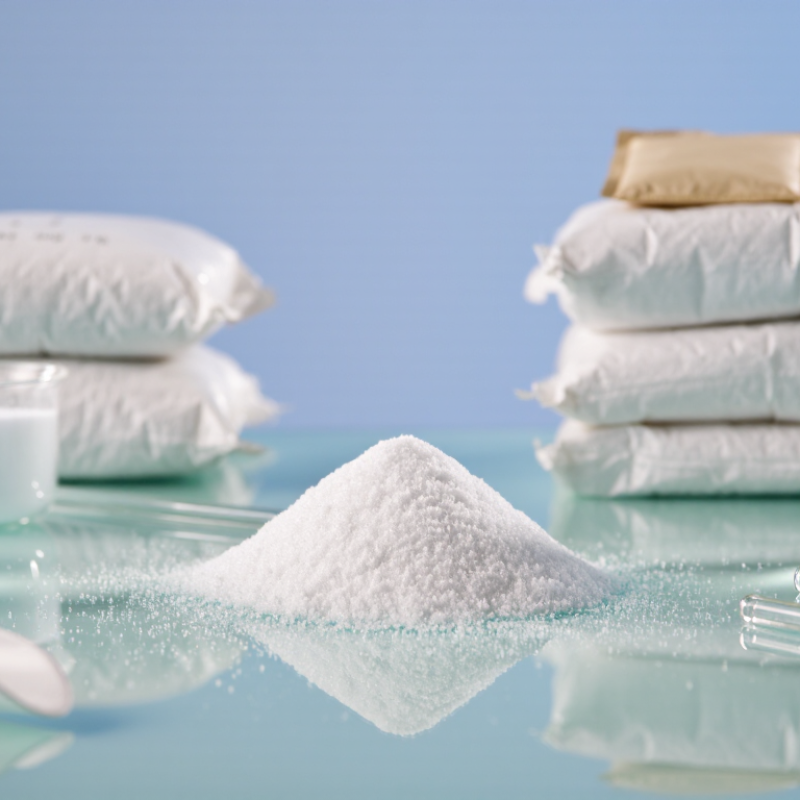
Sodium sulfite powder is an inorganic salt with the formula Na₂SO₃. Its anhydrous form has a molar mass of 126.04 grams per mole, as recorded by PubChem. Commercial powder may contain moisture or hydrated crystals, so its exact behavior can vary slightly between grades. It is usually white and crystalline.
The International Chemical Safety Card for sodium sulfite reports a density of about 2.63 grams per cubic centimeter and water solubility near 23 grams per 100 milliliters at 20°C. In practice, the powder dissolves more readily with stirring; a clear solution forms in a clean glass beaker. Its sulfite ions act as reducing agents and react with oxygen, forming sulfate. This chemistry supports its use as an oxygen scavenger in water-treatment and boiler systems.
Small details matter. Storage moisture can cause caking, while air exposure may gradually change the chemical composition at the powder’s surface. That makes appearance alone an unreliable purity check. PubChem and the safety card describe key identity and handling data, but users should consult the specification for their particular grade before preparing solutions.

How Sodium Sulfite Works as a Reducing Agent
Sodium sulfite powder is used in some water-treatment, paper, and textile processes. Its key role comes from its behavior as a reducing agent. In water, sulfite ions can donate electrons and become sulfate ions. This reaction can consume dissolved oxygen or reduce certain oxidizing substances, including residual chlorine. The exact result depends on concentration, pH, temperature, and contact time. Small details matter.
Tips: Follow the process instructions and use suitable gloves and eye protection. Avoid breathing the dust, and keep the powder dry in a closed container. For water treatment, verify the result with an appropriate test rather than judging by appearance.
The chemistry sounds tidy; real mixtures are less tidy. Other substances in a solution may also react with sulfite, so a dose that works in one setting may not work in another. In controlled industrial applications, operators measure and adjust the amount to limit excess sulfite. This helps protect downstream processes and product quality. Sodium sulfite is not a universal fixer, and it should not be added to household water or food without clear, suitable guidance.
Uses in Food Processing and Preservation
Sodium sulfite powder is used in food processing mainly to slow oxidation and enzymatic browning. In a cut potato or peeled fruit, browning can begin quickly after exposure to air. Dissolved sulfite helps limit those color changes and can protect flavor during processing and storage. It also serves as a preservative in selected foods, including some dried fruit and processed potato products. The exact role depends on the food, the recipe, and the processing conditions. Small amounts matter.
In water, sodium sulfite forms sulfite species that react with oxygen and oxidation products. This chemistry is useful, but it is not a substitute for careful temperature control, clean equipment, or suitable packaging. FDA rules require sulfites to be declared when they are present in food at 10 parts per million or more. That detail matters for people sensitive to sulfites.
Safety assessments deserve a measured reading. EFSA’s 2016 assessment set a temporary group acceptable daily intake of 0.7 milligrams per kilogram of body weight per day, expressed as sulfur dioxide. Its 2022 re-evaluation later concluded that the available data did not support establishing an acceptable daily intake. That uncertainty is worth acknowledging. Food processors should follow current local requirements and use validated formulations, rather than treating sulfite powder as a universal preservation fix.
Applications in Pulp, Paper, Textiles, and Photography
Sodium sulfite powder is a water-soluble reducing agent used in several paper-making processes. In neutral sulfite semi-chemical pulping, it helps soften wood chips so fibers can be separated with less mechanical force. The resulting pulp can suit products such as corrugated board. In other mill operations, sulfite may help remove residual oxidizing chemicals from process water. Exact use depends on the pulp recipe and equipment.
Textile processors use sodium sulfite in selected dyeing and finishing steps. It can help reduce certain dyes into a soluble form, allowing color to enter fibers before oxidation fixes the shade. It may also neutralize leftover chlorine after bleaching. Small changes matter. Fiber type, bath temperature, and dosage can affect the result, so operators check the process rather than relying on a fixed amount.
In traditional photographic developers, sodium sulfite acts as a preservative. It slows oxidation of developing agents when they contact air, helping the solution remain usable for a measured period. It can also influence image grain and tonal appearance. The effect depends on the full formula, not sulfite alone. One practical caution: contact with acids can release sulfur dioxide, so storage, ventilation, and protective equipment deserve attention.
What Is Sodium Sulfite Powder Used For? - Applications in Pulp, Paper, Textiles, and Photography
| Industry | Application | What It Does | Practical Notes |
|---|---|---|---|
| Pulp | Neutral sulfite semichemical pulping | Provides sulfite in a cooking liquor that partially softens and separates wood fibers, making them easier to refine mechanically. | Used with other process chemicals, commonly in production of pulps for corrugating and other paper grades. Conditions depend on the wood and process. |
| Paper | Oxygen removal in selected process-water systems | Can react with dissolved oxygen, helping limit oxidation in certain process or treatment applications. | Use depends on mill chemistry and process design; it is not a universal additive for paper stock or finished paper. |
| Textiles | Removal of residual chlorine after bleaching | Acts as a reducing agent that can neutralize residual chlorine on textile materials. | The amount and treatment conditions must be controlled to avoid unnecessary chemical use and to suit the fiber and bleaching process. |
| Textiles | Auxiliary in selected dyeing or printing processes | May serve as a reducing or oxygen-scavenging auxiliary in specific formulations. | Its role is process-specific; stronger reducing agents are commonly chosen where substantial reduction is required. |
| Photography | Photographic developer formulations | Functions primarily as a preservative by helping protect developing agents from oxidation by air. | It supports developer stability but is not itself the image-forming developing agent. |
| Across applications | Chemical handling and process control | Sodium sulfite (Na2SO3) is a water-soluble reducing agent that can react with oxygen and other oxidizing substances. | Follow the product safety data sheet and process specifications. Avoid contact with acids, which can release sulfur dioxide gas. |
Water Treatment, Storage, and Safe Handling Uses
Sodium sulfite powder is used in water treatment to remove residual chlorine and reduce dissolved oxygen in some systems. Removing chlorine can protect sensitive downstream processes, while oxygen control may help limit corrosion in suitable water circuits. The correct dose depends on water quality and system design. Measure and test; do not guess. Too much sulfite can affect water chemistry and create extra treatment needs.
Tips: Store the powder tightly sealed in a cool, dry place. Keep it away from moisture and incompatible chemicals, especially acids. Use the product’s safety data sheet and site procedures for handling and dosing. A scoop that looks clean may still hold residue.
Avoid raising dust when opening or transferring the container. Wear suitable gloves and eye protection, and use ventilation appropriate to the task. If powder gets on skin or in eyes, follow the product’s first-aid instructions and seek help when needed. Sodium sulfite can release irritating sulfur dioxide if it contacts acids. Routine handling can feel simple, but small lapses matter; check labels and equipment before each use.
Article Source:

Whether your solution requires a single pumping application or an expansive engineered system,
CheckPoint is committed to becoming your partner in excellence.


