


Top Range Exhaust Hood Types for Every Kitchen?

A Range Exhaust Hood is more than a polished panel above the stove. It can help move cooking fumes, moisture, and odors out of the room—but performance depends on its design, placement, and use. Lawrence Berkeley National Laboratory’s field research on installed cooking exhaust devices found that real-world performance varies across kitchens and hood configurations. That matters when comparing under-cabinet, wall-mounted, island, insert, and downdraft models. A powerful-looking unit is not automatically the right fit.

Brett Singer, a research scientist at Lawrence Berkeley National Laboratory, has emphasized this practical guidance: “The best way to reduce exposure to cooking pollutants is to use a range hood that vents outdoors and is used whenever you cook.” For shoppers, that means checking whether a model is ducted or recirculating, then considering cooktop width, mounting height, and everyday noise. The Home Ventilating Institute’s certified product data provides rated airflow and sound information, useful details beyond marketing claims. Still, ratings do not tell the whole story. Installation and user habits matter, too. A hood that is too loud may stay switched off; an island hood may need careful sizing to capture rising cooking plumes. No single type suits every kitchen. This guide compares the leading options, their strengths, and the trade-offs worth weighing before you buy.
Top Range Exhaust Hood Types for Every Kitchen?

How Range Hoods Capture and Remove Cooking Pollutants

Cooking releases fine particles, grease, and odors. Gas burners can also produce nitrogen dioxide and other combustion pollutants. A range hood helps by capturing the rising plume near the cooktop and exhausting it outdoors. It is not simply a fan. The canopy must catch the plume before room currents carry it across the kitchen. That detail matters.

A Lawrence Berkeley National Laboratory study by Singer and colleagues (2012) tested 15 installed residential cooking exhaust devices. Measured pollutant capture efficiencies ranged from 15% to 98%. Capture efficiency describes how much of a pollutant the hood captures—not just how much air the fan moves. A wide, well-positioned canopy and adequate airflow can improve capture. Using rear burners may help, too. But noisy fans are often left off.

A ducted hood removes captured air from the home; a recirculating hood sends air back through filters. Those filters can trap grease, but their effectiveness depends on filter type and upkeep. Keep metal grease filters clean, and run the hood while cooking. Leaving it on briefly afterward can clear lingering pollutants. The practical weak point is simple: maintenance is easy to postpone.
Ducted and Ductless Hood Systems: Key Differences

Top Range Exhaust Hood Types for Every Kitchen?

Ducted and Ductless Hood Systems: Key Differences

A ducted hood carries cooking fumes outdoors through a vent. It can remove heat, moisture, smoke, and odors from the kitchen, making it a strong choice for frequent frying or searing. But it needs a suitable route through a wall or ceiling. Long, twisting duct runs can reduce airflow, so placement matters. A quiet fan cannot fix a poorly planned vent.

A ductless hood pulls air through filters, then returns it to the room. Its grease filter catches particles, while a carbon filter helps reduce odors. It is easier to install where exterior venting is impractical. However, it does not send heat or moisture outside, and filters need regular cleaning or replacement. That upkeep is easy to underestimate. Still, ductless can be a sensible fit for light cooking or a rental kitchen.

Tips: Check the hood’s airflow guidance and your cooktop’s width before buying. For ducted systems, keep the duct path short and direct when possible. For ductless models, confirm replacement filters are available and note their service schedule. No system is maintenance-free.

Common Range Hood Styles and Their Kitchen Uses

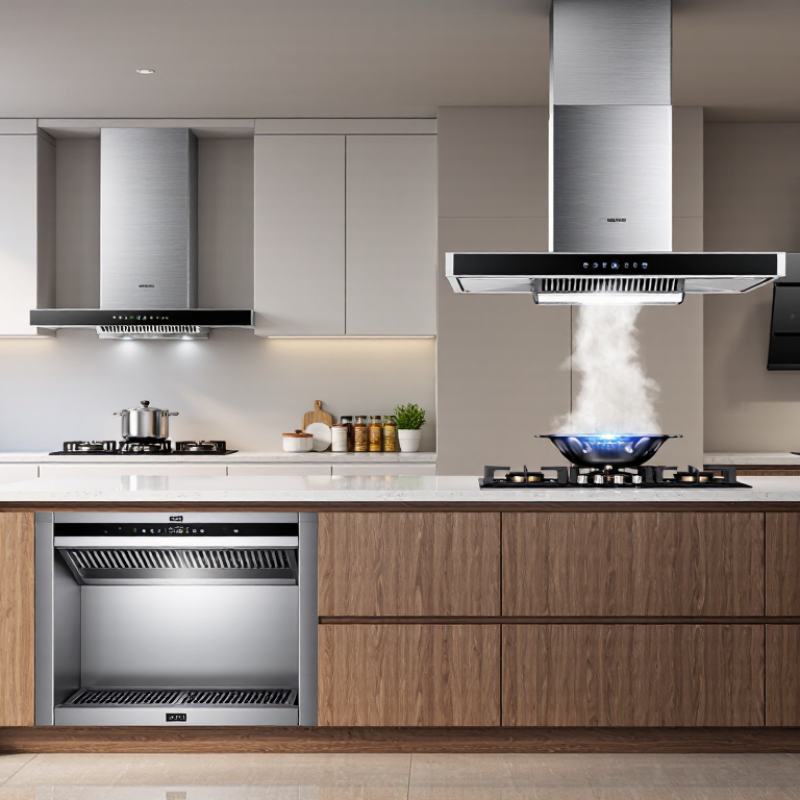
Range hood style should match the cooktop’s location, cabinet layout, and cooking habits. Under-cabinet hoods suit compact kitchens, where upper cabinets leave little room for a chimney. Wall-mounted chimney hoods work above freestanding ranges and often provide a wider capture area. They can become a visual focal point, but need clear wall space.

Island hoods hang above a cooktop with no wall behind it. Their open-sided position makes adequate capture area and installation height especially important. Downdraft systems draw air beside or behind the cooking surface, preserving sightlines; however, their low intake may be less effective with tall pots. An insert fits inside a custom hood enclosure, offering a built-in look when cabinetry is planned around it. Details matter.

A Lawrence Berkeley National Laboratory study by Singer and colleagues found capture efficiency across tested residential exhaust hoods ranged from 15% to 98%. The wide spread shows that style alone does not guarantee performance. Hood shape, airflow, burner position, and installation all affect how much cooking pollution is captured. For a busy range, choose a hood that covers the active burners and exhausts outdoors when feasible. Check the manufacturer’s airflow and sound data, too. A powerful hood can be noisy, and people may use it less. That trade-off deserves a second look.

Choosing Hood Size, Airflow, and Noise Level

A range hood should cover the cooking surface, not just look proportional above it. Choose one at least as wide as the range; a little extra width can catch smoke from front burners. Check the required mounting height, too. A hood mounted too high may let steam drift into the room, while one mounted too low can obstruct cooking.

Airflow ratings matter, but a larger number does not guarantee better performance. Duct length, diameter, and bends can restrict airflow, so review the hood’s installation requirements before buying. Frequent high-heat cooking may call for more capacity than light, occasional use. Still, estimates can miss real kitchen habits; a pot of pasta and a smoky skillet create very different demands.

Noise deserves equal attention. Compare sound ratings at the speeds you will actually use, since the quiet setting may not clear heavy cooking fumes. If possible, listen to a hood running in a showroom. Check duct and fan placement as well: vibration can make a suitable hood sound harsher than expected. Details matter. A qualified installer can assess duct routing and any need for replacement air, based on the home and local requirements.

Choosing a Range Hood: Recommended Width by Type

Example minimum hood widths for a 30-inch cooktop, based on common sizing guidance.

Wall-mounted, under-cabinet, and insert hoods are commonly sized at least as wide as the cooking surface. Island hoods are often recommended to be wider because they lack a wall to help capture rising smoke. These are general guidelines, not universal requirements. Check the hood’s installation instructions, airflow rating (CFM), and noise rating (sones); performance and sound vary with the model, ductwork, and installation.

Installation, Ventilation, and Maintenance Essentials

A range hood works best when its size suits the cooktop and the duct route is planned before installation. Check the installation manual for the required mounting height and clearances; even a few centimeters can affect capture and safe use. A short, straight duct usually moves air more effectively than a long route with several bends. Small details matter.

For ducted models, vent air outdoors through a properly sized, smooth duct, not into an attic or wall cavity. Keep the outlet clear, and ask a qualified installer to check the electrical connection and whether the home needs additional replacement air. A recirculating hood is useful where outside venting is impractical, but it filters and returns air rather than removing moisture. Not the same.

After cooking, let the fan run briefly to clear lingering steam and odors. Wash metal grease filters regularly, following the maker’s instructions; a greasy filter can restrict airflow and become a fire concern. Replace charcoal filters at the recommended interval, since washing usually will not restore them. I still find filter schedules easy to forget, so a calendar reminder helps. Wipe the hood’s exterior with a suitable, non-abrasive cleaner, and check that lights and controls work as expected.

Whether your solution requires a single pumping application or an expansive engineered system,
CheckPoint is committed to becoming your partner in excellence.