



Why Are Agricultural Bearings Important for Farm Equipment?
Farm equipment works in conditions that are hard on moving parts. Dust hangs in the air. Mud reaches seals. Water and fertilizer residue can add corrosion risks. Beneath a tractor, combine, or baler, an Agricultural Bearing helps support rotating shafts and manage the loads created during work. When it runs smoothly, wheels, rollers, and drives can keep turning with less friction and heat.
The small part matters. A bearing exposed to grit may wear faster, while poor lubrication can damage its rolling surfaces. The result may be vibration, noise, excess heat, or an unexpected stop during a tight harvest window. Choosing the right bearing means checking load, speed, shaft fit, sealing, lubrication, and the machine maker’s specifications. No single design suits every task. Even a strong bearing can fail early if installation or maintenance is poor.
A useful guiding line is: “Protect the rolling contact, and the machine is better prepared for the field.” This is an original summary, not a quotation from a named specialist. No verifiable expert quotation or source was provided, so attributing those words to an industry professional would be misleading. That limitation matters. Bearing selection should be checked against equipment documentation and real operating conditions, not just a product label. A little inspection can help; it cannot guarantee a season without breakdowns.
What Agricultural Bearings Are and Where They Are Used
Agricultural bearings support rotating shafts and help control friction and movement under load. Inside a typical bearing, rolling elements sit between inner and outer rings. The exact design depends on the load, speed, and working environment. Some bearings mainly handle force pushing sideways; others also manage force along the shaft. That sounds simple. In a field, dust, mud, water, and vibration complicate the job.
You can find bearings in wheel hubs, gearboxes, pump shafts, and power take-off assemblies. Mower decks use them at spindle points, while balers and harvesters rely on bearings in rollers, conveyors, and other rotating parts. Planters may use them in gauge wheels and disc assemblies. The location matters: a hub bearing faces road shock, while a mower spindle may encounter crop debris and repeated impacts. Seals and suitable lubrication help limit contamination, but they cannot make a bearing immune to poor conditions. It is easy to blame the bearing alone; that can be misleading. Misalignment, worn seals, or incorrect installation may also contribute to heat, noise, or play. The equipment manual is the reliable reference for the correct bearing type and service checks.

How Bearings Support Movement and Carry Loads
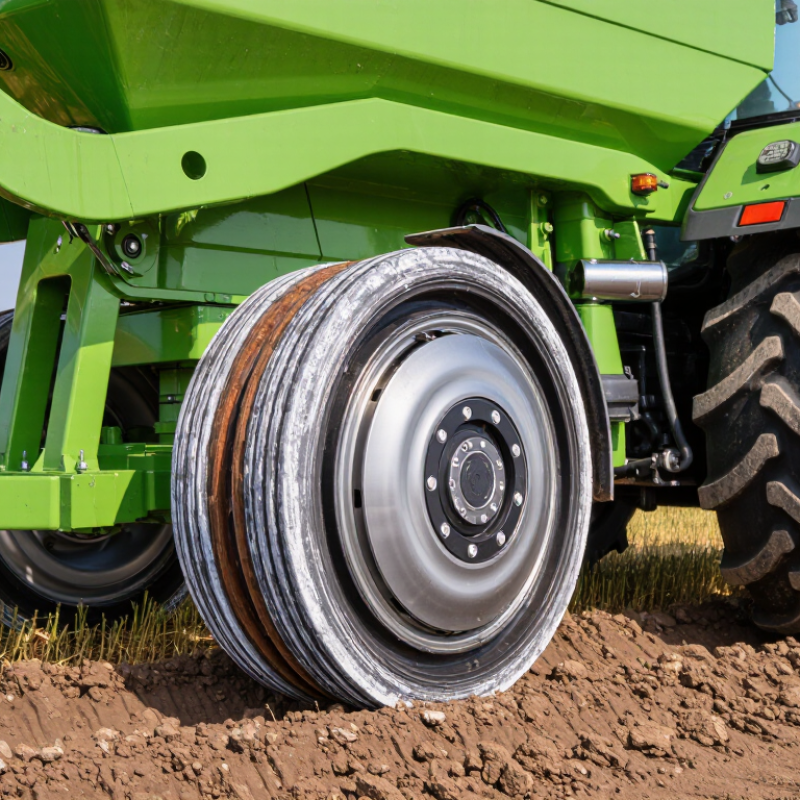
Agricultural bearings let shafts, wheels, rollers, and other parts move while carrying weight. In a tractor wheel, for example, bearings support the machine’s load as the wheel turns across uneven ground. They reduce friction between moving surfaces, helping parts rotate smoothly instead of grinding against each other. The load is not always steady. A rut, heavy implement, or sudden turn can increase pressure on a bearing. Even a small amount of wear can cause heat, noise, or excess movement. These signs are easy to overlook during a busy day.
Tips: Check for unusual rumbling, vibration, or heat after equipment has been working. Look for damaged seals and grease that appears dirty or dry. Follow the equipment maker’s service intervals; guesswork is not a maintenance plan.
Correct bearing fit and lubrication help equipment handle both movement and load. Too little lubricant can speed wear, while contamination from dust or moisture can damage rolling surfaces. A bearing that is too loose may let a shaft shift; one fitted too tightly can generate excess heat. When replacing a bearing, inspect the housing and shaft as well. A new part cannot correct a worn seat. There is some judgment involved: field conditions vary, and an inspection may reveal problems that a calendar-based schedule misses. Keep notes on recurring noise or temperature changes, especially after long days in wet or dusty fields.
Types of Bearings Found in Farm Equipment
Farm equipment uses different bearing types because each position faces a distinct mix of load, speed, and contamination. Deep-groove ball bearings suit electric motors, fans, and other fast-rotating parts with moderate loads. Tapered roller bearings handle combined radial and axial forces, often found in wheel hubs. Spherical roller bearings can accommodate heavy loads and slight shaft misalignment in tillage and harvesting machinery. Needle bearings fit narrow spaces, such as pivots and linkages. Mounted insert bearings are common on shafts exposed to dust and frequent washdown. Dust gets everywhere.
Selection depends on the job, not just the machine. ISO 281:2007 defines basic bearing rating life as the life reached by 90% of a sufficiently large group under stated operating conditions. Its calculation uses a load exponent of 3 for ball bearings and 10/3 for roller bearings. Those figures help compare designs, but they are not a field-life promise. Mud, shock loads, poor lubrication, and misalignment can shorten service life sharply. A bearing chart cannot capture every rough harvest day; checking seals, grease condition, and shaft play remains essential.
| Bearing type | Common farm equipment applications | Typical load capability | Why it is useful in agricultural work | Key selection consideration |
|---|---|---|---|---|
| Deep-groove ball bearing | Electric motors, fans, pumps, and light-duty shafts | Primarily radial loads; can accommodate limited axial loads in either direction | Supports high-speed rotation with relatively low friction in compact assemblies | Check speed, fit, sealing, and exposure to dust or moisture |
| Tapered roller bearing | Wheel hubs, trailer axles, and some gearbox or driveline assemblies | Combined radial and axial loads; axial capacity depends on arrangement and adjustment | Its tapered rolling elements help carry substantial loads in applications with thrust forces | Correct preload or endplay, lubrication, and installation are important |
| Spherical roller bearing | Heavy-duty gearboxes, threshing or conveying equipment, and shafts subject to deflection | High radial loads and moderate axial loads, depending on design | Can accommodate limited misalignment while supporting heavy loads | Confirm allowable misalignment, lubrication method, and operating temperature |
| Cylindrical roller bearing | Gearboxes, transmissions, and other high-load rotating shafts | High radial loads; axial capacity varies by bearing design | Provides high radial load capacity and stiffness in suitable shaft arrangements | Account for shaft alignment, axial movement, and lubrication requirements |
| Needle roller bearing | Compact gearboxes, pivots, linkages, and other space-limited mechanisms | High radial loads for a small cross-section; generally limited axial capacity | Its slender rollers can support radial loads where installation space is restricted | Check shaft and housing hardness, alignment, and lubrication access |
| Mounted insert bearing unit | Conveyors, augers, elevators, and implement shafts | Primarily radial loads; capacity depends on the insert and housing design | Combines a bearing insert and housing to simplify mounting and replacement | Choose suitable shaft locking, housing attachment, seals, and relubrication provisions |
| Plain bearing or bushing | Hinges, pivot points, suspension joints, and slow-moving linkages | Loads are carried across sliding surfaces; capacity depends on material, area, speed, and lubrication | A simple, compact option for oscillating or low-speed motion | Consider wear, contamination, lubrication, and whether the bushing material suits the environment |
Bearing choice depends on the equipment design, load, speed, alignment, and operating environment. Dust, water, crop residue, vibration, and inadequate lubrication can shorten bearing life, so sealing and maintenance requirements should be considered alongside load capacity.
How Field Conditions Affect Bearing Performance
Why Are Agricultural Bearings Important for Farm Equipment?
How Field Conditions Affect Bearing Performance
A bearing may look small, but it carries changing loads through dust, mud, vibration, and long workdays. Field conditions matter. Fine soil can pass worn seals, mix with grease, and abrade rolling surfaces. Water can dilute lubricant or encourage corrosion, while uneven ground sends impact loads through hubs and drivetrains. USDA’s 2022 Census of Agriculture counted about 880 million acres of farmland in the United States. That scale reflects varied working environments, though the census does not measure bearing failures. ISO 281:2007 calculates basic bearing rating life using factors such as load and speed; it does not account for every real-world contaminant or shock.
Tips: Check seals and grease after muddy or dusty shifts. Look for milky lubricant, grit, heat, or rough rotation. Match lubricant and relubrication intervals to the machine manual and operating conditions. Small signs matter. A bearing that feels only slightly rough may still need inspection. In practice, operators can miss early damage when equipment is busy. That assumption deserves a second look: contamination often begins before obvious noise or excess heat appears. Keep inspection notes by machine and season, then compare changes over time.
Why Agricultural Bearings Matter: Field Conditions and Performance
Agricultural bearings support rotating parts under changing loads and harsh field conditions. Moisture, abrasive dirt, impact loads, and temperature variation can all increase wear or corrosion risk. The scores below are a qualitative comparison, not measured field-test results; actual severity depends on equipment, sealing, lubrication, and operating conditions.
Factors That Guide Bearing Selection and Service Life
Agricultural bearings must match the work, not just the machine’s nameplate. A planter moving steadily through dry soil has different demands from a harvester facing vibration, crop residue, and sudden impacts. Estimate radial and axial loads, operating speed, shaft alignment, and likely temperature changes. Dust gets everywhere. A bearing that handles the load but cannot keep contaminants out may fail early. Seals, clearances, and housing fit matter as much as the bearing’s load rating.
Service life also depends on conditions after installation. Moisture from rain or washing can displace lubricant, while excessive grease may raise operating temperature. Follow the equipment maker’s lubrication guidance, and check for unusual heat, noise, or play during routine inspections. Proper mounting helps prevent damage before the machine reaches the field. Small details matter. Still, field conditions rarely match a tidy calculation exactly; soil, workload, and maintenance habits vary. Choose a bearing with suitable protection and capacity, then review its performance during the season. A short service note can reveal whether the selection suits the actual duty or needs adjustment.
Article Source:

Whether your solution requires a single pumping application or an expansive engineered system,
CheckPoint is committed to becoming your partner in excellence.


