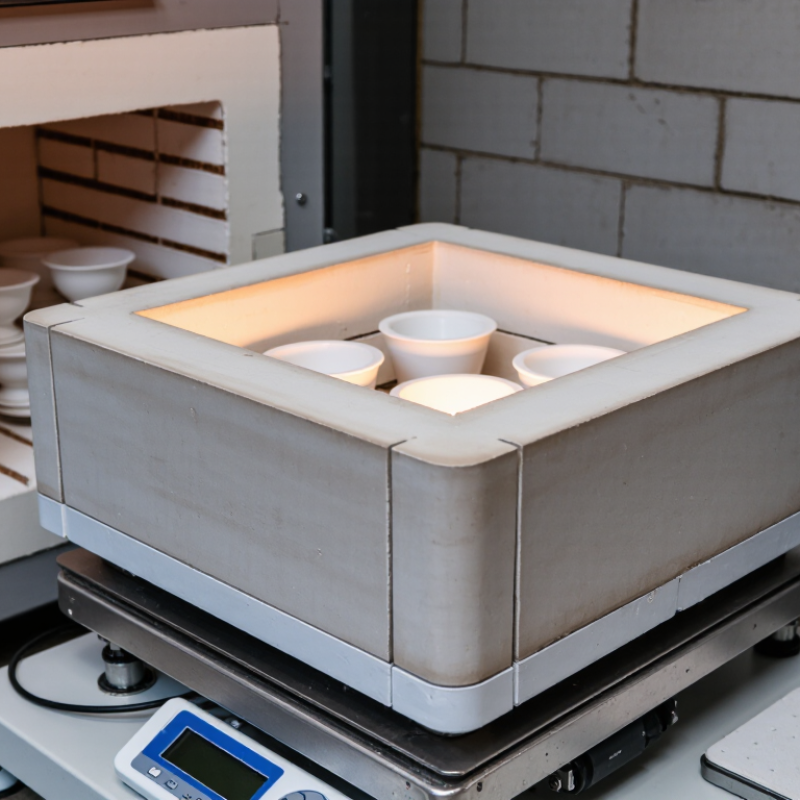
How to Choose the Right Cordierite Saggar?

Choosing the right Cordierite Saggar can determine whether a kiln load survives intact or returns with cracks, warping, and surface contamination. This component is more than a simple container. It supports ceramic pieces, controls their firing environment, and absorbs repeated thermal stress. Small differences matter.

Ceramics engineer Dr. Elena Marquez, a specialist in kiln furniture and refractory materials, says, “A saggar should be selected for the entire firing cycle, not for temperature alone.” Her point is practical. A Cordierite Saggar may tolerate high heat, yet fail when cooling happens too quickly. Thermal shock resistance, wall thickness, porosity, and dimensional stability deserve equal attention. So does the saggar’s internal size. A tight fit can restrict airflow and damage delicate work.

Measure carefully. Check the kiln atmosphere, firing temperature, load weight, and stacking method before ordering. For porcelain, glaze ware, or technical ceramics, surface cleanliness is also important. Residual dust or poorly finished edges may mark the product. A flat base helps prevent rocking. Reinforced corners can reduce handling damage.

No selection rule is perfect. Real kiln behavior often exposes weaknesses that specifications hide. I would test one Cordierite Saggar through several cycles before purchasing a large batch. Record its color, flatness, cracks, and weight changes. This simple trial may reveal more than a sales sheet. The best choice balances performance, lifespan, handling safety, and total operating cost. Not just the lowest price.

How to Choose the Right Cordierite Saggar?

Identify the Firing Process and Saggar Performance Requirements

How to Choose the Right Cordierite Saggar?

Identify the Firing Process and Saggar Performance Requirements

Start with the firing curve, not the product name. Record peak temperature, heating rate, dwell time, cooling rate, atmosphere, and load weight. The European Commission’s Ceramic Manufacturing BREF identifies temperature, residence time, and atmosphere as critical kiln controls. Oxidation firing may suit one body, while reducing gases can alter surface reactions and contamination risks.

Cordierite is valued for low thermal expansion. Refractory data commonly report approximately 2 × 10⁻⁶ K⁻¹ near room temperature, but values vary with composition and porosity. Measure the real cycle. A saggar facing 1,300°C repeatedly needs stronger thermal-shock resistance than a batch fired slowly at 1,100°C. ASTM C1171 provides a useful framework for comparing thermal-shock damage. ASTM C20 can help evaluate apparent porosity, absorption, and bulk density.

Then match performance to the load. Heavy powder compacts need bending strength and stable stacking edges. Fine electronic components need clean surfaces and controlled porosity. Reactive glazes may require a sacrificial liner or greater wall thickness. Inspect corners after every cycle. Cracks tell the truth. Still, visual checks alone are weak; weighing, dimensional checks, and test firing create better evidence. I would not select a saggar from catalogue temperature alone. Actual kiln gradients, repeated handling, and uneven loading often expose weaknesses that laboratory figures miss.

Compare Cordierite Grades, Shapes, Sizes, and Wall Thicknesses

Choosing the right cordierite saggar starts with its grade, not its appearance. Pure cordierite usually offers low thermal expansion and good resistance to repeated heating. Cordierite-mullite grades may provide higher mechanical strength, but their thermal behavior can differ. Check the technical sheet for thermal shock resistance, open porosity, bulk density, and recommended service temperature. Similar-looking saggars can perform very differently.

Shape affects heat flow and loading speed. Rectangular saggars suit flat products and make kiln space easier to organize. Round saggars reduce sharp corners, which can help limit stress during firing. Rounded internal corners are useful when powder or fragile parts must move freely. I once selected a square saggar for convenience, then noticed uneven edge wear. The shape was practical, but not ideal for that loading pattern.

Size should match the product closely. Excessive empty space wastes kiln volume and may create uneven temperature exposure. A saggar that is too small can restrict airflow and cause contact damage. Wall thickness brings another compromise. Thin walls heat faster and reduce weight, while thicker walls resist impact and repeated handling better. However, thick walls store more heat and may slow cooling. Measure the actual wall thickness, because production tolerances are not always perfect. For demanding cycles, compare samples after several firings, checking cracks, warping, glaze deposits, and corner erosion. Supplier test data matters, but your kiln profile matters more. My early trials used one cycle only; that was not enough evidence.

How to Choose the Right Cordierite Saggar?

Compare cordierite grades, shapes, sizes, and wall thicknesses for kiln-firing applications.

Cordierite Grade

Standard cordierite is suitable for routine firing. High-purity and cordierite-mullite grades are preferred for higher temperatures, heavier thermal cycling, or improved load stability.

Shape Selection

Rectangular saggars maximize kiln space, while round or oval designs can reduce corner stress and improve airflow around the load. Use reinforced rims for stacking.

Size and Wall Thickness

Typical wall thickness is about 10–15 mm for footprints near 300 × 300 mm, 15–20 mm near 400 × 400 mm, and 20–30 mm for larger 500–600 mm footprints.

The chart shows typical continuous service-temperature ranges for generic cordierite material grades. Actual performance depends on formulation, porosity, firing atmosphere, thermal-cycle rate, load, and saggar geometry. Always confirm the supplier’s technical data before specifying a production saggar.

Evaluate Thermal Shock Resistance and Chemical Compatibility

How to Choose the Right Cordierite Saggar?

Evaluate Thermal Shock Resistance and Chemical Compatibility

Cordierite saggers are valued for their low thermal expansion. NIST materials data places typical cordierite expansion near 2–4 × 10⁻⁶ K⁻¹. This helps reduce cracking during rapid furnace cycles. However, thermal shock depends on more than expansion. Wall thickness, porosity, strength, and temperature gradients also matter. A thin sagger may survive a fast cycle, while a thicker one fails beside the kiln door. It happens.

Use ASTM C1525 as a reference for thermal shock testing. Compare samples after repeated heating and cooling, not after one impressive test. Record visible cracks, edge chipping, mass change, and dimensional distortion. ISO 14705 can support thermal expansion measurements. These tests reveal practical performance better than a catalogue value.

Chemical Compatibility

Chemical compatibility deserves equal attention. The European Commission’s Ceramic Manufacturing BREF identifies alkali-bearing vapors and other reactive process compounds as important kiln concerns. Alkali-rich powders, borate residues, and some metal oxides may attack cordierite surfaces.

Inspect the inner wall after several cycles. Look for glazing, pitting, discoloration, or powder adhesion. A simple trial with the actual powder blend is often more reliable than generic compatibility charts. I would also test contaminated areas, because clean laboratory conditions can create false confidence.

Match Saggar Design to Product Load, Kiln Conditions, and Budget

How to Choose the Right Cordierite Saggar?

Match Saggar Design to Product Load, Kiln Conditions, and Budget

Choosing a cordierite saggar starts with the product load, not the lowest quoted price. Measure the batch weight, footprint, and stacking height before selecting dimensions. A shallow saggar suits small, evenly distributed pieces. Taller loads need stronger walls and careful internal support. Avoid packing products against the sides. They need space for handling and airflow.

Kiln conditions matter just as much. Check the firing temperature, heating rate, cooling speed, and atmosphere. Cordierite offers low thermal expansion, which helps reduce cracking during thermal shock. However, it is not damage-proof. Repeated rapid cooling, uneven loading, or direct flame exposure can shorten its service life. Vent holes may help some processes, but excessive openings can weaken the structure. Ask the kiln operator to confirm clearances and shelf alignment.

Budget decisions should include the full operating cost. A lighter saggar may reduce handling effort, yet it can wear faster under heavy production. A thicker design costs more initially but may provide better stability. Inspect corners, rims, and the base after every cycle. Small chips can become serious failures. I once underestimated the weight of a stacked load, and the saggar bowed slightly. That mistake changed my inspection routine. Pilot testing is essential. One test batch may reveal problems that specifications miss.

Inspect Quality Standards and Plan Proper Use and Maintenance

How to Choose the Right Cordierite Saggar?

A reliable cordierite saggar begins with documented quality standards, not appearance alone. Check its dimensions, wall thickness, flatness, density, and open porosity. These details affect loading space, heat transfer, and service life. Ask for test data covering maximum temperature, thermal shock resistance, and flexural strength. A certificate is useful, but it should match the actual production batch. Inspect each piece under bright light. Look for hairline cracks, warped edges, rough corners, and uneven surfaces. Small defects matter.

Plan the saggar around the firing process. Confirm the product size, powder load, stacking height, and kiln atmosphere before purchase. Leave enough clearance for heat circulation. Avoid sudden temperature changes, especially when the saggar is cold or heavily loaded. Use clean supports and keep powder from building along the base. After firing, remove residue with a soft tool. Do not strike the walls. Record firing cycles and inspect the saggar after cooling. I have seen usable pieces rejected too early, while overlooked cracks later caused failure. My judgment is not always perfect. A simple inspection log helps correct that weakness. Replace any saggar with spreading cracks, severe distortion, or unstable stacking performance. Careful handling reduces waste and protects consistent production.

How to Choose the Right Cordierite Saggar? – Inspect Quality Standards and Plan Proper Use and Maintenance
Evaluation Area Key Dimension or Specification Practical Selection Criteria Recommended Inspection or Control Use and Maintenance Guidance
Material Cordierite composition and grade Select a documented cordierite or cordierite-based refractory grade suitable for the intended firing atmosphere and maximum temperature. Request a material certificate identifying chemical composition, firing temperature, maximum service temperature, and applicable test results. Do not mix saggars with substantially different thermal-expansion behavior in the same firing cycle unless the process has been validated.
Thermal Expansion Coefficient of thermal expansion Prefer a low and stable value, commonly about 1.5–3.0 × 10⁻⁶/K for cordierite-based ceramics, depending on grade and test direction. Review the supplier’s dilatometry report and test temperature range; compare results with the kiln heating and cooling profile. A low expansion coefficient helps reduce thermal-shock stress, but it does not eliminate damage caused by rapid temperature changes or uneven loading.
Service Temperature Maximum continuous operating temperature Choose a rated service temperature above the actual peak kiln temperature. Many cordierite-based products are used in the approximate range of 1,200–1,400 °C, depending on grade and atmosphere. Check the technical data sheet for continuous-use and intermittent-use limits rather than relying only on the material name. Keep the operating temperature below the stated limit and consider the effects of load weight, atmosphere, dwell time, and repeated cycles.
Dimensions Length, width, height, wall thickness, and flatness Specify dimensions according to the kiln shelf, product footprint, stacking arrangement, and required gas circulation. Use consistent wall thickness to reduce uneven heating. Measure representative samples with calibrated gauges. Check overall dimensions, diagonal difference, wall thickness, base flatness, and corner squareness. Leave clearance between the saggar and kiln walls or heating elements. Avoid forcing a distorted saggar into a tight kiln space.
Dimensional Tolerance Manufacturing consistency Set tolerances according to the kiln and stacking design. A practical internal control may use tighter tolerances for interlocking or automated handling than for loose single-piece loading. Define an approved drawing with measured nominal dimensions and allowable deviation before mass purchasing. Use the same orientation during stacking when dimensional variation could affect airflow, product contact, or load stability.
Bulk Density Density uniformity Use the supplier’s grade-specific value as the reference. Uniform density is more important than selecting the highest density alone because excessive density can increase thermal mass. Evaluate bulk density using a recognized ceramic or refractory test procedure, such as ASTM C20 where applicable. Reject pieces with large internal voids, soft zones, or abnormal weight differences that may indicate nonuniform forming or firing.
Porosity and Absorption Apparent porosity and water absorption Use consistent, grade-specific limits. Open porosity affects gas penetration, contamination behavior, mechanical strength, and moisture sensitivity. Test representative samples using a suitable apparent-porosity and water-absorption method, such as ASTM C20 when applicable. Store saggars in a dry, covered area. Dry damp pieces completely before high-temperature use to reduce vapor-related cracking.
Mechanical Integrity Cracks, chips, warpage, and edge strength Surfaces should be free from through-cracks, open laminations, severe edge chipping, and deformation that affects safe stacking. Perform 100% visual inspection. Use a light tap comparison only as a screening method; confirm questionable pieces with dimensional or laboratory testing. Handle with two hands or suitable lifting tools. Do not drag saggars across kiln shelves or place them down on one corner.
Thermal Shock Resistance to repeated heating and cooling Choose a grade validated for the actual cycle frequency, peak temperature, cooling rate, and load condition. There is no single universal thermal-shock limit for every saggar design. Request cycle-test data using a method representative of the production process. Record the number of cycles until cracking, warpage, or unacceptable strength loss. Use gradual heating and cooling whenever the process permits. Avoid placing a hot saggar on a cold metal surface or exposing it to drafts.
Surface Condition Work surface, glaze, coating, and contamination The inner surface should be compatible with the fired product and any powder, setter, glaze, or protective coating used in the process. Inspect for loose particles, coating flaking, embedded foreign matter, and rough areas that could mark the product. Remove loose residue with a soft brush or approved vacuum method. Avoid aggressive scraping that damages the ceramic surface.
Load Design Product mass and load distribution Calculate the total product and setter mass per saggar. Distribute the load evenly and keep the center of gravity low and centered. Record the maximum approved load per saggar and confirm it through a trial firing and post-cycle inspection. Do not exceed the validated load. Uneven loads can cause local stress, sagging, cracking, and poor gas circulation.
Stacking Vertical alignment and airflow Stack only stable, dimensionally compatible pieces. Maintain designed gaps for heat transfer and atmosphere circulation. Use a stacking checklist covering alignment, gap size, base support, and maximum stack height. Do not use cracked or badly warped saggars as load-bearing pieces. Rotate orientation only when the process documentation permits it.
Atmosphere Compatibility Oxidizing, neutral, or reducing atmosphere Confirm compatibility with the kiln atmosphere, volatile compounds, fluxes, and reaction products generated during firing. Review chemical compatibility data and inspect for discoloration, reaction layers, softening, or accelerated erosion after trial cycles. Separate saggars used for chemically incompatible materials and clearly identify them to prevent cross-contamination.
Incoming Quality Control Sampling and acceptance records Define an inspection plan covering appearance, dimensions, weight, flatness, and material documentation before production release. Assign lot numbers and retain inspection records, certificates, sample measurements, and photographs of nonconforming pieces. Quarantine rejected pieces. Do not place unverified saggars directly into a production kiln.
Routine Maintenance Cleaning, inspection, and repair decision Inspect before and after every firing cycle for cracks, warpage, residue buildup, edge damage, and changes in surface condition. Use a simple condition rating such as: A = production-ready, B = limited use after review, C = remove from service. Minor removable residue may be cleaned; structural cracks, through-cracks, severe warpage, or unstable edges generally require retirement.
Service Life Number of firing cycles Do not use a fixed cycle count as the only replacement rule. Actual life depends on temperature, thermal gradients, atmosphere, load, handling, and cleaning. Track cycles, failures, operating conditions, and measured defects for each lot or batch. Establish a replacement threshold from historical failure data and remove pieces before they create product or kiln damage.
Storage Moisture, impact, and stacking position Store on a level, protected surface in a dry area. Support large saggars evenly to prevent long-term bending. Check stored inventory periodically for moisture, impact damage, edge chipping, and unsupported spans. Use separators where needed and avoid high stacks that could fall or place point loads on lower pieces.
Process Validation Trial firing and acceptance criteria Approve a new saggar design only after it demonstrates acceptable product quality, dimensional stability, thermal performance, and handling safety. Compare pre- and post-firing dimensions, surface condition, weight change, product defects, and kiln-cycle results. Revalidate after changing saggar geometry, product load, kiln program, firing atmosphere, or protective materials.
Important: The numerical ranges shown are practical reference values for preliminary evaluation, not universal acceptance limits. Final specifications should be agreed with the ceramic manufacturer and verified under the actual kiln temperature, atmosphere, loading pattern, heating rate, cooling rate, and number of firing cycles.

Whether your solution requires a single pumping application or an expansive engineered system,
CheckPoint is committed to becoming your partner in excellence.