



7 Fingerprint Scanner Buying Tips for Global Buyers

Choosing a Fingerprint Scanner for an international project involves more than comparing prices and advertised speed. A device that works smoothly in a quiet office may struggle at a busy entrance, where users move quickly and lighting changes throughout the day. Buyers should look beyond polished product photos and ask how the scanner performs in their actual setting. Small details matter. Dry skin, frequent use, and different finger-placement habits can all affect capture quality. A quick demonstration is useful, but testing with representative users is more revealing. One impressive scan does not prove consistent performance.

This guide presents seven practical buying tips for global buyers, from sensor type and matching speed to software compatibility, data protection, and supplier support. It also encourages clear questions about environmental ratings, warranties, maintenance, and the certifications relevant to the destination market. Product claims deserve verification through specifications, test reports, or a hands-on evaluation where possible. Requirements vary by project, so no single model is right for every organization. A low purchase price may look attractive, yet replacement parts, integration work, and training can change the total cost. That trade-off is easy to miss. Even experienced procurement teams can overlook workflow details when deadlines are tight. Use these tips to compare options carefully, record what remains uncertain, and choose a scanner that fits real users—not just a feature list.
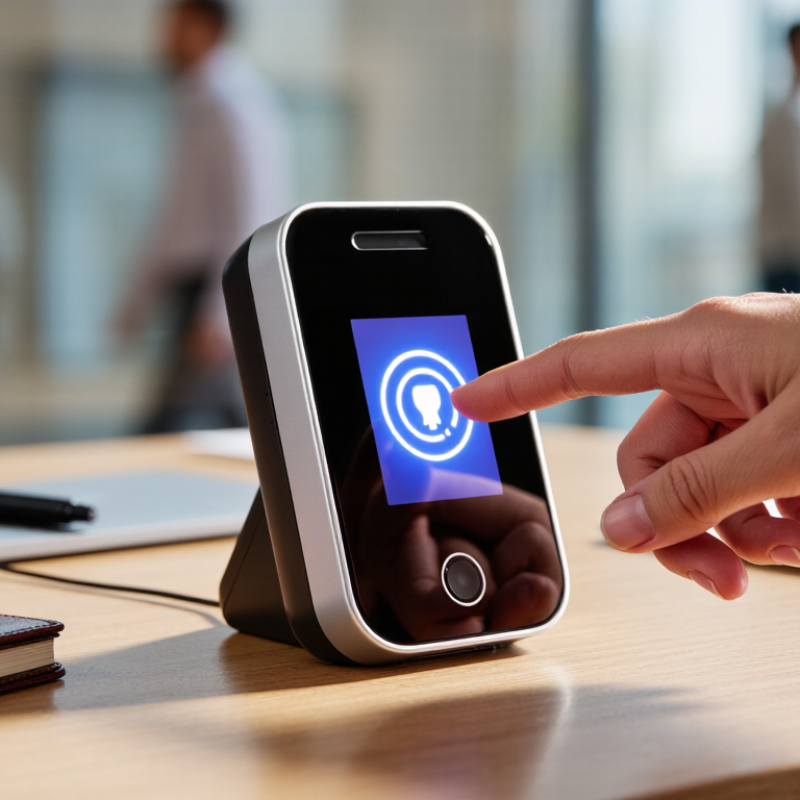
7 Fingerprint Scanner Buying Tips for Global Buyers

Define the Use Case and Select a Sensor with 500 ppi Capture Capability

Before comparing fingerprint scanners, define the task: enrollment, daily verification, or occasional identity checks. Will users scan one finger or several? Will the device sit at a staffed counter, a dusty entrance, or a shared office terminal? Each setting changes the needs for capture area, durability, and cleaning. Small details matter. A queue of employees arriving with cold, dry hands can expose weaknesses that a quiet demonstration misses.

A 500 ppi capture capability is a useful baseline for collecting fingerprint detail, but the number alone does not guarantee dependable images.

Ask how the scanner handles partial placement, light pressure, and naturally worn ridges. During evaluation, capture several fingers under ordinary conditions, then inspect whether images remain clear and consistent. Test both.

A glossy specification sheet can make every sensor look adequate; real users are less predictable.

I would also check the active sensing area and the guidance shown when a finger is misplaced. One limitation is worth admitting: performance can vary with skin condition, so a single successful scan proves little. Compare repeated attempts, not just the best image, and record the conditions.

Check Image Quality Using NIST NFIQ 2.0’s 0–100 Score

A fingerprint image can look sharp on a screen and still be difficult to match. Ask for raw sample images and evaluate them with NIST NFIQ 2.0, where scores range from 0 to 100. Higher scores generally indicate better image quality. Check that the images meet the tool’s input requirements, including resolution and format. A score is not a match probability.

Test several fingers, not just one clean thumb. Include ordinary variations such as slightly dry skin, firm and light pressure, and different placement angles. Keep lighting, capture settings, and evaluation methods consistent across devices. I would not trust one tidy demo. Real users are less predictable.

Compare score distributions, not only averages. A scanner with a strong average may still produce many low-quality captures. There is no universal score that guarantees reliable performance; your use case and capture conditions matter. NFIQ 2.0 evaluates image quality, not every part of a scanner’s usability or matching system. Review low-scoring images closely: clipped ridge detail, smears, or uneven contact may explain the result. Some variation is normal. Don’t ignore it.

7 Fingerprint Scanner Buying Tips for Global Buyers - Check Image Quality Using NIST NFIQ 2.0’s 0–100 Score

# Buying tip What to evaluate How to use NFIQ 2.0 Practical buyer action
1 Compare image quality with a consistent method Request fingerprint image samples captured by each scanner under comparable conditions. Check that the images are suitable for the intended enrollment or verification workflow. NFIQ 2.0 assigns fingerprint images a quality score from 0 to 100; higher scores indicate better predicted utility for matching. The score is not a percentage and is not, by itself, a guarantee of a successful match. Run the same NFIQ 2.0 version on each candidate’s supported images. Compare score distributions across a test set rather than relying on one image or one average.
2 Check resolution and image compatibility Confirm the scanner’s stated resolution, image dimensions, output format, and supported fingerprint capture types. NFIQ 2.0 is intended for 500 ppi fingerprint images. Use NFIQ 2.0 only with images that meet its input requirements. A score from an unsupported resolution or image type may not provide a meaningful comparison. Ask for sample image files and technical specifications. Verify resolution and format independently before comparing quality scores.
3 Test a representative range of users Include participants with varied finger conditions and capture experience, such as dry or moist skin, worn ridges, and different ages. Follow applicable consent and privacy requirements. Review NFIQ 2.0 results across the test set and relevant capture conditions. A broad, representative sample is more informative than a small set of ideal captures. Document the test population and conditions. Compare score distributions and capture outcomes without treating a single score as a substitute for usability testing.
4 Evaluate the usable capture area Check platen dimensions, finger placement guidance, and whether users can consistently position the required fingerprint area on the sensor. Use NFIQ 2.0 to assess the quality of the resulting images, while separately checking whether the captured area contains enough usable ridge detail for the application. Test typical users, including first-time users, and inspect both the image scores and the number of incomplete or mispositioned captures.
5 Measure first-attempt performance and recaptures Record capture time, first-attempt completion, recapture frequency, and the causes of failed or low-quality captures. NFIQ 2.0 measures image quality, not the scanner’s full workflow speed or user success rate. Use scores alongside operational measures. Run repeated trials under realistic conditions. Report the number of attempts and the share of images meeting a quality target defined for your own application.
6 Verify data output and system interoperability Confirm that the scanner provides the required image data, metadata, interfaces, and integration options for your enrollment or matching system. A high NFIQ 2.0 score does not establish template compatibility, standards compliance, or interoperability with a separate matching system. Test the scanner with the actual downstream software and required data formats. Validate image exchange and matching performance in the intended workflow.
7 Test real operating conditions and support requirements Assess performance in expected lighting, temperature, humidity, cleaning, and installation conditions. Review maintenance, warranty, documentation, and local service arrangements. Capture images in the environments where the device will be used, then analyze them consistently with NFIQ 2.0. Quality results from a controlled demo may not represent field performance. Include a field trial where possible. Record environmental conditions, score results, downtime, cleaning needs, and support response expectations.

Scoring note: NFIQ 2.0 provides a 0–100 fingerprint image quality score, with higher scores indicating better predicted matching utility. It does not define one universal pass threshold for every application; buyers should set acceptance criteria through representative testing and validate them with their matching workflow.

Verify Template Compatibility with ISO/IEC 19794-2

A fingerprint reader can capture a sharp image and still produce a template another system cannot use. Check whether the device exports ISO/IEC 19794-2 minutiae records, not merely whether its brochure says “ISO compatible.” Confirm the exact format version, coordinate conventions, units, and supported record fields. Ask for sample templates and test them with your own matching software. Tiny differences matter.

Tip: Request a cross-system test. NIST’s MINEX III evaluation published comparison data for minutiae-template generators and matchers; its results show that matching performance can vary across generator–matcher pairings. Use this as a reason to test the actual combination you plan to deploy, rather than treating standards support as a guarantee. Check enrollment and matching with dry fingers, damp fingers, and varied placement. Keep the test conditions consistent, and record failed reads as well as successful ones.

Look closely at minutiae count, image quality, and any vendor-specific extensions in sample records. A file that parses may still lose useful information or produce weaker matching. Ask suppliers to document conversion steps and identify fields they omit. Then run a pilot with representative users and compare results against a baseline. Not perfect, but revealing. A short test can expose compatibility gaps before devices are purchased in volume.

Compare Capture Areas Against FBI FAP 10’s 15.2 × 20.3 mm Minimum

When comparing fingerprint scanners, check the usable capture area, not just the glass plate. For FBI FAP 10 applications, the stated minimum is 15.2 × 20.3 mm. A larger-looking platen may still produce a smaller image if the sensor crops its edges. Ask for the active imaging dimensions in the device’s technical documentation.

Test with real fingers. Place a dry finger near each edge, then repeat with a slightly damp one. Does the scanner retain the ridge detail across the full required area? Look for sample images or test results, and confirm the image dimensions after capture. A measurement printed on a brochure is helpful, but it does not show how the device behaves in practice. Small differences matter.

Also check resolution and image quality alongside area. A wide capture with blurred ridges may be less useful than a clean, correctly sized image. Confirm whether the stated dimensions refer to the sensor’s full field or the final output. That detail is easy to miss. If documentation is unclear, request clarification before ordering. I would not assume two scanners meet the same requirement just because their listed dimensions look similar. A quick edge-to-edge test can prevent an expensive mismatch.

Assess Liveness Detection, Data Security, and Regional Compliance

Buying a fingerprint scanner for international use means checking more than capture speed. Ask how liveness detection distinguishes a real finger from a printed pattern, silicone replica, or replayed sensor input. Request test results across dry, damp, and worn fingertips. A demo on one clean finger proves little. Spoofing is real. Also ask what happens when confidence is low: does the device retry, reject, or offer a documented fallback?

For data security, find out whether fingerprint templates stay on the device or travel to a server. Confirm encryption during transfer and storage, role-based access, and a clear deletion process. Ask who can export records and whether access is logged. Test the system’s behavior when a network connection drops. A secure brochure is not evidence. Review technical documentation and verify settings during a pilot. One gap buyers sometimes miss: backup copies may follow different retention rules.

Regional compliance needs early attention. Privacy, biometric-data, storage, and consent requirements can differ between markets, even within one sales region. Ask suppliers for data-flow diagrams, retention controls, and documentation relevant to each intended market. Have qualified local advisers review the planned use before deployment. This can slow purchasing, admittedly. Still, discovering a mismatch after installation may cost more than checking it in advance.

7 Fingerprint Scanner Buying Tips for Global Buyers

Regional biometric privacy laws: year adopted or enacted

When comparing scanners, test liveness detection against presentation attacks, protect biometric templates with encryption and access controls, and confirm consent, retention, deletion, and data-transfer requirements for each market. The dates below provide context, not a compliance checklist; legal obligations vary by jurisdiction.

Whether your solution requires a single pumping application or an expansive engineered system,
CheckPoint is committed to becoming your partner in excellence.