


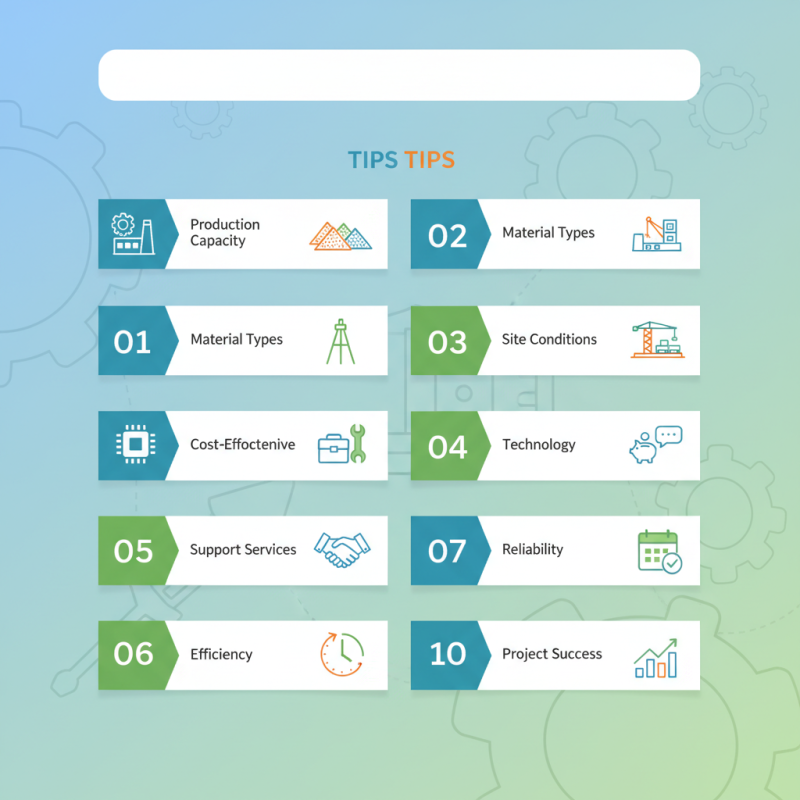
10 Essential Tips for Choosing a HZS60 Concrete Batching Plant?
When it comes to selecting a Hzs60 Concrete Batching Plant, the process can feel overwhelming. Making the right choice is crucial for your construction projects. A reliable batching plant ensures consistent quality and efficient operations. With many models available, you'll want to navigate this landscape carefully.
Understanding your specific needs is the first step. Consider your production capacity, material types, and site conditions. Each factor can significantly impact your decision. Not all HZS60 Concrete Batching Plants are created equal. Some may excel in technology, while others focus on cost-effectiveness.
Additionally, you should think about maintenance and support services. A great plant requires excellent after-sales service. It’s worth noting that a poorly chosen batching plant can lead to delays and increased costs. Reflect on these aspects as you embark on this journey. Choose wisely, as the right plant can make all the difference in your project’s success.
Key Specifications to Look for in an HZS60 Concrete Batching Plant
When selecting an HZS60 concrete batching plant, key specifications play a crucial role in decision-making. One significant factor is the production capacity. HZS60 units typically have a capacity of 60 cubic meters per hour. This output meets the demands of medium to large-scale construction projects. However, one must assess whether this capacity aligns with your project's requirements.
Another essential specification is the mixing system. A twin-shaft mixer is often preferred for its efficiency and uniformity in mixing. Reports indicate that twin-shaft mixers can increase mixing speed by up to 20%. This can reduce time on site and enhance productivity. Yet, the initial investment may seem high. Evaluating cost-effectiveness is crucial here.
Additionally, consider the control system’s sophistication. Advanced control systems provide real-time data, ensuring precise batching and minimizing errors. The ability to integrate with management software can lead to significant operational improvements. It's important to weigh these advantages against the complexity they introduce. Finding a balance between simplicity and control is essential for optimal performance.
Key Specifications to Look for in an HZS60 Concrete Batching Plant
Understanding Production Capacity and its Impact on Project Efficiency
When selecting a HZS60 concrete batching plant, understanding production capacity is vital. The HZS60 can produce up to 60 cubic meters of concrete per hour, making it suitable for medium to large projects. This production scale can significantly affect overall project efficiency. If the plant's capacity is too low, project timelines might extend. Delays can lead to increased costs and resource management challenges.
While the HZS60 offers impressive output, consider your specific requirements. A higher capacity than needed may lead to inefficiencies. Regular maintenance is essential for optimal performance. Neglecting maintenance can cause output fluctuations. Accurate forecasts of concrete needs can guide plant selection. Project managers must ensure that the output aligns with the project’s timeline.
Monitoring the plant’s workload is critical for effective operations. Overworking the batching plant can lead to wear and tear. This might not show immediate results, but long-term issues can arise. Therefore, balancing production capacity with actual demand is crucial for maintaining efficiency. Pay attention to the balance; it reflects on the project's success.
Evaluating the Importance of Mixer Type in Quality Concrete Production
When selecting a HZS60 concrete batching plant, the type of mixer plays a pivotal role in ensuring quality. Different mixers produce varying results, impacting the final concrete product. A successful plant must utilize a mixer that suits the specific needs of a project. For projects requiring high consistency, twin-shaft mixers often outperform others. They offer excellent mixing efficiency, ensuring uniform distribution of materials.
It’s essential to consider the design and capacity of the mixer. A well-designed mixer can significantly improve production rates. However, larger mixers may lead to difficulties in achieving the desired quality for smaller batches. This balance is crucial yet often overlooked in decision-making processes. Also, maintenance should not be neglected. Regular inspection keeps the mixer in optimal condition and prevents production delays.
Evaluating mixer types also involves weighing cost against performance. A less expensive option may tempt many, but long-term efficiency is key. Investing in a reliable mixer can reduce downtime and enhance output quality. The presence of expert guidance when making these choices can provide valuable insights. Listening to the experiences of others in the field proves essential in navigating the complexities of mixer selection.
10 Essential Tips for Choosing a HZS60 Concrete Batching Plant
| Tip | Importance | Considerations | Mixer Type |
|---|---|---|---|
| Identify Your Production Needs | High | Amount of concrete needed per day | Planetary Mixer |
| Assess Available Space | Medium | Size of the batching plant and related equipment | Twin-Shaft Mixer |
| Review Environmental Regulations | High | Compliance with local laws | Drum Mixer |
| Evaluate Your Budget | High | Total cost including maintenance | Batch Mixer |
| Consider Automation Features | Medium | Level of technology and control | Digital Control Mixer |
| Research the Production Capacity | High | Output per hour | High-Capacity Mixer |
| Inspect Material Handling Systems | Medium | Conveyors and silos configuration | Auto-Feeding Mixer |
| Check Maintenance Needs | High | Availability of spare parts | Maintenance-Free Mixer |
| Test Concrete Quality | High | Testing method and frequency | Quality Assurance Mixer |
| Consult with Industry Experts | Medium | Gather insights and feedback | Expert-Recommended Mixer |
Analyzing Energy Consumption and Its Cost Implications for Long-Term Use
Energy consumption is a key factor when selecting a HZS60 concrete batching plant. The operational efficiency of this equipment directly impacts long-term costs. Reports indicate that energy expenses can account for up to 30% of the total operating costs in concrete production. Therefore, understanding the energy consumption patterns of various plants is essential.
Investigations into energy use reveal that plant technology plays a significant role in efficiency. For instance, modern control systems can optimize mixed concrete output by minimizing excess energy usage. A study noted that upgrades to energy-efficient motors result in 15-20% reductions in energy costs. Clauses in energy consumption documentation can highlight potential savings as well.
Investing in energy-efficient features may have a higher upfront cost. However, the long-term benefits often outweigh these initial expenses. Operators should also consider their local energy prices, as these fluctuating rates can influence overall operational costs. Additionally, annual maintenance routines can impact energy efficiency. Neglecting these can lead to performance losses, requiring a strategic approach to plant operations.
Assessing After-Sales Support and Maintenance Services for HZS60 Plants
When selecting an HZS60 concrete batching plant, after-sales support and maintenance services are crucial factors. A reliable support system can save you both time and money. Assess the availability of technical assistance, spare parts supply, and the responsiveness of the service team. You don’t want to face delays during critical project phases.
Consider setting up routine maintenance checks. Regular maintenance ensures the plant operates at peak efficiency. Look for service packages that include inspections and repairs. Knowing how quickly you can get support is vital. A company with a reputation for on-site assistance can make a significant difference.
Think about training opportunities for your team. Continuous education on equipment operation can prevent costly mistakes. Effective training enhances safety and efficiency. Always review feedback from other users to gauge service effectiveness. An informed choice leads to smoother operations and minimizes unexpected challenges.
Article Source:

Whether your solution requires a single pumping application or an expansive engineered system,
CheckPoint is committed to becoming your partner in excellence.


