



Why Choose the Right Storage Rack Upright?

A warehouse rack can look solid and still be poorly matched to its daily work. The Storage Rack Upright supports the beams, carries stored loads, and helps keep each bay stable. Its height, frame depth, steel profile, and connection details all matter. A few millimeters of mismatch can complicate beam installation. A weak fit can also affect how the rack performs under load.

Choosing an upright starts with real operating conditions. Consider pallet weight, rack height, forklift clearance, floor quality, and the risk of accidental impacts. Check the manufacturer’s load tables and confirm that the upright works with the planned beams and accessories. Do not rely on appearance alone. Two frames may look nearly identical but have different capacities. Small details matter.

Good selection also includes what happens after installation. Clear aisle markings, impact protection in busy areas, and routine checks can help reveal damage before it becomes a larger concern. Follow the supplier’s guidance for inspection and repair, and consult a qualified rack professional when specifications are unclear. An upright is not a substitute for sound layout or careful loading. It is one part of a complete storage system.

There is no universal “best” frame. A compact facility with light cartons has different needs from a high-bay warehouse holding dense pallets. Even careful planning can miss something, such as a new forklift route or a change in pallet size. Review those assumptions before ordering. The right Storage Rack Upright is the one that fits verified loads, compatible components, and the warehouse’s actual routine—not just the one that looks strongest.
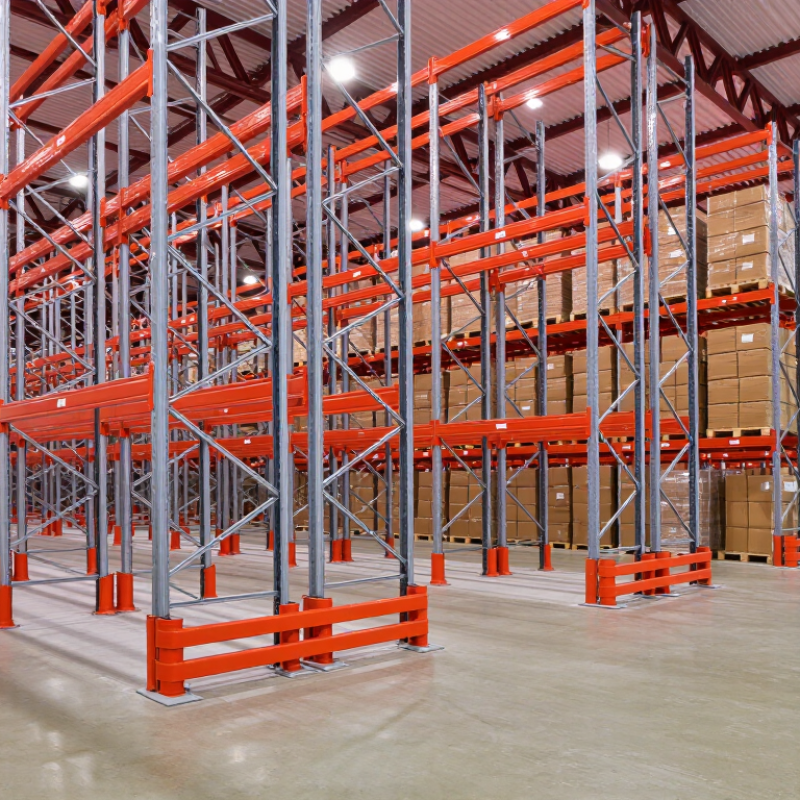
Why Choose the Right Storage Rack Upright?

What a Storage Rack Upright Is and How It Supports a Rack

A storage rack upright is the vertical column that gives a rack its frame. It connects to horizontal beams and bracing, forming the structure that holds stored loads. In a typical pallet rack, weight travels from each pallet to the beam, then through the upright frame and baseplate into the floor. The upright also helps resist sideways forces from loading, impacts, and uneven floors. It is not just a post. Its height, steel thickness, hole pattern, and bracing all affect capacity. ANSI MH16.1 sets design and testing requirements for steel storage racks, making it a useful reference when comparing specifications.

Why does this matter?

The U.S. Census Bureau reported that U.S. e-commerce sales reached $1.1187 trillion in 2023, up 7.6% from 2022. More inventory moving through warehouses can put greater demands on storage systems. MHI’s 2024 industry report found that 88% of surveyed organizations expect to adopt robotics and automation within five years. Automated handling makes consistent rack dimensions and clearances especially important. Small details matter. Still, selecting an upright by appearance alone is an easy mistake.

Tips: Check the rack’s load plaque and manufacturer’s capacity documentation before adding or changing loads. Look for bent columns, cracked welds, or damaged baseplates, and have uncertain damage assessed by a qualified rack professional. A tiny twist may be hard to spot. Don’t ignore it.

How Upright Design Affects Load Capacity and Stability

Why Choose the Right Storage Rack Upright?
How Upright Design Affects Load Capacity and Stability

A storage rack upright is more than a vertical post. Its steel thickness, section shape, and depth affect resistance to bending and buckling. A deeper, well-braced profile can improve stability, but no single dimension guarantees a safe load. Small details matter.

Capacity also depends on rack height, beam length, connector fit, and how goods are placed. A pallet sitting off-center can twist a beam and increase stress on the frame. Check load tables for the exact rack configuration, not a similar-looking setup. A tidy appearance is not proof of strength.

Tips: Inspect uprights for dents, bent flanges, loose anchors, and missing braces before loading. Keep heavier pallets on lower levels and distribute weight across beams. Use the rated capacity for the installed layout; changing beam heights can alter it. If a rating is unclear, pause and ask a qualified rack specialist. A visual check helps, but it cannot replace verified specifications.

Why Choose the Right Storage Rack Upright? — How Upright Design Affects Load Capacity and Stability

Upright Design Dimension What to Check Effect on Load Capacity Effect on Stability Practical Selection Guidance
Section shape and depth The cross-section’s shape, dimensions, bends, and orientation. Section geometry affects stiffness and resistance to bending and buckling. Capacity cannot be determined from outside dimensions alone. A suitable section helps resist lateral movement and deformation under load. Compare complete engineered specifications rather than choosing by profile appearance or depth alone.
Steel grade and material thickness Specified steel properties and the thickness of the formed steel, including any relevant tolerances. Material strength and thickness contribute to the upright’s resistance to yielding and local buckling. Consistent material and section properties help the frame perform as designed. Use documented material specifications and the rack supplier’s rated capacities; do not infer capacity from thickness alone.
Perforations and beam connections Hole pattern, hole spacing, connection fit, and the condition of locking devices. Perforations and connection details influence the capacity of the upright and the beam-to-upright joint. Secure, compatible connections help prevent unintended beam disengagement and reduce connection movement. Use beams and connectors approved for the upright system, and keep safety locks in place where specified.
Frame bracing Diagonal and horizontal braces, their positions, and their connections between uprights. Bracing forms part of the frame’s structural system and can affect its calculated load capacity. Bracing restrains frame movement and helps maintain alignment under operating loads. Do not remove, alter, or substitute braces without approval from a qualified rack designer or the system supplier.
Frame height and bay configuration Overall frame height, upright spacing, beam levels, and the installed layout. Capacity depends on the complete frame configuration, not simply on the capacity of one upright in isolation. Taller frames and different layouts can change frame behavior and sensitivity to sway. Confirm that the capacity rating applies to the actual height, beam arrangement, and configuration in use.
Base plate, floor, and anchorage Base-plate condition, anchor type and installation, floor condition, and required clearances. The load path continues through the base plate and anchors into the floor; inadequate support can limit the system. Properly specified and installed anchorage helps resist frame movement and overturning forces. Follow the engineered installation details and verify that the floor and anchors are suitable for the rack system.
Damage, corrosion, and modifications Bends, impact damage, cracked welds, corrosion, and unapproved drilling or repairs. Damage or alterations can reduce the capacity of an upright and may invalidate its original rating. Deformed or weakened members can compromise frame alignment and stability. Inspect racks regularly and have damaged components assessed and replaced in accordance with applicable guidance.

Important: Rack load capacity is specific to the complete system and its installation. Use the manufacturer’s or qualified engineer’s ratings for the exact configuration; do not estimate safe working loads from upright dimensions alone.

Which Factors Determine the Right Upright for Your Needs

Why Choose the Right Storage Rack Upright?

Which Factors Determine the Right Upright for Your Needs

Choosing an upright starts with the load, not the aisle. Add the weight of each loaded beam level, then consider how many levels will be installed. The Rack Manufacturers Institute’s ANSI MH16.1 standard addresses rack design, including loads, frame configuration, and bracing. These details matter: a tall frame holding dense pallets needs different engineering from a low rack storing light cartons. Measure the available height and depth, too. A few centimeters can affect clearances and forklift access.

Floor and operating conditions matter just as much. Check slab condition, anchor locations, vehicle type, and the chance of impact near busy aisles. The U.S. Bureau of Labor Statistics reported 4.8 recordable injury cases per 100 full-time workers in warehousing and storage in 2022, compared with 2.7 across private industry. That figure covers many hazards, not rack failures specifically, but it reinforces the value of careful layout and inspection. Ask a qualified rack designer to verify the proposed configuration against actual loads and site conditions. Paper plans miss things. A slightly uneven floor, or a pallet that overhangs, can change how a rack is used. Recheck the design when inventory, equipment, or beam positions change.

How to Match Uprights to Loads, Layout, and Environment

Why Choose the Right Storage Rack Upright?

A storage rack upright must suit the loads it will actually carry, not just the available height. Check the rack supplier’s capacity charts for the exact frame height, depth, beam spacing, and bracing configuration. A change in beam level can affect frame capacity. So can an unevenly distributed pallet load. Never rely on a rating from a different setup.

Look closely at the layout. A narrow aisle may save floor space, but it leaves less room for forklifts to turn without striking uprights. Measure vehicle paths, pallet overhang, and clearances around doors and columns. Small details matter. Anchor points and floor condition matter too; a damaged slab or poorly installed base plate deserves review before loading.

The environment changes the choice. Moisture, washdowns, and temperature swings can accelerate corrosion or affect protective finishes. Inspect uprights for dents, bent bracing, loose anchors, and rust, especially near floor level. It is easy to focus on load numbers and overlook daily impacts. That is a planning gap worth correcting. When the layout or loads change, ask a qualified rack professional to confirm the configuration against current manufacturer data. A quick visual check is useful, but it cannot establish structural capacity.

How to Check Upright Compatibility and Safety Requirements

Before selecting a storage rack upright, confirm that it matches the existing system. Measure the upright height, frame depth, steel profile, and distance between connector holes. Check the beam connector shape and locking mechanism, too. Looks can mislead. Similar-looking parts may not fit securely or share the same load rating. Compare measurements with the rack’s original documentation or ask a qualified rack specialist to verify compatibility.

Check the rated capacity for the exact frame and beam configuration, including the number and spacing of beam levels. Loads should be evenly placed and kept within the posted limits. Do not guess. Confirm that baseplates, anchors, and the floor can support the intended loads. If capacity labels or installation records are missing, pause use until the specifications are verified.

Inspect each upright for bends, cracks, corrosion, damaged welds, loose anchors, or signs of forklift impact. Check that frames stand plumb and that connectors fully engage and lock. A tape measure helps, but it cannot confirm steel grade or hidden damage. Replace suspect components with verified compatible parts; improvised repairs can weaken the frame. Even careful checks have limits, so arrange a competent inspection when damage, changes, or unclear specifications are involved.

Why Choose the Right Storage Rack Upright?

Compare common pallet footprints when checking whether a rack’s frame depth and beam spacing suit the loads you store.

How to use this comparison: Euro pallets are nominally 1200 × 800 mm; GMA pallets are 48 × 40 in (about 1219 × 1016 mm). These are pallet dimensions, not rack specifications. Confirm pallet overhang and clearances, upright-frame and connector compatibility, and the rack’s rated capacity against the manufacturer’s requirements before use.

Whether your solution requires a single pumping application or an expansive engineered system,
CheckPoint is committed to becoming your partner in excellence.