How to Choose a Cement Unloader in 2026?
Choosing a Cement Unloader in 2026 starts with the actual job, not the largest capacity listed in a brochure. A Cement Unloader must match the cement volume, delivery frequency, unloading distance, and receiving silo. A truck that unloads quickly can still cause delays if the site connection is poorly positioned. Small details matter.
Before comparing models, measure the available space and check the route from the vehicle to the silo. Note the hose length, inlet height, power supply, and access for maintenance. Cement dust can affect visibility and equipment, so ask suppliers how their system contains dust and what routine cleaning involves. Request operating data for the conditions you expect, rather than relying on a headline capacity alone.
The best choice also depends on the people who will operate and service the machine. Review control layout, training needs, common wear parts, and the availability of technical support. Ask for clear specifications and, where possible, speak with users handling similar materials and delivery volumes. Verify the details against your site before purchase. A neat comparison table may miss a tight turning area or an awkward silo inlet. That happens. This guide will help you assess the main options, compare practical trade-offs, and prepare questions that lead to a more dependable purchasing decision.
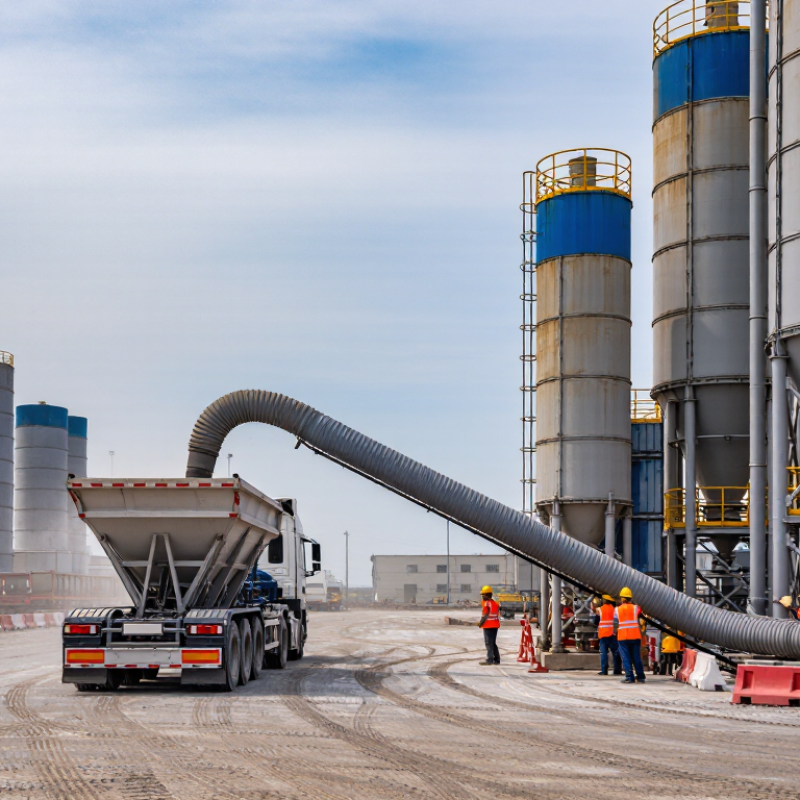
Identify Your Cement Unloading Requirements
Identify the material before comparing equipment. Cement type, moisture, temperature, and storage time affect flow. A dry powder may discharge differently after absorbing moisture during transport. Check the supplier’s product data, then confirm conditions using actual samples when possible.
Measure the bottleneck. The USGS Mineral Commodity Summaries 2025 estimated global cement production at 4.2 billion metric tons in 2024, but that scale says little about one site’s needs. Record peak tonnes per hour, delivery vehicle type, unloading window, hose distance, vertical lift, and silo inlet size. Include the time needed to connect and clean the system; these minutes are easy to overlook. A rough shift log often reveals whether average capacity or short delivery peaks matter more.
Dust control matters. Cement handling can create airborne dust, so assess the unloading point, ventilation, filtration, and operator position. Compare the proposed system’s stated capacity with your own material and route, not only a brochure figure. Ask how performance was tested and what happens when flow slows. Site measurements may be incomplete; treat that as a reason to verify assumptions, not to guess.
Compare Cement Unloader Types and Operating Principles
Choosing a cement unloader in 2026 starts with the transfer route, not brochure capacity. The USGS Mineral Commodity Summaries 2025 estimates 2024 world cement output at roughly 4.1 billion metric tons. That scale makes reliability and dust control practical priorities. Pneumatic unloaders use vacuum to pull powder through a hose, then filters separate cement from conveying air. They suit enclosed transfer and changing pickup points, but long lines and loaded filters can reduce throughput. Moisture matters.
Mechanical designs work differently. A grab crane lifts batches into a hopper; screw systems feed cement continuously through rotating flights. Bucket elevators raise material vertically, often within a larger transfer line. The IEA’s 2023 cement analysis attributes about 7% of global CO2 emissions to the sector, making energy use worth checking beside hourly capacity. Mechanical equipment can offer steady flow, yet may need more space and maintenance access. No universal winner. Compare measured tonnes per hour with actual cement condition, conveying distance, filter cleaning, and truck or vessel delays. Even experienced operators can underestimate cleanup time, so a site trial should allow for that uncertainty.
Match Capacity and Design to Your Site and Cement Supply
Choosing a cement unloader starts with the supply pattern, not the largest capacity on a brochure. Estimate the tonnes delivered per truck and the time available to unload each one. Then compare that demand with the unloader’s rated throughput. A rating is only useful when the cement condition, hose length, and operating setup match the stated test conditions. Ask the supplier to clarify those assumptions.
The site changes the design. Measure the distance from the truck connection to the silo, including bends and vertical lift. Check available power, access for tanker positioning, and space around the discharge point. A long hose run can slow transfer and increase wear. Dust collection also matters, especially near busy walkways or neighboring work areas. Small details matter.
Consider how often deliveries arrive and whether the silo can hold enough cement between them. A continuous supply may justify a different setup than occasional deliveries. Match the unloader to the tanker outlet and the cement’s flow characteristics, too. On paper, the numbers may fit. They may not fit on a crowded site. Leave room for maintenance and unexpected delays, and verify the final configuration with site measurements before ordering.
Evaluate Safety, Durability, and 2026 Compliance Needs
Choosing a cement unloader in 2026 means looking beyond hourly capacity. Start with the material path: enclosed transfer points, effective dust collection, guarded moving parts, and reachable emergency stops. Dust matters. Ask how operators isolate stored energy before clearing a blockage, and whether inspection doors can be opened without awkward reaching. These details are easy to overlook on a specification sheet.
Durability depends on the actual cement, duty cycle, and site conditions. Check wear liners, seals, hoses, and contact surfaces for abrasion resistance, then ask how often they need inspection or replacement. A larger unit is not automatically a better choice; excess capacity can raise energy use and maintenance costs. Look closely. For 2026 compliance, confirm current local requirements for worker exposure, noise, emissions, electrical equipment, and any pressure systems used. Requirements vary by location and equipment design, so request current technical files and maintenance records rather than relying on a sales claim. If possible, observe a trial with similar material and operating conditions. One limitation remains: a short demonstration cannot reveal years of wear. That is worth admitting before comparing bids.
How to Choose a Cement Unloader in 2026
Evaluate safety, durability, and compliance needs
The percentages are illustrative procurement weights, not measured product ratings or an industry survey. Prioritize dust containment and applicable compliance documentation, then verify guarding, emergency stops, wear-resistant components, and maintenance access against your site conditions. Regulatory requirements vary by location and installation, so confirm the rules that apply to your project.
Compare Total Ownership Costs and Supplier Support
How to Choose a Cement Unloader in 2026?
Compare Total Ownership Costs and Supplier Support
A low purchase price can hide higher energy, maintenance, and downtime costs. Compare each unloader using the same annual tonnage, operating hours, and material conditions. The U.S. Department of Energy’s Improving Compressed Air System Performance sourcebook reports that leaks can waste 20–30% of compressor output. That figure is not specific to unloaders, but it shows why air leakage and compressor demand deserve measurement. Ask suppliers for energy-use data at your required throughput, not just a best-case figure. Small details matter.
Build a lifecycle estimate covering installation, power, wear parts, inspections, and likely service interruptions. NIST Handbook 135 provides a life-cycle costing framework for comparing costs over equipment’s useful life. Request a written spare-parts list, typical lead times, commissioning scope, operator training, and service-response commitments. Check whether technicians can diagnose faults remotely and whether common parts are stocked locally. A polished quote is not proof of dependable support. My estimate would still be imperfect until site conditions and unloading cycles are confirmed; dusty transfer points and variable cement flow can change maintenance needs. Compare assumptions line by line, then ask suppliers to explain any figures they cannot document.