How to Choose the Best Spunlace Machine in 2026?
Choosing the best Spunlace Machine in 2026 requires more than comparing price tags and advertised output. The correct choice begins with your product, fibers, market, and production targets. A machine processing viscose may behave differently with recycled polyester, cotton, or blended webs. Small details matter.
Dr. Thomas Gries, a respected textile-engineering expert at RWTH Aachen University, expresses the principle clearly: “The right technology begins with the material, not the machine.” This view is practical. Before requesting quotations, manufacturers should examine web width, basis weight, line speed, hydroentanglement pressure, drying capacity, and water-treatment requirements. A factory manager should also inspect nozzle design, pump efficiency, filtration access, control software, and spare-parts availability. These features affect fabric strength, softness, energy use, and unplanned downtime.
Real experience often reveals what brochures omit. Watch a complete production trial, not only a polished demonstration. Check the fabric after washing, drying, winding, and storage. Ask how quickly operators can clean blocked filters or replace worn components. Review documented references from plants producing comparable materials. A low purchase price may become expensive through high water consumption, difficult maintenance, or unstable quality. That risk is easy to underestimate. I would not pretend that one machine suits every factory. Budget, local technical skills, floor space, and environmental goals change the decision. The strongest selection process combines measured trial data, transparent supplier support, and honest reflection about operational weaknesses. This guide explores those points, helping buyers compare Spunlace Machine options with greater confidence in 2026.
Define Your Spunlace Production Requirements and Product Goals
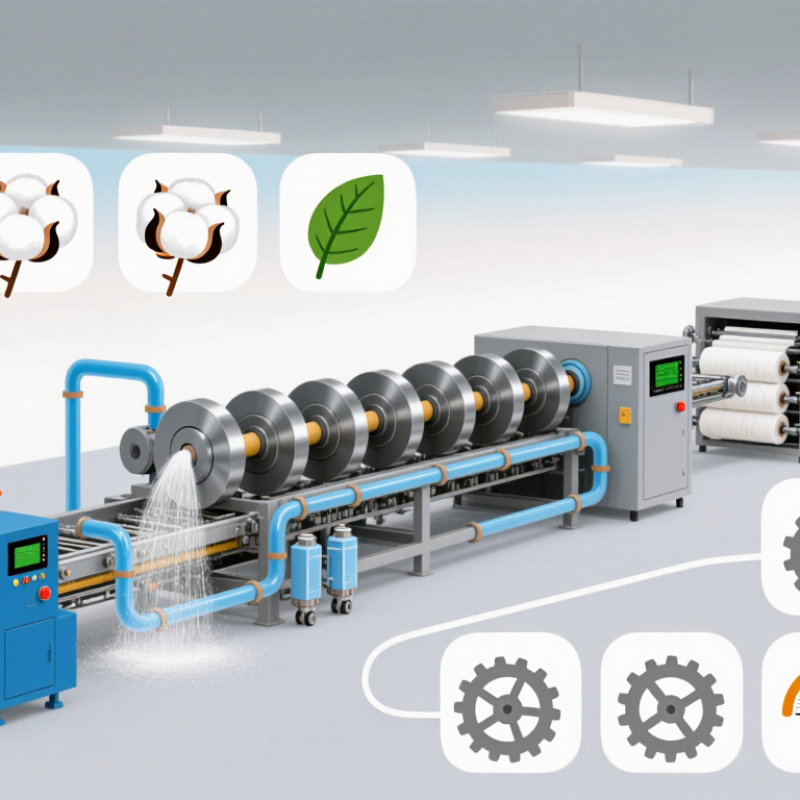
Choosing the best spunlace machine in 2026 starts with a clear production definition. Decide whether you need wipes, medical fabrics, filtration media, or durable industrial materials. Each product demands different fiber blends, basis weights, web widths, and strength targets. Record your expected output, not only the machine’s advertised speed. A line running at 120 meters per minute may produce less saleable fabric after setup losses and quality checks.
Your product goals should guide every technical discussion. Consider fiber length, web-forming stability, hydroentanglement pressure, drying capacity, and water-treatment requirements. Also define acceptable variation in thickness, tensile strength, absorbency, and appearance. These details help engineers match the forming, entangling, drying, and winding sections. The first production plan may be wrong. Pilot trials can reveal unexpected fiber migration, edge weakness, or excessive energy use. Leave room to revise your assumptions.
Tips: Bring real fiber samples and target specifications to supplier meetings. Ask for test data under comparable conditions. Check how quickly operators can change widths and clean filtration equipment. Calculate total operating cost, including water, power, maintenance, labor, and rejected rolls. A simple spreadsheet is useful, but it can hide downtime. Review actual production records when possible. Small details matter.
Evaluate Key Machine Specifications, Performance, and Material Compatibility
Choosing the best spunlace machine starts with measurable specifications, not attractive brochures.
Check working width, designed basis-weight range, line speed, nozzle pressure, and installed power. A line rated for 30–120 gsm may struggle with a soft 35 gsm wipe. Ask for production trials using your own fibers. Small differences appear quickly.
Material compatibility deserves equal attention.
Polyester, viscose, cotton, lyocell, and recycled fibers need different opening, blending, and hydroentanglement settings. Review the carding system, web-forming stability, fiber-loss rate, and drying temperature. A machine should also handle fiber length variation without creating visible streaks. It sounds basic. It is not.
EDANA reported about 3.1 million tonnes of European nonwoven production in 2023, showing the scale and pressure of this market.
Smithers’ Future of Global Nonwovens to 2028 also identifies hygiene, medical, and wipes as important demand areas. These applications require stable strength, absorbency, cleanliness, and repeatability. Therefore, compare tensile strength, elongation, basis-weight variation, water consumption, and recovery performance under continuous operation. Closed-loop water filtration can reduce operating costs, but its maintenance burden is easy to underestimate. Request verified test data, energy readings, and a 24-hour trial, rather than accepting a maximum-speed claim. A faster line is not always better. My own caution: projected output often assumes perfect fiber quality, skilled operators, and no stoppages. Real factories rarely behave so neatly.
Assess Automation, Energy Use, Maintenance, and Workplace Safety
How to Choose the Best Spunlace Machine in 2026?
When I evaluate a spunlace machine, I examine automation beyond the control panel. A clear interface should show water pressure, web speed, pump load, and fault history. Automatic tension control can reduce uneven fabric, but excessive automation may hide basic process problems. Ask operators to test recipe changes and alarm recovery. Watch the line run.
Energy use deserves a measurement-based review. Request electricity and water consumption per kilogram of finished material, not only rated motor power. High-pressure pumps, dryers, and compressed-air systems often create the largest costs. Variable-speed drives may reduce waste during slower production. However, promised savings can change with fiber type, fabric weight, and operating hours. Small faults matter.
Maintenance access is practical evidence of machine quality. Technicians should reach filters, nozzles, sensors, and pumps without dismantling half the line. Check cleaning time, lubrication points, diagnostic records, and spare-part availability. Workplace safety also needs close inspection: guarding, interlocks, emergency stops, noise levels, wet-floor risks, and manual lifting distances. I have seen efficient lines lose production because routine cleaning was awkward. My own evaluations are not always perfect, so I prefer site trials, operator feedback, and recorded performance data over attractive specifications.
How to Choose the Best Spunlace Machine in 2026?
Recommended procurement weighting for automation, energy use, maintenance, and workplace safety
A practical 100-point evaluation model gives the highest priority to automation because stable process control and real-time monitoring reduce labor dependency and quality variation. Energy efficiency and maintenance each receive 25 points because utilities and downtime strongly affect operating costs. Workplace safety receives 20 points, covering guarding, interlocks, ergonomic access, dust control, and emergency-stop systems. Buyers can adjust these weights according to production scale, local energy prices, and site risk assessments.
Verify Supplier Reliability, Total Cost, Installation, and After-Sales Support
How to Choose the Best Spunlace Machine in 2026?
Supplier reliability should be tested before technical specifications. Ask for audited production records, installed-machine references, and verified output data. Smithers’ The Future of Global Nonwovens to 2028 forecasts steady market growth, increasing pressure on manufacturers to deliver stable quality and shorter downtime. A supplier with weak engineering documentation may become an expensive risk.
Total cost matters more than the purchase price. Request energy consumption per kilogram, water usage, filter replacement intervals, labor needs, and spare-parts pricing. A 2024 Grand View Research report values the global nonwoven fabrics market at over 50 billion dollars, showing the scale of this industry. Yet market growth does not guarantee profit. Small efficiency losses accumulate quickly.
Installation support needs practical detail. Confirm foundation drawings, commissioning time, operator training, and remote troubleshooting procedures. Ask who pays for travel and replacement parts. After-sales support should include response-time commitments and a local technical contact. EDANA’s industry guidance repeatedly emphasizes process control, traceability, and responsible resource use. These principles should appear in the supplier’s service plan, not only in sales presentations.
See the machine running.
Visit an operating plant if possible. Check web tension, fiber distribution, noise, water clarity, and cleaning routines. I would not trust impressive samples alone; they may hide unstable settings. A careful supplier will disclose limitations, maintenance risks, and expected learning time. That honesty is useful. Sometimes, the cheapest machine is simply the least expensive mistake.
How to Choose the Best Spunlace Machine in 2026? — Verify Supplier Reliability, Total Cost, Installation, and After-Sales Support
Anonymous supplier profiles based on a practical 2026 procurement benchmark for a hydroentanglement spunlace line. Values are comparable planning figures rather than brand-specific quotations.
| Supplier Profile | Production Width | Nominal Line Speed | Typical Product Range | Estimated Annual Output | Estimated Equipment Price | Estimated Installed Cost | Delivery Lead Time | Installation & Commissioning | Warranty | Remote Response Target | Critical Spare-Parts Availability | Reliability Verification Evidence | Risk Level | Total Evaluation Score |
Profile A
High-capacity integrated line | 3.2 m | 120–180 m/min | 30–120 gsm; wipes, medical nonwovens, filtration substrates | 8,000–12,000 tonnes/year | US$6.0–8.5 million | US$8.0–11.0 million | 14–18 months | 10–14 weeks on site; operator training included | 12 months from acceptance | Within 4 hours during working days | Common parts stocked regionally; critical electrical and hydraulic parts typically 2–6 weeks | Audited reference installations, FAT records, component traceability, and documented uptime reports | Low | 88/100 |
Profile B
Flexible mid-capacity line | 2.4 m | 90–140 m/min | 25–100 gsm; wipes, hygiene materials, coated substrates | 4,800–7,500 tonnes/year | US$3.8–5.5 million | US$5.2–7.2 million | 12–16 months | 8–12 weeks on site; recipe and maintenance training available | 12 months from shipment or 18 months from delivery, subject to contract | Within 8 business hours | Standard mechanical parts in stock; selected controls and pumps require 3–8 weeks | Two or more operating references, signed performance guarantees, and factory acceptance testing | Low | 86/100 |
Profile C
Cost-focused standard line | 1.6–2.0 m | 60–110 m/min | 30–90 gsm; general-purpose wipes and industrial nonwovens | 2,500–4,500 tonnes/year | US$2.2–3.4 million | US$3.1–4.6 million | 9–13 months | 6–9 weeks on site; basic operator training included | 12 months from shipment | Within 1 business day | Local consumables available; specialized parts commonly require 6–12 weeks | Factory test documentation and customer references available, but limited long-term uptime data | Medium | 75/100 |
Profile D
Modular expansion line | 2.0–2.6 m | 80–130 m/min | 20–100 gsm; wipes, absorbent materials, and specialty nonwovens | 3,800–6,200 tonnes/year | US$3.0–4.8 million | US$4.2–6.4 million | 11–15 months | 7–11 weeks on site; modular commissioning by production section | 12 months from acceptance | Within 8 business hours | Core mechanical parts stocked; automation parts generally 4–10 weeks | Documented upgrade history, simulation of future modules, and contractual spare-parts list | Medium | 82/100 |
Profile E
Entry-level compact line | 1.6 m | 45–80 m/min | 35–80 gsm; standard wipes and low-to-medium volume applications | 1,500–2,800 tonnes/year | US$1.5–2.4 million | US$2.2–3.4 million | 8–12 months | 4–7 weeks on site; remote training with optional field support | 12 months from shipment | Within 1–2 business days | Most standard parts available; proprietary components may require 8–16 weeks | Basic factory acceptance testing and limited comparable production references | High | 68/100 |
Evaluation assumptions: Annual output assumes approximately 7,200 operating hours per year, 80% effective utilization, normal product changeovers, and stable raw-material quality. Installed cost includes the machine line, standard utilities connection, commissioning, freight allowance, and basic operator training, but excludes land, building construction, taxes, financing, and major wastewater-treatment infrastructure.
Recommended verification before purchase: request at least two recent customer references, a signed performance guarantee, a factory acceptance test, a complete utility-load list, a spare-parts price schedule, installation milestones, response-time commitments, and clear warranty exclusions.