



Choosing the right Road Marking Machine begins with the road, not the product brochure. Lane width, surface texture, traffic volume, climate, and marking material all influence performance. A machine that works smoothly on a dry airport apron may struggle on rough asphalt after rain. This practical difference is often overlooked.
The World Health Organization’s Global Status Report on Road Safety 2023 records approximately 1.19 million annual road deaths worldwide. Clear, durable markings cannot solve every safety problem, but they support driver guidance and roadway consistency. The Federal Highway Administration also treats pavement markings as essential traffic-control devices within the Manual on Uniform Traffic Control Devices. These references show why line accuracy, nighttime visibility, bead application, and maintenance access deserve careful attention.
A reliable selection process should compare spray, thermoplastic, cold-plastic, and preformed-tape capabilities. Check application width, pump stability, glass-bead delivery, drying time, fuel use, and operator visibility. Small details matter. A poorly balanced handle can cause uneven lines after several hours. A weak cleaning system can turn a productive shift into repeated downtime. Manufacturers should provide test results, service records, and clear operating specifications. Independent field trials are even better.
Budget still matters, but purchase price is only one part of ownership cost. Parts availability, training, calibration, and local technical support may decide the real return. Some specifications look impressive on paper. The road may disagree. Therefore, the best Road Marking Machine is not automatically the fastest or cheapest model. It is the one that delivers consistent markings, safe operation, measurable productivity, and dependable service under the actual conditions of your project.
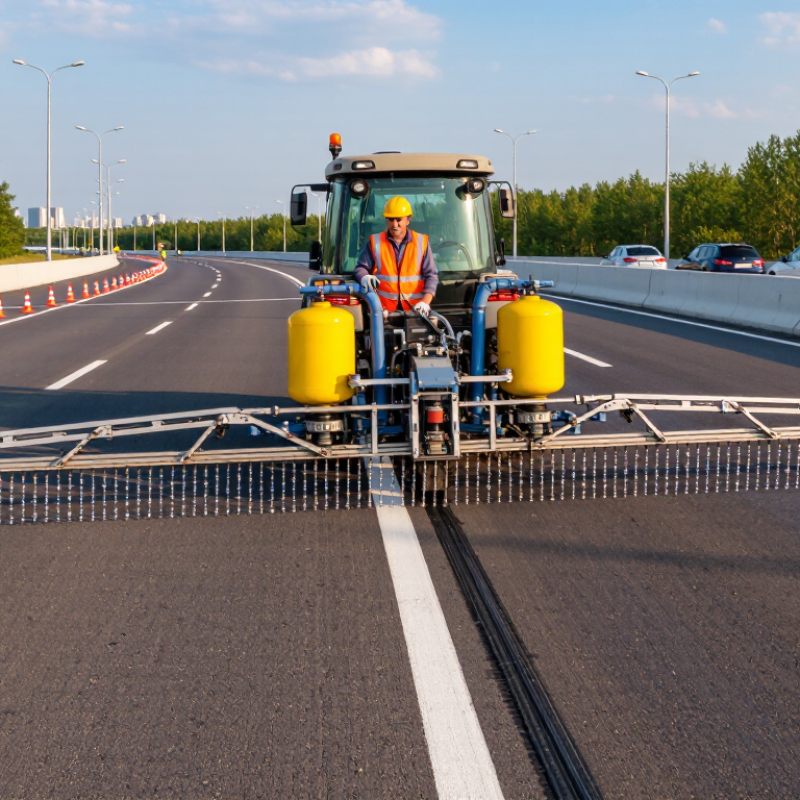
How to Choose the Best Road Marking Machine?
Choosing a road marking machine starts with the job, not the catalogue. Measure the line width, marking length, daily output, and required accuracy. A narrow bicycle lane needs different control from a highway centerline. Note whether the work involves straight runs, arrows, crossings, or frequent stops. On real projects, layouts change more often than expected. That detail affects tank size, maneuverability, and cleaning time.
Surface conditions matter just as much. Record pavement type, texture, slope, moisture, dust, and ambient temperature. New asphalt may release heat and solvents, while aged concrete can hold surface dust. Uneven surfaces can widen a spray line and reduce visual consistency. For water-based materials, humidity and drying time deserve close attention. Wind can carry overspray onto kerbs, parked equipment, or unfinished lines. Test a small section before full production. Professional judgment begins with that test, not with assumptions.
Operating conditions also determine the machine format. A compact walk-behind unit suits tight streets and short maintenance jobs. Ride-on equipment may reduce fatigue on long, repetitive routes. Airless spraying can cover broad lines quickly, but nozzle selection demands care. Thermoplastic work requires heating capacity, temperature monitoring, and trained handling. Check access points, transport limits, power availability, and noise restrictions before choosing. I have seen productive machines underperform because operators ignored hose length or cleanup access. That mistake is avoidable, although field conditions still change. Leave room for adjustment.
| Road Marking Job | Typical Surface | Recommended Machine Type | Suitable Material | Typical Application Width | Operating Speed | Key Operating Conditions | Important Selection Features |
|---|---|---|---|---|---|---|---|
| Urban lane lines and edge lines | Asphalt or concrete streets with frequent intersections and traffic interruptions | Walk-behind or compact ride-on airless sprayer | Water-based or solvent-based traffic paint | 5–20 cm | 3–8 km/h | Limited working space, frequent stopping, changing line lengths, and moderate traffic-control requirements | Compact dimensions, precise line adjustment, easy steering, and quick start-up |
| Highway center lines and edge lines | Long, relatively straight asphalt or concrete pavement | Self-propelled ride-on airless road marking machine | Solvent-based paint, water-based paint, or two-component cold plastic | 10–20 cm | 5–12 km/h | Long continuous runs, high production demand, strict line consistency, and exposure to wind and dust | Large paint capacity, stable pressure control, glass-bead dispensing, and good operator visibility |
| Parking bays and facility markings | Smooth asphalt or concrete in parking lots, warehouses, and commercial facilities | Walk-behind airless sprayer or compact battery/electric machine | Water-based or solvent-based traffic paint | 5–15 cm | 2–6 km/h | Short lines, frequent turns, obstacles, and a need for accurate layout work | Small turning radius, adjustable spray gun, low vibration, and simple cleaning procedure |
| Crosswalks, arrows, and symbols | Asphalt or concrete with complex shapes and multiple line widths | Airless machine with manual or stencil-guided spray gun | Traffic paint or cold plastic, depending on durability requirements | 10–60 cm | 1–5 km/h | Frequent changes in geometry, close work around stencils, and high importance of edge definition | Fast width adjustment, accurate trigger control, low-pressure spraying capability, and stencil compatibility |
| Thermoplastic road markings | Clean, dry asphalt or concrete with adequate surface preparation | Thermoplastic pre-heater and screed, extrusion, or spray applicator | Hot-applied thermoplastic with reflective glass beads | 10–30 cm | 3–8 km/h | Material must be heated to its specified application temperature; moisture and poor surface preparation reduce adhesion | Accurate temperature control, insulated material tank, bead application system, and safe heat management |
| Durable intersection and heavy-traffic markings | Asphalt or concrete exposed to braking, turning, snowplows, and intensive traffic | Two-component cold plastic machine or specialized plural-component system | Two-component cold plastic or methyl methacrylate material | 10–50 cm | 2–7 km/h | Short working time after mixing, strict ratio control, and a need for high wear resistance | Accurate component metering, rapid flushing, reliable mixing, and application-time control |
| Runways, taxiways, and airfield markings | Large concrete or asphalt surfaces requiring highly visible and accurately positioned lines | Ride-on airless or plural-component marking system | High-build traffic paint, water-based paint, or specialized two-component coating | 15–90 cm | 3–10 km/h | Large open areas, strict layout tolerances, strong visibility requirements, and controlled access windows | High positional accuracy, large material capacity, multi-gun operation, and dependable stripe uniformity |
| Temporary construction-zone markings | Existing asphalt or concrete, sometimes dusty or partially worn | Portable walk-behind airless sprayer | Removable or short-term traffic paint | 5–20 cm | 2–7 km/h | Rapid deployment, changing traffic patterns, limited work windows, and frequent relocation between sites | Low weight, quick setup, easy transport, compact paint tank, and simple maintenance |
| Reflective line marking | Road surfaces where night-time visibility is required | Airless machine equipped with a synchronized glass-bead dispenser | Traffic paint or thermoplastic combined with reflective glass beads | 10–20 cm | 4–10 km/h | Beads must be distributed consistently while the coating is still wet or at the correct application stage | Adjustable bead flow, synchronized application, stable travel speed, and easy calibration |
| Cold or humid weather application | Outdoor asphalt or concrete with low ambient or pavement temperature | Airless machine selected for the coating's viscosity and weather range | Paint specifically approved for the expected temperature and humidity conditions | 5–30 cm | 2–8 km/h | Surface must be dry and within the coating manufacturer's application range; condensation can damage adhesion | Pressure reserve, suitable hose and nozzle selection, weather monitoring, and reliable material circulation |
| Hot, dry, or dusty conditions | Sun-exposed asphalt or concrete with elevated pavement temperature | Airless or thermoplastic system matched to the material's open time | Fast-drying traffic paint or thermoplastic designed for the conditions | 5–30 cm | 3–10 km/h | Rapid solvent or water evaporation, airborne dust, and possible premature drying at the spray tip | Appropriate nozzle size, stable pressure, material agitation when required, and frequent tip inspection |
| Large-volume multi-lane projects | Long road sections, expressways, or extensive industrial pavement | High-capacity ride-on machine or truck-mounted road marking system | Traffic paint, thermoplastic, or two-component material | 10–90 cm | 6–15 km/h | High daily output, multiple line configurations, extended operating periods, and planned traffic closures | Large tanks, multiple spray guns, automatic line-pattern control, operator ergonomics, and service access |

Whether your solution requires a single pumping application or an expansive engineered system,
CheckPoint is committed to becoming your partner in excellence.