

How to Choose the Best Hand Crimper in 2026?
Choosing the best Hand Crimper in 2026 requires more than comparing prices or counting online reviews. A reliable tool should match the terminals, wire sizes, and materials used in your real projects. Look closely at the jaw markings, handle shape, ratchet release, and crimp profile. Fit matters. A crimper that feels strong may still produce loose connections if its die does not match the terminal. That mistake is common.
This guide focuses on practical selection, not exaggerated product claims. We will examine crimp consistency, grip comfort, build quality, maintenance needs, and compatibility with insulated and non-insulated terminals. Clear markings can prevent errors under poor workshop lighting. A controlled ratchet can help complete each crimp fully, while an emergency release may prevent damaged work. These details become important during repetitive repairs, where hand fatigue quietly affects accuracy.
Professional practice also requires checking the finished connection. A properly formed crimp should hold the conductor firmly without cutting or crushing it. Visual inspection helps, but a suitable pull test offers stronger evidence. Manufacturer specifications and recognized technical guidance should support the final choice. Still, no tool is perfect. Even an expensive model may feel awkward in smaller hands or perform poorly with an unfamiliar terminal. Reflect on your actual workflow before buying. The best Hand Crimper is the one that delivers repeatable results, safe handling, and sensible value over time.
Understanding What a Hand Crimper Is and How It Works
How to Choose the Best Hand Crimper in 2026?
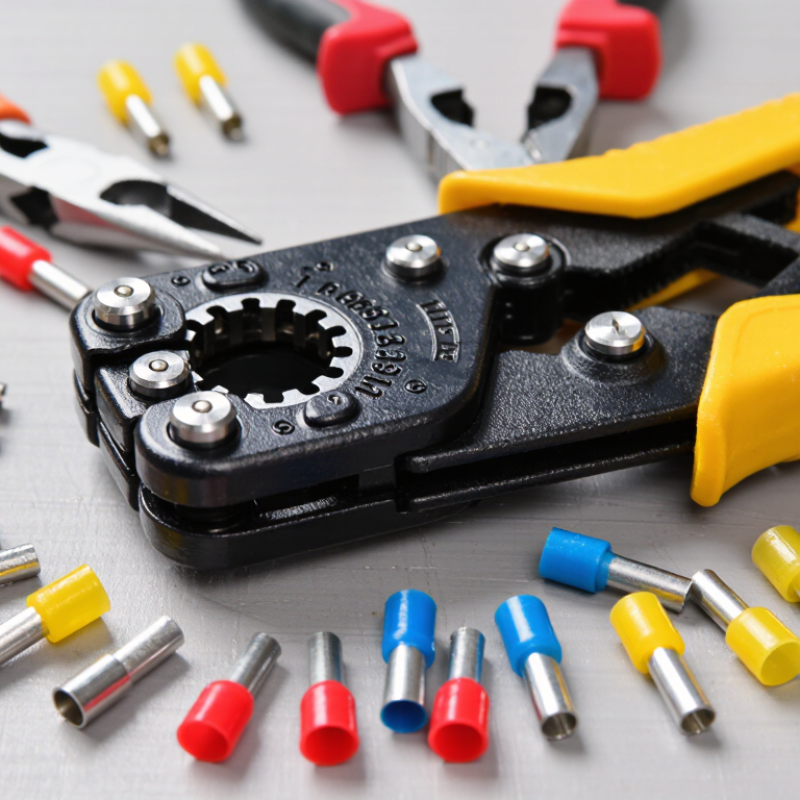
A hand crimper is a mechanical tool for joining wires to metal terminals. It compresses the terminal around the stripped conductor. This creates both physical grip and electrical contact.
Most models use shaped dies and two handles to apply controlled pressure. Some include a ratcheting mechanism. It keeps the jaws closed until the crimp reaches its intended position.
The correct crimp depends on the terminal type, wire size, and die profile. A terminal should fit firmly before pressure is applied. Too little force may cause a loose connection. Excessive force can damage the terminal or cut wire strands.
In workshop testing, I check the finished crimp for even compression, firm retention, and exposed strands. I once assumed a tighter crimp was always better. That assumption was wrong.
A reliable tool should also feel balanced, open smoothly, and show clear size markings. Calibration records and technical specifications add confidence, especially for repeated work.
Tips: Match the crimper to the terminal material and wire gauge. Test one sample before production. Pull the wire gently by hand. It should not slide out. Keep the jaws clean and inspect them for wear. If the result looks uneven, stop and reassess the die position. That small pause prevents bigger errors. When selecting a hand crimper in 2026, prioritize repeatable results over extra features. Verify applicable electrical standards for your work.

Identifying the Right Crimper Type for Your Materials
In 2026, the best hand crimper is not always the most expensive one. Fit the tool to the material, terminal shape, and required compression strength. A ratcheting crimper suits insulated wire terminals because it controls the full cycle. Ferrule crimpers create clean, square endings on fine-stranded wires. Coaxial cables need compression tools, while thick cable lugs may require hydraulic force. The wrong jaw can flatten metal unevenly and weaken the connection.
Grand View Research’s 2024 hand tools market analysis valued the global market above USD 20 billion. It also forecasts continued growth through 2030. That figure reflects demand, not guaranteed performance. Check technical specifications carefully. IPC/WHMA-A-620 remains a recognized industry reference for cable and wire assembly acceptance. Its guidance supports inspecting conductor placement, insulation clearance, and crimp quality.
I once selected a compact crimper because it felt comfortable. That shortcut was wrong. The jaws matched small terminals, but the handles demanded too much force on thicker copper. For repeated work, choose ergonomic handles, a controlled ratchet, and replaceable dies when available. Test several sample crimps before production. Measure pull strength when the application is safety-critical. A bright, neat crimp can still fail internally. Surface appearance alone is not enough.
Comparing Jaw Design, Crimping Force, and Handle Comfort
How to Choose the Best Hand Crimper in 2026?
Jaw design determines how evenly a hand crimper shapes a connector. Look for hardened jaws with clean, matching profiles. Uneven edges can leave loose corners or visible marks. I inspect the jaw surfaces under bright light before testing any tool. Smooth alignment matters more than a polished finish. Some jaws feel precise but wear quickly. That is easy to overlook.
Crimping force should match the material and connector size. A strong tool is not automatically the best choice. Excessive force can distort thin metal or damage insulation. I prefer a model that closes steadily, without sudden resistance. Ratcheting mechanisms can improve consistency, especially during repeated work. Still, a ratchet may feel awkward in tight spaces. Check the release action before committing.
Handle comfort affects accuracy after several dozen crimps. Cushioned grips reduce pressure around the palm, but soft padding can hide poor balance. Test the opening width with your own hand. Your fingers should close naturally, not stretch around the handles. I once chose a compact crimper that looked efficient. After an hour, my wrist disagreed. That experience changed how I judge tools. Weight, grip texture, and pivot smoothness deserve practical testing, not just specifications. A dependable crimper should feel controlled at the final squeeze, even when your attention is divided.
Checking Build Quality, Compatibility, and Safety Features
How to Choose the Best Hand Crimper in 2026?
A reliable hand crimper should feel solid before it touches a terminal. Check for hardened steel jaws, a firm pivot, and smooth movement without side-to-side play. The handles should close evenly and return without grinding. A heavy tool is not always better. Excess weight can cause fatigue during repeated work. I once chose a cheaper crimper because its jaws looked precise. After several uses, the alignment shifted slightly. That small flaw produced inconsistent crimps.
Compatibility matters as much as construction. Match the crimper’s die profile with the terminal type and wire gauge. A tool designed for insulated terminals may not suit open-barrel contacts. Check the manufacturer’s gauge range, but test the fit with a spare terminal first. The terminal should hold the conductor firmly without cutting its strands. A gentle pull test can reveal weak compression. It is simple. Still, many users skip it.
Tips: Look for clear gauge markings and a comfortable, non-slip grip. Choose a ratcheting mechanism with a release lever for controlled work. Use insulated handles only when they carry a verified electrical rating; ordinary plastic is not protection. Wear eye protection, especially when trimming wire or testing a finished connection. Inspect the jaws regularly for rust, burrs, or uneven wear. My own checks are not perfect, and lighting can hide defects, so I sometimes use a small work lamp. A crimper should support careful workmanship, not replace it.
Selecting the Best Hand Crimper for Your Budget and Tasks
How to Choose the Best Hand Crimper in 2026?
Choosing the best hand crimper depends on your budget and the tasks you regularly perform. A cheap tool may work for occasional repairs, but it can produce uneven crimps after repeated use. For daily wiring work, choose hardened jaws, a smooth ratchet, and clear wire-size markings. The jaw profile must match your terminal type. An insulated terminal needs different support from an open-barrel terminal.
In my workshop, I once bought a lightweight crimper because it felt comfortable. After several hours, my hand became tired, and some crimps looked loose. That shortcut was a mistake. Check the handle shape, return spring, and locking mechanism before buying. A compact model suits tight spaces, while a longer handle can provide more leverage. Do not choose maximum force automatically. Excessive pressure may damage a terminal or deform the conductor.
Tips: Match the crimper with the exact wire gauge and terminal specification. Test one sample connection first, then pull it firmly by hand. Inspect the crimp for gaps, cracked insulation, or exposed strands. If the tool lacks calibration guidance, measure a few finished crimps and record the results. A slightly higher price can be worthwhile, but only when the tool fits your real workload. I still review my tool choices after difficult jobs; comfort and consistency are easy to underestimate.
Article Source:

Whether your solution requires a single pumping application or an expansive engineered system,
CheckPoint is committed to becoming your partner in excellence.


