



How to Choose the Right Gate Valve for Your Needs?
Choosing the right Gate Valve can significantly impact your plumbing system. A gate valve controls the flow of liquids and gases through pipes. It is crucial to select one that matches your specific needs.
Gate valves come in various sizes, materials, and designs. Understanding these factors can help you avoid costly mistakes. For example, a poorly selected valve may not withstand the required pressure. It could lead to leaks or even failures.
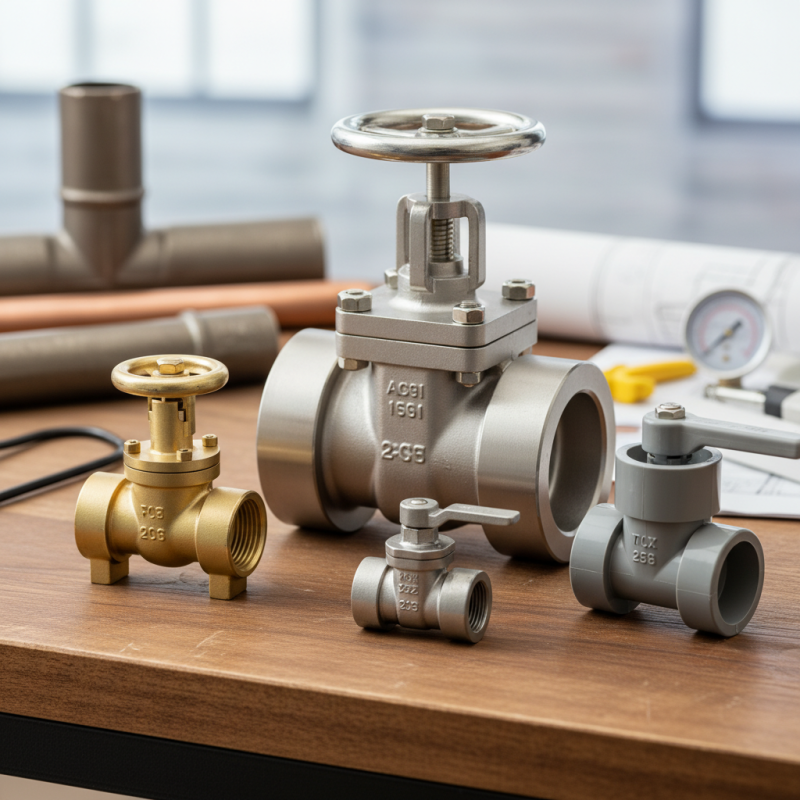
Look closely at the valve's materials. Brass, stainless steel, and plastic are common options. Each has distinct properties, such as resistance to corrosion. Also, consider the pressure ratings. These ratings determine the valve's performance under different conditions. Selecting the wrong type can be a major oversight. Assessing your requirements carefully will lead to informed decisions.
Understanding the Function and Importance of Gate Valves
Gate valves play a vital role in fluid control systems. They are designed to either fully open or fully close a pipeline. This type of valve is not meant for regulating flow. Its main function is to provide a straight-line flow from one end to another. Understanding this is crucial for effective system management.
Choosing the right gate valve requires an understanding of your specific needs. Consider factors like material, pressure ratings, and size. A mismatch can lead to leaks or failures. For example, using a gate valve in a corrosive environment without proper material can cause premature failure. Each detail counts. Think about the application: is it for water, oil, or gas? Each medium has its own requirements.
Valves can also present challenges. Installation might be straightforward, but maintenance can be tricky. A valve left unattended may become stuck. Hence, regular inspection is necessary. Reflect on the choices made in the selection process. Did you prioritize function over cost? These considerations are essential for ensuring your gate valve performs effectively.
How to Choose the Right Gate Valve for Your Needs?
| Dimension | Material | Size (Inches) | Pressure Rating | Application |
|---|---|---|---|---|
| PN10 | Cast Iron | 2" | 10 Bar | Water Supply |
| PN16 | Ductile Iron | 3" | 16 Bar | Wastewater |
| Class150 | Carbon Steel | 4" | 150 PSI | Oil and Gas |
| Class300 | Stainless Steel | 6" | 300 PSI | Chemical Processing |
| PN25 | Brass | 1" | 25 Bar | HVAC |

Identifying the Key Specifications for Your Application Needs
Selecting the right gate valve requires careful attention to your specific application needs. Start by identifying the medium that will flow through the valve. This could be water, oil, or gas. Each medium has different properties that affect valve performance. For example, corrosive substances will demand materials that resist degradation. Regular brass or steel isn’t always sufficient.
Next, consider the pressure and temperature conditions the valve will encounter. High-pressure systems require valves built to withstand greater stress. For instance, an industrial setting might have much harsher environments than a residential one. This disparity can lead to issues like valve failure if proper specifications aren’t followed.
Another crucial factor is the size of the valve. It must fit seamlessly within the existing piping system. Oversized or undersized valves can lead to flow restrictions. Additionally, pay attention to the connection type, whether it’s flanged or threaded. Mismatched connections can cause leaks. Each choice should reflect thoughtful analysis of your unique situation.
Evaluating Material Options for Durability and Compatibility
Choosing the right gate valve requires careful consideration of material options. Different materials offer varying levels of durability and compatibility with fluids. For example, stainless steel is corrosion-resistant and ideal for water and steam applications. However, it may not be the best choice for aggressive chemicals.
Ductile iron is another common option. It is strong and suitable for larger pipes. Yet, it can be vulnerable to corrosion if not treated properly. Some users overlook the importance of protective coatings. These coatings can extend the life of ductile iron valves significantly.
Plastic gate valves provide an interesting alternative. They are lightweight and resistant to a variety of corrosive substances. However, their temperature range is limited. For high-temperature applications, these might not be reliable. Understanding these nuances is crucial for making the best decision. Users must reflect on their specific needs before choosing a valve.
Assessing Size and Pressure Ratings for Optimal Performance
Choosing the right size and pressure rating for a gate valve is crucial. Many systems fail due to improper sizing. According to industry reports, nearly 30% of valve issues stem from incorrect dimensioning. Understanding the pipeline specifications helps ensure optimal performance. A gate valve should match the pipe size closely to avoid energy loss.
Pressure ratings are equally vital. Gate valves are categorized by their pressure class, which reflects their ability to handle internal pressures. For instance, a valve rated at 150 psi is suitable for lower pressure systems. However, if installed in a high-pressure pipeline, it may fail prematurely. Research indicates that around 40% of premature valve failures occur due to improper pressure ratings.
Selecting the appropriate size and pressure rating requires careful planning. Each application presents unique challenges. It's essential to assess both flow requirements and operating conditions. A mismatch can lead to flow restriction or leakage during operation. Collecting data on existing systems can help reduce the risk of mistakes. It's not unusual to revisit designs after valve installations. Many professionals find themselves adapting systems post-installation.
Pressure Ratings of Gate Valves
Considering Maintenance and Installation Requirements for Longevity
Choosing the right gate valve involves considering maintenance and installation. Proper maintenance ensures longevity. A report from the American Society of Mechanical Engineers states that improper installation can reduce a valve's lifespan by up to 50%. This figure emphasizes the importance of careful installation.
When selecting a gate valve, review the maintenance requirements. Some valves need more frequent servicing. A study by the International Journal of Pressure Vessels and Piping notes that valves requiring fewer components generally have a lower chance of failure. In contrast, complex designs may promise better performance but can complicate maintenance routines. Simple is often better for long-term solutions.
Installation factors are crucial too. Ensure access for maintenance tasks. Restricted spaces can lead to costly delays. Moreover, consider temperature and pressure ratings. Using valves outside recommended limits may lead to premature wear and failure. Regular inspection is vital, as noted by the Valve Manufacturers Association. In their report, they highlight the 30% of valves that fail due to lack of proper monitoring.
Article Source:

Whether your solution requires a single pumping application or an expansive engineered system,
CheckPoint is committed to becoming your partner in excellence.


