China Top POY Spinning Line Manufacturer and Price?

Choosing a China Top POY Spinning Line Manufacturer requires more than comparing a single machine price. A reliable supplier should demonstrate engineering experience, stable production records, and clear technical documentation. The POY Spinning Line must match your polymer type, output target, yarn specification, and factory conditions. These details directly influence investment cost.

A typical quotation may include spinning positions, extruders, metering pumps, quenching units, winding machines, control systems, installation, and training. However, prices can vary widely. A compact line for limited production may cost far less than a fully automated system with high-speed winders and advanced monitoring. Freight, spare parts, energy consumption, and after-sales service also deserve careful review.

Look beyond the headline price.

Experienced manufacturers can explain how temperature stability affects yarn quality during continuous operation. They should also provide layout drawings, production references, testing procedures, and realistic delivery schedules. Factory visits or verified customer feedback can strengthen confidence, although they may not reveal every operating challenge. That is worth admitting.

The best supplier is not always the cheapest. A low initial quotation may hide frequent maintenance, difficult software support, or expensive replacement components. Conversely, a higher offer may include stronger automation and better long-term reliability. Buyers should compare total ownership costs, not only equipment prices.

This guide examines China’s leading POY Spinning Line manufacturers, practical pricing factors, technical standards, and supplier evaluation methods. It aims to support a careful decision based on evidence, production goals, and measurable value. Mistakes can happen. A structured comparison helps reduce them.

China Top POY Spinning Line Manufacturer and Price?

What Is a POY Spinning Line?

What Is a POY Spinning Line?

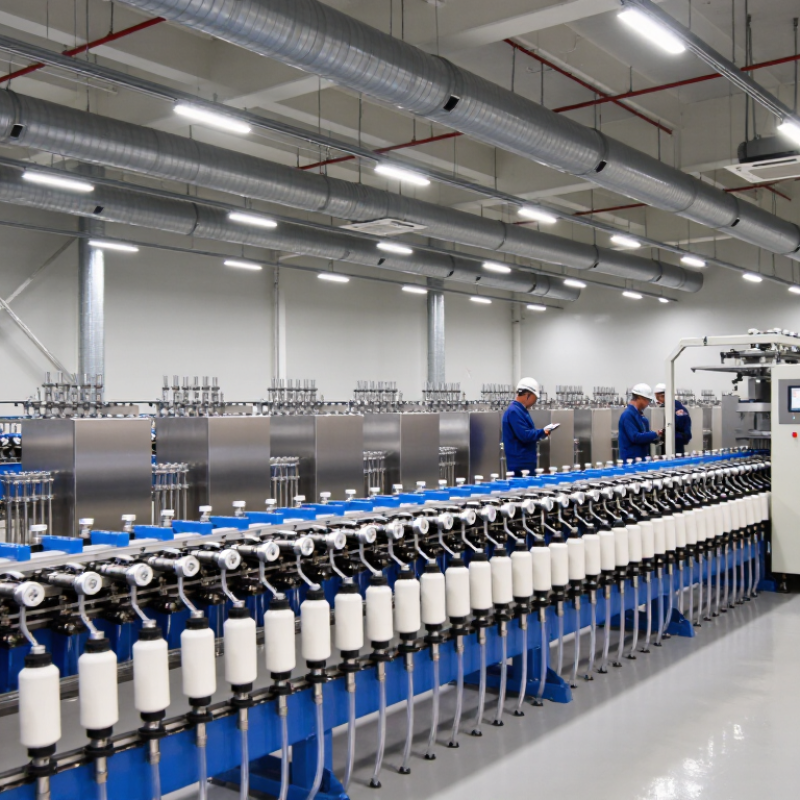
A POY spinning line converts polyester polymer melt into partially oriented yarn. The process begins with dried polymer chips or direct melt feed. A screw extruder melts the material at controlled temperatures. The melt then passes through metering pumps and spinnerets. Each spinneret creates many fine filaments.

Cooling air solidifies the filaments inside a quenching cabinet. A godet system then draws and stabilizes them without producing fully oriented yarn. Interlacing adds cohesion, while precision winders form packages for texturing or weaving. A typical modern line may operate near 3,000–3,500 meters per minute, depending on polymer quality, filament count, and product specification.

The scale is significant. Textile Exchange’s Materials Market Report 2024 estimated global fiber production at about 124 million tonnes in 2023, with polyester remaining the largest fiber category. This demand supports continued investment in stable POY production. However, capacity alone does not prove quality. Yarn uniformity, package density, energy use, and waste rate deserve closer inspection.

A practical price review should include spinning positions, automatic winding, melt filtration, control systems, installation, and commissioning. Energy efficiency matters too. The International Energy Agency identifies the textile sector as an important industrial energy user, so inefficient heating and compressed-air systems can quietly increase operating costs. I would not judge a line by its quoted speed alone. Test data, long-run stability, maintenance access, and actual denier consistency often reveal more. One overlooked detail can become a costly production problem.

How Does a POY Spinning Line Work?

How Does a POY Spinning Line Work?

A POY spinning line converts polymer chips into partially oriented yarn through controlled melting and stretching. The process begins with drying, because moisture can create bubbles and weaken the filament. Dried chips enter an extruder, where heated screws melt them into a uniform polymer stream.

The melt passes through precision filters and a metering pump. These parts remove impurities and stabilize flow. The spinneret then forms many fine filaments. A cooling cabinet sends carefully measured air across them. This step hardens the filaments evenly. Operators apply a small amount of finish oil to reduce friction and static.

The yarn then moves across godet rollers at controlled speeds. Speed differences create partial molecular orientation without fully drawing the yarn. A winding unit collects the POY onto packages, often at high production speed. Package shape matters. Poor tension control can cause slippage, uneven edges, or unstable unwinding later.

In practical production, temperature readings alone are not enough. Operators also inspect filament appearance, package hardness, and yarn evenness. A slight filter blockage may remain unnoticed for hours. That is an expensive lesson. Line price depends on spinning positions, automation, output, energy use, and quality-control equipment. Comparing only the purchase price can hide maintenance and operating costs.

China Top POY Spinning Line Manufacturer and Price? - How Does a POY Spinning Line Work?
Technical overview, production stages, capacity factors, and indicative equipment investment for a polyester POY spinning line
Category Item or Stage Typical Technical Data Function in the POY Process Key Selection Considerations
POY Spinning Line Process
Raw Material Polyester chips Usually polyethylene terephthalate (PET); intrinsic viscosity commonly selected according to the required yarn application Provides the polymer that is melted, filtered, extruded, cooled, and drawn into partially oriented yarn Chip moisture, viscosity, melting behavior, contamination level, and consistency affect yarn quality
Preparation Crystallization and drying Drying temperature and residence time depend on chip grade and equipment design; moisture control is essential before melting Removes moisture and reduces hydrolytic degradation during high-temperature extrusion Use stable temperature control, adequate air circulation, and dew-point monitoring
Melting Extruder and melt-pump system Converts dried PET chips into a homogeneous polymer melt; melt pressure and temperature are continuously monitored Delivers a steady, metered polymer flow to the spinning assembly Important factors include screw design, energy efficiency, pressure stability, and maintenance access
Filtration Melt filter or polymer filtration unit Removes solid impurities and unmelted particles from the polymer melt Protects spinnerets and improves filament uniformity and spinning stability Filter area, automatic changeover capability, pressure-drop monitoring, and cleaning method
Extrusion Spinning beam and spinneret Produces multiple continuous filaments through precision capillary holes Determines filament count, cross-sectional profile, and initial yarn formation Spinneret material, hole geometry, hole count, beam temperature uniformity, and replacement cost
Cooling Quench-air cabinet Controlled cross-flow or radial cooling air is applied below the spinneret Solidifies the extruded filaments and helps control denier and orientation uniformity Air temperature, humidity, velocity uniformity, cabinet sealing, and filtration quality
Finishing Finish-oil application system Applies a controlled amount of spin finish to the filament bundle Reduces friction and static electricity while improving downstream processing performance Metering accuracy, finish uniformity, pump stability, and compatibility with the target end use
Orientation Godet rollers and interlace unit Controls yarn tension, speed, and filament cohesion; interlacing commonly uses compressed air Provides partial molecular orientation and keeps filaments together during winding Roller surface quality, speed synchronization, tension control, air consumption, and interlace consistency
Winding Automatic winder Forms packages at controlled winding speed and tension; package size depends on the line design Produces transportable POY packages for texturing, knitting, weaving, or other downstream processes Package density, doffing time, tension variation, yarn-break handling, and automation level
Typical POY Line Performance Parameters
Product Type Polyester POY Partially oriented yarn made from thermoplastic polyester filaments Used as an intermediate yarn, especially for false-twist texturing and selected textile applications Confirm compatibility with the intended texturing, knitting, weaving, or dyeing process
Common Yarn Range Total yarn linear density Often supplied across approximately 30–300 denier, with the exact range determined by spinneret configuration and line design Defines the mass per unit length of the yarn Higher denier generally requires suitable polymer throughput, cooling capacity, and winding configuration
Filament Configuration Filament count Selected according to yarn specification; examples include fine-filament and multi-filament constructions Influences handle, covering power, luster, strength, and downstream process behavior Choose spinneret hole count and cross-sectional geometry according to the final fabric requirements
Winding Speed Line speed Modern systems may operate at several thousand meters per minute; actual speed depends on yarn type and machine configuration Determines production rate and contributes to filament orientation Evaluate yarn quality at the target speed rather than relying only on the maximum mechanical speed
Production Capacity Annual output Depends on positions, ends per position, denier, operating hours, start-up efficiency, and product mix Measures the practical output of the complete line Use realistic operating efficiency, planned maintenance, waste, and product changeover time in calculations
Energy Demand Electricity, compressed air, and cooling utilities Varies with polymer throughput, extruder efficiency, cooling system, winder speed, and plant layout Supports melting, extrusion, cooling, interlacing, winding, and environmental control Request a utility balance covering connected load, normal load, chilled water, compressed air, and ventilation
Indicative Equipment Investment Factors
Equipment Price Complete POY spinning line Indicative project quotations can range from approximately USD 1 million to more than USD 10 million, depending on capacity, automation, specifications, and scope Covers some or all of the systems required to convert PET chips into wound POY packages Compare the same scope: main machinery, auxiliaries, installation, commissioning, training, spare parts, and taxes
Price Driver Number of spinning positions More positions generally increase output, building requirements, controls, utilities, and installation complexity Determines the number of simultaneous yarn production streams Balance target output with available floor space, labor, utility capacity, and expansion plans
Price Driver Automation level Options may include automatic doffing, centralized process control, online monitoring, and production data recording Improves consistency, labor efficiency, traceability, and operating visibility Assess payback, local technical support, software integration, and operator training requirements
Price Driver Auxiliary systems May include chip conveying, drying, chilled water, compressed air, waste handling, air conditioning, and electrical systems Provides the utility and material-handling infrastructure needed for continuous operation Clarify whether utilities are included in the quotation or supplied by the buyer
Installation Commissioning and start-up Requires equipment alignment, piping and cabling, process calibration, trial production, and operator training Brings the line from mechanical completion to stable commercial production Include installation supervision, acceptance criteria, spare parts, and warranty terms in the contract
Operating Cost Major cost components PET chips, electricity, labor, maintenance, finish oil, packaging materials, compressed air, and water treatment Determines the cost per kilogram of POY produced Calculate cost using local energy prices, realistic utilization, waste rate, and maintenance intervals
Manufacturer Evaluation Checklist
Technical Capability Proven process performance Review documented output, denier range, yarn quality data, energy balance, and successful trial results Confirms that the proposed line can meet the required product specifications Request objective test reports rather than evaluating equipment by purchase price alone
Quality Control Yarn testing and monitoring Typical checks include denier, breaking strength, elongation, oil content, interlace, evenness, and package quality Detects process variation and verifies production consistency Confirm the available online sensors, laboratory instruments, calibration method, and data records
After-Sales Support Service and spare parts May include remote support, on-site commissioning, preventive maintenance guidance, and critical spare-parts planning Reduces downtime and supports stable operation after installation Check response time, local service resources, documentation, training, and long-term parts availability
Commercial Terms Quotation and delivery scope Price depends on technical configuration, delivery terms, payment schedule, lead time, and included services Defines the actual project cost and responsibilities of each party Request a line-by-line quotation with exclusions, performance guarantees, warranty, and acceptance conditions
Price note: The investment figures are broad industry-oriented estimates only. Final pricing must be confirmed through a project-specific quotation because capacity, yarn specifications, automation, utilities, installation scope, shipping, duties, and local construction conditions can substantially change the total cost.

Key Equipment and Technical Specifications

A POY spinning line combines several precision units, not one machine. The main equipment includes a polymer chip dryer, extruder, spinning beam, metering pumps, and spinnerets. A quenching cabinet cools freshly formed filaments with controlled airflow. Godet rollers then stabilize yarn tension before winding.

A practical line often supports spinning speeds from 2,500 to 3,500 meters per minute. Exact speed depends on polymer quality, yarn denier, and process stability. Typical specifications include 30–150 denier output, adjustable filament counts, and automatic tension monitoring.

High-accuracy metering pumps help control polymer flow. Small flow errors can create uneven yarn.

The winding section needs stable traversing, reliable package formation, and quick doffing. A modern control system records temperature, pressure, speed, and tension in real time. Energy use also deserves attention. Dryers and extruders can dominate operating costs.

Some suppliers discuss only the purchase price. That is incomplete. Installation, spare parts, training, utilities, and commissioning can change the final investment significantly. A low quotation may hide higher maintenance costs.

Ask for measured production data, not attractive claims. No specification sheet is perfect. Factory conditions still matter. A careful buyer should test yarn evenness, elongation, strength, and package hardness before approving full production.

How to Evaluate a China-Based POY Line Manufacturer

How to Evaluate a China-Based POY Line Manufacturer

China’s POY equipment market serves a huge polyester industry. Textile Exchange’s Materials Market Report 2024 states that polyester represented about 57% of global fiber production in 2023. That equals roughly 71 million tonnes. This scale creates many suppliers, but capability differs sharply. Ask for verified production data, not only catalog speeds. Check denier range, annual output, energy consumption, winding precision, and filament breakage rates. Request recent factory references with similar polymer viscosity and product specifications.

Inspect the production floor when possible. Look at spinning beams, quench systems, godet surfaces, and automatic doffing during operation. A reliable supplier should provide FAT records, calibration documents, installation schedules, and spare-parts lists. Its engineers should explain how temperature stability affects yarn uniformity. They should also identify maintenance points around filters, pumps, and winding units. The lowest quotation may exclude commissioning, software updates, or operator training. Read every line.

Price matters, but total cost matters more. Compare electricity use per kilogram, expected uptime, consumable costs, and local service response. Ask for measured results from a running line, preferably over several production shifts. Be cautious with perfect claims. Real factories experience startup waste, learning delays, and occasional tension variation. A serious evaluation leaves room for those imperfections. It also sets measurable acceptance limits before payment.

POY Spinning Line Price Factors and Buying Considerations

POY spinning line prices depend on capacity, configuration, and service scope, not nationality alone. Textile Exchange’s Materials Market Report 2024 estimates that polyester represented about 57% of global fiber production in 2023, reaching nearly 59 million tonnes. This demand supports large Chinese equipment suppliers, but quotations still require technical comparison.

A typical quotation should separate spinning positions, extruders, metering pumps, godets, cooling systems, winders, automation, installation, and spare parts. More positions may reduce unit cost, but they increase commissioning risks. High-speed winders can improve output, yet they also demand tighter temperature control and cleaner air. Small details matter.

Energy efficiency deserves careful attention. The International Energy Agency reports that electric motor systems consume a major share of industrial electricity. Therefore, buyers should request measured power consumption per kilogram, not only installed motor capacity. Ask for line speed, denier range, first-year spare parts, response time, and acceptance-test conditions. A low initial price can hide expensive filters, heater failures, or weak after-sales support. Check references from factories producing similar deniers. Some quotes look complete but exclude civil works and utility installation. That is where budgets often become uncertain. My practical view is imperfect: the cheapest line may be acceptable for standard products, but not for unstable feedstock or frequent product changes.

Whether your solution requires a single pumping application or an expansive engineered system,
CheckPoint is committed to becoming your partner in excellence.