



Bulk buyers choosing Eco Friendly Tissue Paper need more than a green label. They need dependable quality, clear sourcing, and evidence behind environmental claims. China offers a broad supplier base, from large mills to specialized converters. Product choices include recycled-fiber tissue, bamboo-based grades, and virgin pulp certified to recognized standards. The details matter: a soft white roll, a sturdy carton, and consistent sheet performance must all match the buyer’s market.
The scale of forest pressure makes responsible sourcing worth checking. The FAO’s Global Forest Resources Assessment 2020 estimated global deforestation at 10 million hectares annually from 2015 to 2020. This figure covers forests worldwide; it does not mean tissue production caused that loss. Still, it underscores why buyers should ask suppliers about fiber origin, chain-of-custody documentation, and mill practices. A certificate helps, but it is not the whole story.
As architect and sustainability advocate William McDonough and chemist Michael Braungart write in Cradle to Cradle, “Waste equals food.” That circular-design principle is relevant to tissue, where recycled fibers can reduce demand for virgin material, though fiber quality and product use impose limits. Not every claim holds. Buyers should compare product specifications, recycled content, packaging, and independent certifications, then request current supporting documents. A supplier’s sample may feel excellent in hand, yet bulk performance can vary. This guide introduces China-based suppliers and practical checks for evaluating them, so procurement teams can make informed decisions without treating “eco-friendly” as a guarantee.
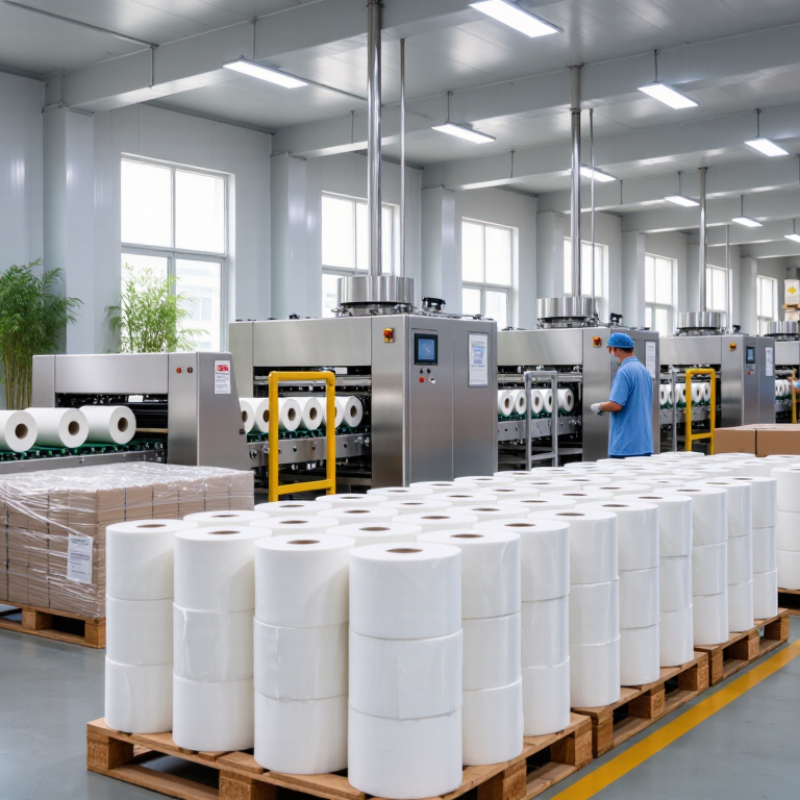
For bulk buyers, “eco-friendly” should describe a product’s full supply chain, not just its wrapper. Start with fiber: ask whether it comes from responsibly managed forests, recycled sources, or a documented blend. Request chain-of-custody records and current, independent certification where available. Paper claims need evidence.
Then assess manufacturing details. Recycled content can reduce demand for virgin fiber, but performance still matters: tissue that sheds, tears, or requires extra sheets may create more waste in daily use. Compare basis weight, absorbency, softness, and strength under the same test conditions. Ask suppliers for mill-level data on energy, water use, and wastewater treatment, rather than relying on broad “green” language. These figures may vary by site.
Packaging and delivery count, too. Look for right-sized cartons, recyclable packaging, and efficient shipment loads, while checking that products stay clean and protected in storage. For a trial, test cases in actual dispensers and record sheets used per visit, breakage, and staff feedback. No single metric settles the question. Supplier data can be incomplete; note gaps and request updates rather than treating one certificate as proof of every environmental benefit. This is a practical checklist, not a perfect scorecard.
Use this framework to assess bulk tissue-paper offers from suppliers in China. It defines verifiable product and manufacturing considerations; it is not a supplier ranking or a claim about any individual supplier.
| Evaluation dimension | What an eco-conscious offer may include | Evidence to request | Bulk-buyer checks |
|---|---|---|---|
| Fiber source | Recycled fiber, responsibly sourced virgin fiber, or a documented blend. Bamboo or other alternative fibers should also have traceable sourcing information. | Fiber-content declaration, supply-chain records, and current chain-of-custody documentation where a certified sourcing claim is made. | Confirm the stated fiber mix applies to the exact product grade and is consistent across production lots. |
| Recycled content | A clearly stated recycled-fiber percentage, with pre-consumer and post-consumer content distinguished where relevant. | Product specification and supporting records for the recycled-content claim. ISO 14021 provides principles for self-declared environmental claims. | Check how recycled content is calculated, whether it refers to fiber or the finished product, and whether the claim is independently verified. |
| Responsible forestry claims | For virgin fiber, sourcing may be supported by a recognized forest-management or chain-of-custody certification, such as FSC or PEFC, when applicable. | Valid certificates and documentation linking the certified claim to the product, facility, and transaction. | Verify certificate scope and validity; do not treat a supplier’s general certification as proof that every product is certified. |
| Pulp processing and bleaching | Suppliers may disclose whether pulp is processed using elemental chlorine-free (ECF) or totally chlorine-free (TCF) bleaching. | Process declaration and relevant environmental or product documentation. | Bleaching terminology alone does not establish a product’s overall environmental impact. Assess fiber sourcing, emissions, and other production factors too. |
| Manufacturing impacts | Measured and managed use of water and energy, wastewater treatment, and control of air emissions and production waste. | Facility-level environmental data, monitoring records, permits where applicable, and an environmental management system audit or certificate. | ISO 14001 relates to an environmental management system; it is not, by itself, certification that a tissue product is environmentally preferable. |
| Product performance | Strength, absorbency, softness, and lint performance suited to the intended use, without relying on unsupported environmental claims. | Technical data sheet, test methods, and representative samples from the offered grade. | Compare products at equivalent sheet size, ply, basis weight, and test conditions. Confirm that performance meets the buyer’s use requirements. |
| Chemical and use-specific requirements | Relevant safety and regulatory documentation for the intended market and use. Food-contact requirements apply only when the product is intended for food-contact use. | Applicable test reports, declarations, and compliance documents for the destination market and specified application. | Define the intended use and destination market before ordering; avoid treating a general safety statement as proof of compliance for every application. |
| Packaging and shipment | Packaging specifications that disclose material types and support practical recycling or reduced packaging where feasible. | Packaging material breakdown, carton specifications, and packing details for the quoted shipment. | Evaluate packaging alongside product protection, pallet efficiency, and transport requirements; request details for the actual order configuration. |
| Traceability and batch consistency | Documented product specifications and a process for identifying production lots and addressing quality issues. | Lot identification method, inspection records, approved specification, and change-notification procedure. | Agree on acceptance criteria, sample approval, tolerances, and procedures for handling out-of-specification deliveries before placing a bulk order. |
| Environmental claim transparency | Specific, qualified claims that identify what is being measured or certified and avoid vague terms such as “green” without supporting detail. | Claim wording, scope, supporting data, and the applicable certificate or verification record. | Check that claims refer to the quoted grade and are current, substantiated, and permitted in the destination market. |

Whether your solution requires a single pumping application or an expansive engineered system,
CheckPoint is committed to becoming your partner in excellence.