What is Carbon Steel Pipe and Its Applications in Industry?
Carbon Steel Pipe is an essential material in various industrial applications. Its unique properties make it a popular choice for many sectors. This type of pipe is made from carbon steel, which provides strength and durability. The steel alloy contains a minimal amount of carbon, making it adaptable for different uses.
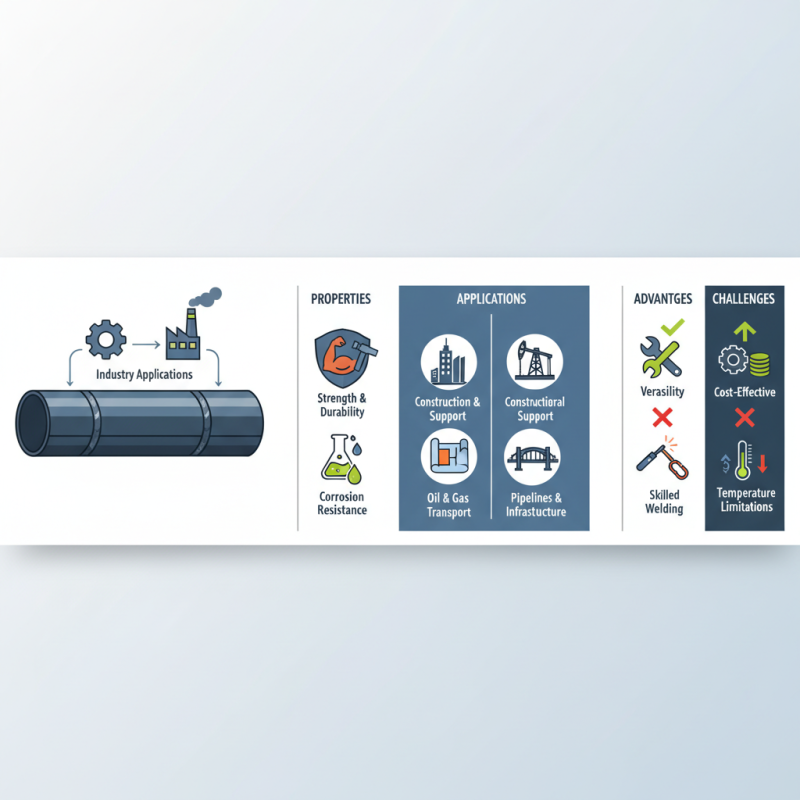
In construction, Carbon Steel Pipe is often used for structural support. Its versatility allows it to be found in buildings, bridges, and pipelines. In the oil and gas industry, these pipes transport fluids and gases under high pressure. Their resistance to corrosion enhances their reliability in harsh environments.
However, while Carbon Steel Pipe is widely used, it is not without challenges. Its welding process requires skilled labor to prevent weak points. Additionally, it may not perform well in extreme temperatures compared to other materials. This highlights the need for careful selection based on specific operational requirements. Understanding the strengths and limitations of Carbon Steel Pipe is crucial for engineers and industry professionals.
Definition and Composition of Carbon Steel Pipe
Carbon steel pipe is a crucial element in various industries, particularly in construction and manufacturing. Its definition primarily revolves around its composition, which includes iron, carbon, and varying amounts of other elements. Typically, carbon content can range from 0.05% to 2.0%. This composition imparts strength, ductility, and durability to the pipes. According to the American Society for Testing and Materials (ASTM), carbon steel is categorized based on its carbon content, which influences its mechanical properties.
The applications of carbon steel pipes are expansive. They are commonly used in structural applications, such as in building frameworks and pipelines for oil and gas. The Global Steel Pipe Market report indicates that the demand for carbon steel pipes is projected to reach 1.4 trillion USD by 2026, reflecting their enormous utility. However, while they offer significant strength, carbon steel pipes can be susceptible to corrosion. This limitation raises concerns in industries where longevity and maintenance are critical.
Despite these challenges, carbon steel pipes continue to be favored for their cost-effectiveness and versatility. The right selection is vital, considering factors like thickness and treatment processes. Some pipes may require additional coatings to enhance their resistance to environmental factors. Understanding these aspects can lead to better decision-making in industrial applications.
Carbon Steel Pipe Production by Application (2023)
Types of Carbon Steel Pipes and Their Properties
Carbon steel pipes are known for their strength, versatility, and cost-effectiveness. These pipes primarily consist of iron and carbon, with carbon content typically ranging from 0.05% to 2.0%. The most common types include seamless, welded, and spiral pipes. Seamless pipes are favored for high-pressure applications. They are produced from solid round billets. Welded pipes, on the other hand, are made from flat plates. They are generally used in low-pressure systems, making them a practical choice in many industries.
The properties of carbon steel pipes vary significantly based on their composition and manufacturing process. High-carbon variants have enhanced hardness and strength, making them suitable for heavy-duty applications. Low-carbon steel provides better ductility and weldability. According to industry reports, the demand for carbon steel pipes is expected to grow by 5% annually. This growth is driven by sectors such as oil and gas, construction, and automotive industries. The success of these applications depends heavily on the specific properties of the carbon steel used.
Still, challenges remain in carbon steel pipe production. Issues like corrosion resistance and weld quality are critical. Selecting the right type requires expertise. Not all applications allow for carbon steel, especially in corrosive environments. Therefore, understanding the properties of various grades is essential for industry stakeholders. This helps avoid costly failures and ensures safety and efficiency in applications.
Common Manufacturing Processes for Carbon Steel Pipe
Carbon steel pipe is a crucial component in various industries, often utilized for its durability and strength. The manufacturing processes for these pipes significantly affect their quality and performance. Notably, two common methods include seamless and welded processes.
In the seamless method, carbon steel is heated and pierced to create a hollow pipe without joints. This technique ensures higher pressure resistance. However, it requires precise control of temperature and material properties. Any deviation can lead to defects.
On the other hand, the welded process involves rolling flat steel into a cylindrical shape and then welding the edges. This method is cost-effective and allows for larger diameters. Yet, welded pipes may have weaker points at the seams.
Both processes highlight the importance of quality control in steel pipe manufacturing. Inspecting for wall thickness and structural integrity is essential. Companies often grapple with achieving the ideal balance between cost and quality. A single mistake during production can compromise the entire batch.
Thus, continuous improvements in manufacturing techniques are vital for advancements in carbon steel pipe applications.
Applications of Carbon Steel Pipe in Various Industries
Carbon steel pipes are widely utilized across various industries due to their strength, durability, and cost-effectiveness. In the construction sector, these pipes serve critical roles in structural applications and plumbing systems. The global carbon steel pipe market was valued at approximately $50 billion in 2022 and is projected to grow steadily, reflecting increasing demand.
In the oil and gas industry, carbon steel pipes are fundamental for transporting oil, gas, and other fluids. According to a recent industry report, nearly 70% of pipelines are made from carbon steel. This material's resistance to deformation and high tensile strength make it ideal for high-pressure applications. Moreover, carbon steel's ability to withstand extreme temperatures ensures safe and effective operation in harsh environments.
**Tip:** When selecting carbon steel pipes, consider factors such as wall thickness and corrosion resistance. These features influence performance and longevity in different settings.
The manufacturing sector also relies on carbon steel pipes for machinery and equipment production. These pipes are essential for fluid transfer in various processes, contributing to efficiency and productivity. However, companies must be mindful of quality control. Minor defects can lead to significant operational issues over time.
**Tip:** Regular inspections and maintenance of carbon steel pipes can prevent leaks and failures, saving costs and enhancing safety.
What is Carbon Steel Pipe and Its Applications in Industry?
| Industry | Application | Pipe Size (Inches) | Pressure Rating (psi) | Standards |
| Oil & Gas | Transport crude oil and natural gas | 2-36 | 1000-3000 | API 5L |
| Construction | Structural support and scaffolding | 1-24 | Various | ASTM A500 |
| Automotive | Manufacturing chassis and exhaust systems | 1.5-3 | 500-1500 | ISO 9001 |
| Power Generation | Steam and cooling water transmission | 4-48 | 2000-5000 | ASME B36.10 |
| Water Supply | Municipal water distribution | 2-30 | 150-600 | AWWA C200 |
Advantages and Limitations of Using Carbon Steel Pipe
Carbon steel pipe is widely used in various industries due to its durability and strength. Its primary advantage lies in its cost-effectiveness compared to other materials. The manufacturing process is efficient, leading to lower overall project costs. Additionally, carbon steel pipes have excellent tensile strength and resistance to high pressure. This makes them ideal for transporting liquids and gases in sectors like oil and gas, construction, and manufacturing.
However, there are limitations to using carbon steel pipe. One major concern is its susceptibility to corrosion. When exposed to moisture and certain chemicals, carbon steel can rust over time. This can lead to reduced structural integrity and increased maintenance costs. Additionally, carbon steel pipes are not ideal for extremely high temperatures or aggressive environments. Users must consider the specific conditions of their applications to ensure reliability and safety.
For industries that require high-quality standards, carbon steel might not always meet safety regulations. This aspect needs careful consideration during material selection. The balance between advantages and limitations is crucial in making informed decisions about using carbon steel pipes. Each application demands thorough risk assessment to optimize performance while maintaining safety.