


What Is the Best Laboratory Coating Machine in 2026?
Choosing the best Laboratory Coating Machine in 2026 requires more than comparing product prices. It demands a careful look at coating uniformity, process control, material compatibility, and long-term reliability. A machine that performs well with tablets may struggle with films, granules, or sensitive laboratory samples. Small differences matter. A stable spray pattern, accurate airflow, and responsive temperature control can affect every batch.
This guide examines laboratory coating equipment from a practical and technical perspective. It considers capacity, coating pan design, atomizing systems, drying performance, cleaning access, and software usability. Experience from daily laboratory work is valuable here. Operators notice details that brochures often overlook, such as awkward inspection windows, inconsistent nozzle pressure, or residue trapped behind seals. These issues can slow experiments and weaken repeatability.
The “best” choice is not universal. It depends on research goals, sample size, formulation behavior, and available facilities. Regulatory expectations and documented quality procedures also deserve attention, especially in pharmaceutical and academic environments. Reliable manufacturers should provide clear specifications, service support, validation guidance, and traceable performance data. Still, no machine is perfect. Even advanced systems may require careful setup, operator training, and repeated testing. That is worth remembering.
By comparing real operating needs with measurable specifications, researchers can make a more confident decision in 2026. The discussion will highlight leading machine types, practical selection criteria, and common purchasing mistakes. It will also question popular assumptions when the evidence seems incomplete. Practical judgment remains essential.
What Is a Laboratory Coating Machine?
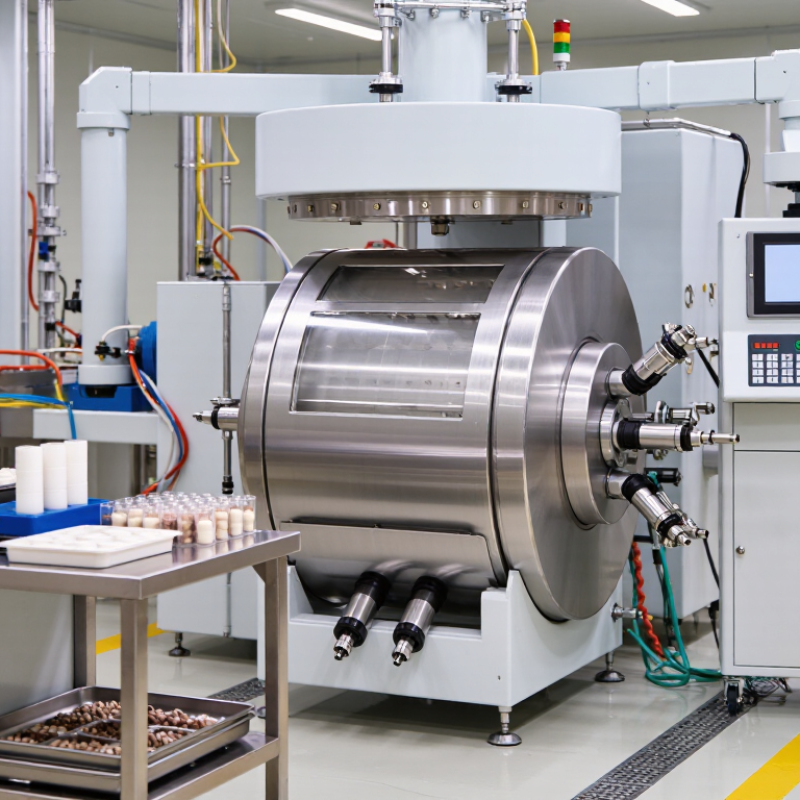
A laboratory coating machine is a compact system for applying a controlled film onto a test surface. The surface may be metal foil, glass, polymer sheet, paper, or another prepared substrate. It spreads liquid, slurry, or suspension at a measured thickness and speed.
Common systems use a doctor blade, slot die, spray head, or dip mechanism. Each method creates different coating behavior. A doctor blade offers direct thickness control. A slot die supports more consistent continuous layers. Operators can adjust coating speed, gap size, drying temperature, and solution flow. These settings affect coverage, adhesion, surface texture, and drying defects.
A reliable machine should provide stable movement, repeatable settings, and clear data records. Safety shields and easy cleaning also matter during daily testing. In practical laboratory work, small errors can change the result. Uneven substrate tension may create streaks. A slightly blocked nozzle may distort an entire sample. Experienced technicians inspect the film under suitable lighting and measure thickness after drying.
The best choice in 2026 depends on the material, sample size, and required accuracy. Automation helps, but it does not replace judgment. A programmed setting can still produce a poor coating. That uncomfortable detail deserves attention. Researchers should test several speeds and drying conditions before trusting one process. Calibration records, maintenance logs, and controlled sample preparation make the results more credible.
How Laboratory Coating Machines Work
What Is the Best Laboratory Coating Machine in 2026?
How Laboratory Coating Machines Work
A laboratory coating machine spreads a liquid layer across glass, metal, polymer film, or another test surface. The operator fixes the substrate on a flat bed or rotating holder. A pump then delivers a measured coating volume. A blade, slot die, spray head, or spin system controls the wet film thickness. Drying may use heated air, infrared energy, or controlled room conditions.
Small changes matter. Web speed, solution viscosity, temperature, and humidity can alter the final layer. A 10% speed increase may reduce coating thickness in some systems, but the result depends on formulation behavior. ASTM D1005 remains widely used for measuring dry film thickness. ASTM D3359 also supports adhesion testing after curing.
The best machine depends on the experiment, not its price. For repeatable thin films, precise fluid delivery and stable motion are essential. For irregular samples, adjustable fixtures may matter more. Grand View Research estimated the global laboratory automation market at about USD 5 billion in 2023, with continued growth through 2030. MarketsandMarkets also projects strong expansion in coating equipment demand, driven by quality control and advanced materials research.
Reality is less perfect. Edge buildup can distort measurements. Cleaning can change the next result. Even skilled operators introduce variation. I would record humidity, drying time, and blade pressure for every trial. That habit often reveals more than a glossy specification sheet.
What Is the Best Laboratory Coating Machine in 2026?
How laboratory coating machines work and how common coating methods compare by representative wet-film thickness.
Laboratory coating machines meter a liquid formulation onto a moving or rotating substrate, control the wet-film thickness, and then use evaporation or thermal drying to form the final coating. The best method depends on the required thickness, uniformity, material viscosity, substrate size, and production speed. Slot-die and blade coating are often selected for repeatable, adjustable films, while spin and spray coating are useful for specialized small-area or irregular-surface work. The thickness windows shown are representative engineering ranges and vary with formulation, tooling, and process settings.
Which Features Define the Best Machine in 2026?
What Is the Best Laboratory Coating Machine in 2026?
The best laboratory coating machine is defined by control, repeatability, and practical maintenance. It should regulate coating speed, liquid flow, drying temperature, and web tension with precision. A stable machine produces even films across glass, metal, polymer, or flexible substrates. Small variations matter. They can change adhesion, thickness, surface texture, and test results. Clear digital records also support reliable comparisons between experiments. Operators should review stored settings, alarms, and calibration history before trusting a result.
Tips: Check coating uniformity at the edges, not only in the center. Ask for measurable thickness data across repeated samples. Choose tool-free cleaning where possible. Inspect the pump, nozzle, and drying chamber after each trial. A simple cleaning routine often prevents expensive inconsistency.
Safety and usability define quality too. The machine should include guarded moving parts, controlled heat, emergency stops, and sensible ventilation connections. Easy access helps technicians clean without disturbing sensitive components. Modular heads can support different liquids and research goals. However, more options do not always mean better performance. Extra controls may confuse new users or increase maintenance demands. No machine is perfect. A thoughtful buyer should test real materials, not rely only on polished specifications. The strongest choice balances accuracy, operator training, service access, and honest long-term operating costs.
How to Compare Laboratory Coating Machine Types
Choosing the best laboratory coating machine in 2026 starts with comparison, not advertising. The right type depends on the substrate, coating chemistry, and required film thickness.
Spin coaters suit small, flat samples and produce smooth films quickly. However, they waste material and struggle with large or flexible substrates.
Dip coaters offer simple thickness control through withdrawal speed. They suit porous surfaces, although edge buildup can complicate measurements.
Spray systems cover uneven shapes, but airflow, nozzle distance, and humidity require careful control. Small changes matter.
Slot-die machines provide repeatable wet films with relatively low material waste. They work well when researchers need a defined coating width and continuous movement. Yet they require setup knowledge, including pump calibration and web alignment.
A compact blade or bar coater may suit early formulation screening. It is affordable and easy to clean, but manual pressure can reduce repeatability.
Compare machines using the same liquid, substrate, drying temperature, and target thickness. Record coating speed, defects, cleaning time, and usable sample area. Operator training also matters. Automation does not replace understanding.
Tips: Request a trial with your actual formulation. Measure thickness at several points, not only the center. Check temperature and humidity control. Ask about calibration procedures, maintenance, and replacement parts. Budget for failed samples. They are part of real development. Test the edges. A machine that performs well once may still need deeper evaluation.
How to Choose the Right Laboratory Coating Machine for Your Needs
What Is the Best Laboratory Coating Machine in 2026?
Choosing the right laboratory coating machine starts with the material, not the machine’s advertised speed. Define substrate size, coating viscosity, target thickness, drying method, and batch volume. A machine for aqueous films may perform poorly with solvent-based formulations. Safety and ventilation also deserve early attention.
Grand View Research reported that the laboratory automation market was valued at about USD 5.4 billion in 2023, with continued growth expected through 2030. This expansion increases equipment choices, but more options can create confusion. Select programmable speed control, uniform air distribution, and measurable temperature stability. ASTM coating-test guidance also emphasizes repeatable film thickness and controlled application conditions. Ask for actual repeatability data, not only marketing claims.
Small details matter. Check whether the chamber fits your largest sample with space for airflow. Confirm cleaning access around the spray nozzle and sample holder. A digital readout is useful, but calibration records matter more. Energy use should be reviewed beside drying time; faster is not always cheaper. The International Energy Agency continues to identify industrial efficiency as a major energy priority, making heat recovery and standby control practical evaluation points. I would also run a pilot test using your own formulation. Laboratory conditions rarely match a brochure. Even experienced users may overlook operator learning time, maintenance access, or waste generated during setup.
What Is the Best Laboratory Coating Machine in 2026? - How to Choose the Right Laboratory Coating Machine for Your Needs
| Machine Type | Best For | Typical Coating Thickness | Typical Operating Range | Suitable Substrates | Main Advantages | Key Limitations |
|---|---|---|---|---|---|---|
| Dip Coater | Immersion coatings, thin films, surface-treatment studies, and research requiring simple layer formation | Approximately 50 nm to 100 µm, depending on viscosity, withdrawal speed, and solution properties | Withdrawal speed commonly about 1 to 10,000 µm/s; programmable dwell and drying stages may be available | Glass, silicon, metals, ceramics, polymers, fibers, and irregular small parts | Low material consumption, straightforward operation, and good repeatability when solution conditions are controlled | Drainage marks, edge effects, and sensitivity to viscosity, surface tension, and evaporation rate |
| Spin Coater | Photoresists, polymers, sol-gel films, electronic materials, and highly uniform coatings on flat samples | Approximately 10 nm to 10 µm for many solution-based materials | Typically about 100 to 12,000 rpm with programmable acceleration, rotation time, and multi-step recipes | Flat silicon wafers, glass slides, ceramic discs, metal coupons, and polymer sheets | Excellent thickness uniformity on flat substrates, fast processing, and precise recipe control | Material waste from overspray, unsuitable for large or irregular parts, and limited edge coverage |
| Laboratory Spray Coater | Large-area coatings, textured surfaces, porous materials, and applications requiring adjustable coverage | Approximately 1 to 100 µm per pass, depending on nozzle, solids content, and spray parameters | Nozzle pressure often about 0.5 to 3 bar; motion speed and flow rate are programmable on automated systems | Metals, plastics, glass, ceramics, textiles, foams, and three-dimensional components | Flexible geometry coverage, scalable process parameters, and compatibility with water- or solvent-based formulations | Overspray, nozzle clogging, operator exposure risks, and greater dependence on ventilation and masking |
| Slot-Die Coater | Continuous thin-film research, printed electronics, battery electrodes, and web-based coating studies | Approximately 0.5 to 100 µm wet film thickness, depending on flow rate, gap, and coating speed | Coating speed commonly about 0.1 to 20 m/min in laboratory systems; shim and pump settings control width and flow | Flexible films, metal foils, glass plates, coated papers, and other continuous or semi-continuous webs | Low waste, repeatable wet-film delivery, and strong relevance to scale-up and roll-to-roll manufacturing | Higher setup complexity, narrower operating window, and sensitivity to rheology, pump pulsation, and web alignment |
| Bar or Rod Coater | Fast screening of inks, slurries, paints, electrode materials, and functional coatings on flat sheets | Approximately 1 to 200 µm wet film thickness, depending on wire size and formulation | Manual or motorized coating speeds commonly range from about 0.01 to 10 m/min | Paper, plastic films, metal foils, glass, and flat laboratory panels | Simple design, low cost of ownership, rapid formulation comparison, and minimal training requirements | Less suitable for complex shapes and very thin high-precision films; uniformity depends strongly on leveling and substrate flatness |
| Electrostatic Powder Coater | Dry powder coatings, protective finishes, and studies involving thermoset or thermoplastic powder materials | Approximately 30 to 150 µm after curing, depending on powder characteristics and application settings | Typical charging voltages are about 20 to 100 kV; curing commonly requires approximately 120 to 220°C, material-dependent | Conductive metals and properly prepared heat-resistant components | Very low solvent emissions, efficient powder utilization, and durable cured films | Requires electrical safety controls and an oven; less suitable for heat-sensitive substrates and very small wet-film studies |
Article Source:

Whether your solution requires a single pumping application or an expansive engineered system,
CheckPoint is committed to becoming your partner in excellence.


