



What Are the Best China Home Elevators?
Choosing the best China Home Elevators requires more than comparing prices, cabin finishes, or advertised lifting speed. A suitable model must match the building structure, daily traffic, user needs, and local installation conditions. Homeowners should examine shaft dimensions, rated load, door width, emergency lowering, battery backup, noise levels, and after-sales support. A beautiful glass cabin means little if technicians cannot reach replacement parts quickly.
Industry consultant John T. Keliher once said, “The best elevator is the one that safely serves its users every day.” That practical idea matters when reviewing Chinese manufacturers. Companies such as Cibes, Savaria, Stiltz, and several established Chinese suppliers offer different designs, technologies, and service networks. However, product quality can vary between factories, distributors, and installation teams. The brand name alone is not enough.
Look closely.
A reliable comparison should include factory certifications, documented testing, warranty terms, maintenance schedules, and installer experience. Ask whether the supplier has completed similar projects in private homes, villas, or renovated buildings. Request photographs of machine rooms, guide rails, control cabinets, and finished cabins. Small details matter, including leveling accuracy and the sound heard beside a bedroom at night.
This guide does not treat the cheapest quotation as the best choice. That would be convenient, but incomplete. Some buyers may also overvalue luxurious materials while overlooking accessibility and long-term servicing. The strongest option balances safety, comfort, energy use, visual integration, and dependable technical support. In the following sections, we compare the leading Home Elevators options available in China and identify where each model performs well—and where it may disappoint.
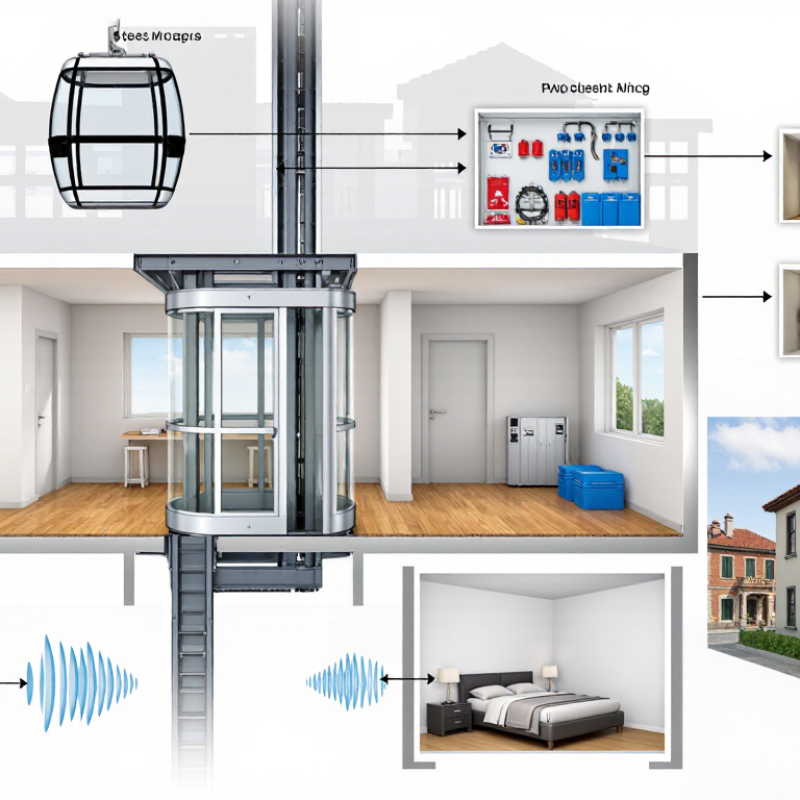
What Defines a High-Quality China Home Elevator?
A high-quality China home elevator begins with safety, not decoration. China Elevator Association statistics reported more than 10 million elevators in service nationwide in 2023. That scale shows why traceable manufacturing matters. Buyers should request factory test records, installation certificates, and maintenance procedures. The lift should follow China’s GB/T 21739 safety framework, with suitable door locks, overspeed protection, emergency lowering, and reliable intercom communication.
Comfort is equally practical. A good unit should start smoothly, stop level with the floor, and keep cabin noise low at night. ISO 8100-1 and ISO 8100-2 provide widely recognized benchmarks for lift safety and design. Energy use also deserves attention. The International Energy Agency reports that buildings consume roughly 30% of global final energy, so standby controls, efficient motors, and LED lighting are not minor details. Ask for measured standby power, not only attractive efficiency claims.
Installation quality can decide the real result. Experienced technicians should check shaft dimensions, pit drainage, load balance, and evacuation access before delivery. I have seen specifications look excellent while site measurements remained vague. That is a warning sign. A 2024 Fortune Business Insights market report identifies residential elevators as a growing global segment, yet market growth does not guarantee equal workmanship. Warranty terms should name response times, spare-part availability, inspection duties, and training. A quieter ride is valuable. Verifiable records matter more.

Which Types of Home Elevators Are Made in China?
China produces several home-elevator types, not one universal solution.
China Elevator Association statistics for 2023 placed the country’s installed elevator base above 10 million units. That scale supports a mature supply chain for compact residential equipment, including machine-roomless traction elevators, screw-driven elevators, hydraulic elevators, and platform lifts. Traction models suit two- to five-storey homes and usually provide smoother, faster travel. Screw-driven systems need less overhead space and can work well where a separate machine room is impossible. Hydraulic models offer strong starting torque, but oil temperature and maintenance deserve careful attention.
Platform lifts are practical for short rises, wheelchair access, and limited construction space. They normally travel more slowly than enclosed passenger elevators. The global elevator and escalator market reports published by Fortune Business Insights identify modernization, accessibility, and residential construction as important demand drivers. However, market reports often combine commercial and residential equipment, so their percentages cannot directly predict a private house project. That distinction matters.
From site experience, shaft dimensions, pit depth, power supply, noise limits, and local inspection rules usually decide the best type. A compact traction elevator may look ideal on paper, yet a shallow pit can make installation expensive. Screw systems appear simpler, but their drive components still require skilled servicing. Check rated load, emergency lowering, door protection, backup power, and maintenance response before comparing prices. Cheap is not always practical. Independent inspection records and clear technical documentation are stronger evidence than showroom claims.
How Do China Home Elevators Compare in Safety and Performance?
China home elevators can provide practical access between floors, but safety depends more on engineering and installation than on appearance. A reliable unit should include door interlocks, overspeed protection, emergency lighting, backup lowering, and a clear alarm system. These features should be tested during commissioning, not merely listed in a brochure.
Performance is easier to judge on site. During a trial ride, listen for grinding, sudden stops, or unusual vibration. The cabin should start smoothly and stop level with the floor, usually within a small, safe margin. Check whether the rated load suits the household, especially when carrying groceries, mobility equipment, or several passengers. Compact models may save space, yet their smaller cabins can feel restrictive. Noise can also increase when the machine room or guide rails are poorly installed.
Qualified technicians should verify electrical protection, shaft dimensions, braking systems, and emergency procedures. Ask for inspection records, maintenance intervals, and replacement-part support. Local building requirements and applicable safety standards still matter. A low purchase price may hide weak after-sales service or difficult repairs. That concerns me more than decorative panels. I would also inspect the elevator after several weeks of use, because minor leveling errors or door delays may appear only after regular operation. Even a well-designed lift needs documented maintenance and careful daily use.
What Are the Best China Home Elevators? - How Do China Home Elevators Compare in Safety and Performance?
| Residential Elevator Configuration | Typical Rated Load | Typical Speed | Typical Travel Range | Drive and Power Characteristics | Safety and Performance Advantages | Key Limitations or Checks | Overall Suitability |
|---|---|---|---|---|---|---|---|
| Traction Elevator with Machine Room | 320–630 kg | 0.40–1.00 m/s | Up to approximately 15–25 m in many private homes | Electric traction system with counterweight; commonly available in single-phase or three-phase configurations depending on motor capacity. | High stability Efficient for frequent use, smooth leveling, and suitable for multiple floors. A machine room can simplify access to major equipment during servicing. | Requires additional machine-room space and accurate structural planning. Verify overspeed protection, emergency braking, door interlocks, and emergency lowering provisions. | ★★★★★ |
| Machine-Room-Less Traction Elevator | 320–630 kg | 0.40–1.00 m/s | Up to approximately 15–25 m in many private homes | Gearless or geared traction equipment is installed within the shaft or adjacent equipment space, reducing building footprint. | Space efficient Good ride quality, lower visual impact, and generally lower operating energy than hydraulic systems for comparable residential use. | Maintenance access must be carefully designed. Check heat dissipation, rescue access, controller location, battery backup, and compliance with applicable local elevator codes. | ★★★★★ |
| Hydraulic Home Elevator | 320–450 kg | 0.15–0.50 m/s | Commonly up to approximately 10–15 m | Hydraulic pump and cylinder provide lifting force. The system usually needs a dedicated cabinet or plant area and may require greater pit or structural coordination. | Strong low-rise option Reliable for short travel, effective at handling heavier loads, and capable of providing smooth starts and stops when correctly tuned. | Higher energy use during upward travel, slower speed, possible hydraulic-oil temperature variation, and more stringent inspection of hoses, valves, seals, and leak protection. | ★★★★☆ |
| Screw-Drive Home Elevator | 250–400 kg | 0.10–0.20 m/s | Typically up to approximately 10–12 m | An electric motor rotates a screw or spindle mechanism. The design can avoid a conventional counterweight and may require limited pit depth. | Simple installation Suitable for low-rise homes, often adaptable to existing buildings, and generally provides controlled movement with a compact shaft arrangement. | Slower travel, potential mechanical wear at the screw and nut assembly, and the need to verify lubrication, load limits, emergency descent, and long-term component availability. | ★★★☆☆ |
| Platform Lift | 225–400 kg | 0.10–0.15 m/s | Often suitable for 1–3 levels and approximately 4–10 m | May use screw, hydraulic, or chain-based lifting technology. The platform format can reduce enclosure requirements in some applications. | Accessibility focused Useful for wheelchair access, lower-rise movement, and retrofit projects where a full enclosed elevator is not practical. | Usually slower and less enclosed than a conventional elevator. Confirm guarding, gate interlocks, anti-crush protection, weather resistance, and whether the installation meets elevator or platform-lift regulations. | ★★★★☆ |
| Panoramic Glass Home Elevator | 320–450 kg | 0.30–0.60 m/s | Commonly up to approximately 15–20 m | Usually based on traction or screw-drive technology, combined with laminated or tempered safety glazing and a customized enclosure. | Premium appearance Provides visibility, natural light, and strong architectural integration while retaining the safety systems of the underlying elevator technology. | Glass adds weight and cost; inspect glazing certification, edge protection, thermal performance, cleaning access, cabin ventilation, and the structural fixing method. | ★★★★☆ |
| Vacuum Pneumatic Elevator | 150–250 kg | 0.15–0.30 m/s | Generally intended for low-rise travel of approximately 6–12 m | Air-pressure differential moves the cabin inside a sealed cylindrical tube. It normally requires limited excavation and no conventional shaft counterweight. | Low structural impact Can be suitable for selected retrofit applications and may offer a distinctive compact design with limited building work. | Lower capacity, limited travel and cabin size, audible pump operation, and specialized maintenance requirements. Confirm emergency descent, sealing performance, power-failure operation, and local approval. | ★★★☆☆ |
| Compact Home Elevator with Shallow Pit | 250–400 kg | 0.15–0.40 m/s | Typically up to approximately 10–15 m | May use a compact traction, screw, or hydraulic system engineered for reduced pit depth and limited overhead space. | Renovation friendly Helps adapt existing houses where excavation, headroom, or shaft dimensions are restricted. | Reduced pit and overhead dimensions can affect rescue access, cabin size, service clearance, and door arrangement. Verify all dimensions before construction and obtain approval from the responsible authority. | ★★★★☆ |
What Features Should Buyers Evaluate Before Choosing One?
When comparing China home elevators, evaluate the installation site before admiring the finishes. Measure shaft space, pit depth, overhead clearance, doorway width, and equipment access. Many private homes have limited structural reserves, so a professional site survey matters more than a polished specification sheet. Ask for rated load, travel speed, stopping accuracy, emergency lowering, door protection, and backup communication. Safety comes first. Confirm that the design follows applicable Chinese requirements and recognized standards, such as EN 81-41 where relevant.
The 2021 AARP Home and Community Preferences Survey found that 77% of adults aged 50 and older want to remain in their current homes. That statistic makes accessibility a practical buying factor, not a luxury. Choose wide entrances, clear controls, gentle acceleration, non-slip flooring, and enough cabin space for a wheelchair or caregiver. Good lighting helps at night. A small cabin may look elegant, but it can become frustrating after an injury or surgery.
Energy use also deserves scrutiny. The International Energy Agency’s 2023 Global Status Report for Buildings and Construction states that buildings consume about 30% of global final energy. Request standby consumption, motor efficiency, lighting controls, and maintenance intervals. Battery backup is useful, yet it does not replace a tested emergency procedure. I would not trust a low price without service records and spare-parts availability. Noise ratings can be incomplete, too; ask to hear a comparable installation during acceleration and braking.
How Can Buyers Select the Best China Home Elevator for Their Home?
A strong China home elevator is not selected by price alone. Buyers should match the lift to their family, building, and daily habits. Measure the proposed shaft, doorway, pit, and overhead space before requesting quotations. Measure twice. A compact home may need a screw, traction, or hydraulic design, depending on structure and local rules. Ask for rated load, travel speed, noise levels, and energy use in writing.
Safety details deserve close attention. Look for emergency lowering, door locks, overload protection, backup lighting, and a manual rescue procedure. Confirm that the control system can operate during a power interruption. A practical site inspection often reveals problems that drawings hide, such as uneven floors or limited maintenance access. Listen carefully. A smooth ride matters, but vibration near bedrooms may become irritating after installation.
Buyers should examine the supplier’s factory experience, installer qualifications, testing records, and after-sales response time. Request references for similar homes, not only large commercial projects. Check whether replacement parts can be supplied for several years and whether technicians serve your region. Compare the full ownership cost, including installation, inspections, electricity, and maintenance. The cheapest quotation may exclude essential work. I would also ask for a written warranty with clear exclusions. This is where many buyers become too optimistic. A beautiful cabin cannot compensate for poor drainage, weak support, or delayed service. Review local building requirements with a qualified professional before signing.
What Are the Best China Home Elevators?
Buyers should compare home elevators by practical specifications rather than brand names. The chart shows common residential planning benchmarks for three widely used elevator configurations.
Typical benchmark values: rated load and speed are common residential ranges, while pit requirements vary by equipment design and local building conditions. Always confirm the final specifications, safety certification, installation requirements, and maintenance support with the supplier and local authorities.
Article Source:

Whether your solution requires a single pumping application or an expansive engineered system,
CheckPoint is committed to becoming your partner in excellence.


