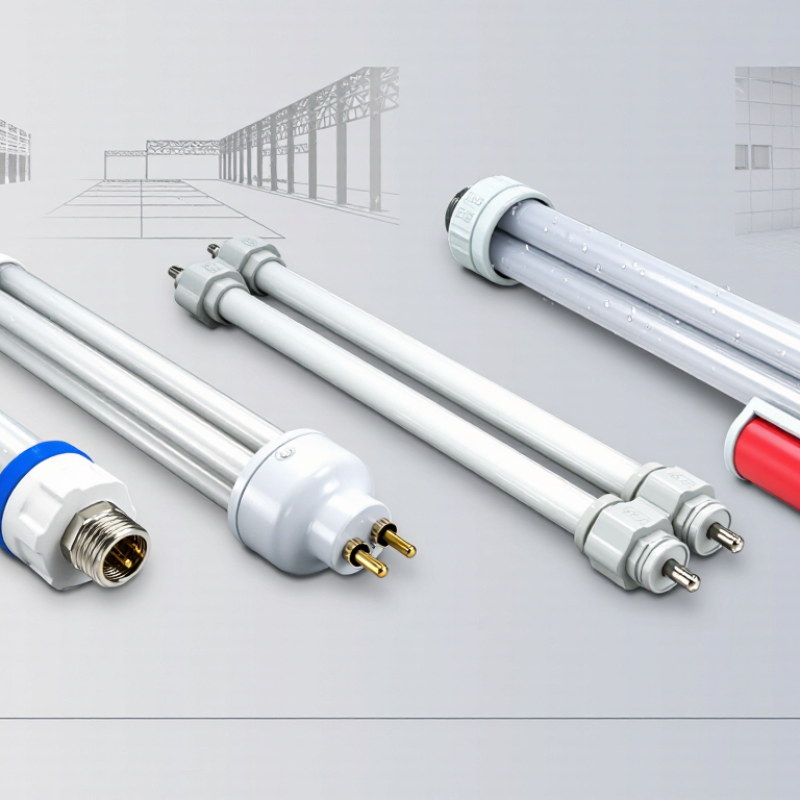
What Are the 2026 Top Waterproof LED Tube Types?

In 2026, the best Waterproof Led Tube options will be judged by more than bright output. Buyers increasingly want reliable protection, efficient operation, and simple maintenance in demanding spaces. Warehouses, parking areas, food-processing rooms, and covered walkways all expose lighting to moisture, dust, vibration, or temperature changes.

This introduction examines the leading waterproof LED tube types expected to shape the market. It considers integrated vapor-tight tubes, retrofit LED tubes, linkable linear systems, and emergency-ready models. Each type serves a different installation goal. Some provide sealed polycarbonate bodies. Others reduce replacement time by fitting existing fixtures. IP65 or IP66 ratings may suit many wet environments, but the rating alone does not prove total product quality. Seals, connectors, heat control, and testing records also matter.

Real-world experience often reveals details that product labels hide. A tube may look powerful in a showroom, then produce glare beneath a low ceiling. A cheaper model may also develop flicker after repeated temperature changes. Small details matter. Professional selection should compare lumen maintenance, color rendering, beam spread, warranty terms, and independent certification. Installation instructions must be followed carefully, especially when bypassing old ballasts or changing wiring. Qualified electrical support remains sensible.

The market is moving toward longer service life, lower energy use, smarter controls, and better resistance to harsh conditions. Yet “top” depends on the site. A cold storage room needs different performance from a humid retail corridor. This guide evaluates the strongest 2026 types with practical evidence, while acknowledging one limitation: specifications can vary between manufacturers and regions. Reliable decisions require testing, not attractive claims alone.

What Are the 2026 Top Waterproof LED Tube Types?

What Defines a Waterproof LED Tube in 2026

What Are the 2026 Top Waterproof LED Tube Types?

What Defines a Waterproof LED Tube in 2026

A waterproof LED tube is more than a sealed plastic body. Its protection begins with a verified IP rating under IEC 60529. IP65 means dust-tight protection and resistance to water jets. IP67 adds temporary immersion protection. These ratings describe tested conditions, not every outdoor installation. The label is not enough.

In 2026, common types include sealed glass tubes, polycarbonate tubes, and integrated linear LED fixtures. Sealed glass can provide strong optical clarity, while polycarbonate handles impact better in workshops and parking areas. Integrated fixtures usually manage moisture more effectively because they reduce exposed sockets and wiring. The U.S. Department of Energy’s SSL research identifies thermal management as a major factor in LED lifetime. That matters here. A tube may survive rain but fail early inside a hot, enclosed housing.

Industry data also supports careful efficiency testing. The International Energy Agency reported that LEDs already represent most global lighting sales, increasing attention on quality and lifecycle performance. DLC technical requirements emphasize tested efficacy, lumen maintenance, and electrical safety. Look for LM-80 and TM-21 documentation, not only impressive lumen claims. I still see products marketed as waterproof without clear test conditions. That creates uncertainty. Check cable glands, end-cap seals, operating temperature, and driver protection before choosing a tube. Even IP67 may be excessive indoors, while IP65 can be inadequate near pressure washing.

Which Waterproof LED Tube Types Lead the Market

What Are the 2026 Top Waterproof LED Tube Types?

Which Waterproof LED Tube Types Lead the Market

In 2026, IP65 and IP66 waterproof LED tubes lead many commercial projects. Their sealed polycarbonate housings resist dust, water spray, and daily cleaning. These tubes suit parking areas, food facilities, workshops, tunnels, and covered outdoor spaces. Integrated vapor-tight LED tubes are increasingly popular because they reduce wiring points and maintenance work. Many models provide 120 to 150 lumens per watt, although real performance depends on temperature and installation quality.

Retrofit waterproof tubes remain useful where existing fixtures are still serviceable. They can lower replacement costs, but ballast compatibility must be checked carefully. Direct-wire designs often improve efficiency and reduce future ballast failures.

Silicone-coated LED tubes offer extra moisture protection, yet heat management can be less predictable. I have seen sealed tubes perform well in cold rooms, then lose output when installed near hot machinery. The market is not perfectly settled.

Tips: Check the IP rating, operating temperature, beam angle, and warranty terms. Confirm the tube fits the fixture before ordering. Look for reliable photometric data and safety testing. A bright tube is not always the best tube. Choose the type that matches cleaning routines, humidity, and maintenance access. That decision is sometimes overlooked.

How Waterproof Ratings and Materials Affect Performance

The leading 2026 waterproof LED tube types are IP65 and IP66 vapor-tight tubes, IP67 immersion-rated tubes, and retrofit tubes installed inside sealed fixtures. According to IEC 60529, IP65 resists water jets, while IP67 supports temporary immersion under specified conditions. That difference matters in washdown rooms, parking structures, and coastal facilities.

Materials shape performance more than many buyers expect. Polycarbonate housings resist impact and usually tolerate demanding industrial handling. PMMA offers strong optical clarity, but it can crack more easily under impact or severe temperature changes. Silicone end seals remain flexible, helping prevent moisture paths around caps and wiring. Aluminum bodies improve heat transfer, yet exposed metal can corrode without suitable coatings. Small details matter.

The U.S. Department of Energy’s Solid-State Lighting research reports show that LED efficacy continues moving toward 200 lumens per watt in advanced products. Higher efficacy reduces heat, but waterproof sealing can trap heat around the LEDs. The International Energy Agency’s Energy Efficiency 2023 report identifies lighting as roughly 15% of global electricity use, making efficiency and service life practical concerns. In field installations, failed gaskets often appear before LED chips fail. That is easy to overlook. A higher IP rating also does not guarantee better light output. Installers should check lumen maintenance, operating temperature, drainage, and cable-entry design together. My cautious view: IP67 is excessive for some dry interiors, while IP65 may be insufficient near frequent high-pressure cleaning.

How to Compare Efficiency, Brightness, and Lifespan

What Are the 2026 Top Waterproof LED Tube Types?

Waterproof LED tubes now include IP65 retrofit tubes, IP67 sealed tubes, and complete vapor-tight fixtures. IP65 resists dust and water jets, while IP67 adds temporary immersion protection under IEC 60529 testing. For washrooms, car parks, and food-processing areas, the housing matters as much as the diode. A cheap tube inside a weak enclosure can still fail early.

Efficiency should be checked in delivered lumens per watt, not package claims. The U.S. Department of Energy’s 2023 SSL R&D Plan identifies laboratory LED performance above 200 lm/W, but installed waterproof products usually deliver less. Heat, diffusers, drivers, and water-resistant seals reduce output. Practical comparisons should record fixture lumens, input watts, and power factor. A 150 cm tube producing 2,400 lumens at 18 watts gives about 133 lm/W.

Brightness also depends on beam spread and mounting height. A frosted lens reduces glare, yet it can lower measured output. For working areas, compare maintained illuminance in lux at the floor, not only initial lumens.

Lifespan needs similar caution. The DOE notes that LED systems can last up to 25 times longer than incandescent lighting, but real life depends on temperature and driver quality. Look for LM-80 data and TM-21 projections, then inspect the warranty conditions.

The comparison is not perfectly clean. Some published hours assume cooler laboratories, not humid ceilings above machinery.

How to Select the Right Waterproof LED Tube for Each Setting

In 2026, waterproof LED tubes are not one universal product. The main types include IP65 vapor-tight tubes, IP67 sealed tubes, and retrofit tubes designed for existing fluorescent housings. IP65 resists dust and water jets, while IP67 also supports temporary immersion under IEC 60529. That difference matters in car parks, food-processing areas, greenhouses, and outdoor canopies. A lumen-only choice can still fail.

Match the tube to the location first. For covered corridors, an IP65 tube with a polycarbonate body usually offers practical protection and easy maintenance. Choose IP67 where flooding, hose cleaning, or heavy condensation is likely. In cold warehouses, check the published operating range and driver performance. LED output can fall in poorly ventilated housings. The U.S. Department of Energy’s solid-state lighting reports continue to identify thermal management as a major factor in LED life and efficacy.

Check the electrical design carefully. Ballast-compatible tubes may simplify replacement, but they can retain old wiring losses. Direct-wire tubes often improve control and reduce failure points, yet installation must follow local electrical rules. The International Energy Agency reports that lighting represents roughly 15% of global electricity use, so efficient selection has measurable impact. Still, manufacturers’ claimed lifetimes deserve scrutiny. Request LM-80 data, TM-21 projections, ingress-test evidence, and a clear warranty. I would not select a tube from lumens alone. Test one fixture first.

What Are the 2026 Top Waterproof LED Tube Types? - How to Select the Right Waterproof LED Tube for Each Setting

Waterproof LED Tube Type Typical Protection Level Construction and Installation Best-Fit Settings Key Advantages Limitations and Selection Checks Recommended Selection
IP65 Integrated LED Vapor-Tight Linear Fixture IP65
Dust-tight and protected against water jets from any direction.
A complete LED fixture with sealed end caps, gasketed housing, and an integrated LED light source. It normally replaces a complete fluorescent vapor-tight fixture rather than using an existing fluorescent ballast. Covered parking areas, workshops, utility rooms, warehouses, agricultural buildings, and semi-outdoor service areas. Good protection from dust, splashing water, and routine wash-down. Integrated construction can reduce maintenance associated with lamps and ballasts. IP65 does not mean the fixture may be submerged. Confirm the product’s electrical listing, mounting method, ambient-temperature range, and suitability for the local wet-location requirements. Choose this type for general damp or wet environments where water jets may occur but temporary immersion is not expected.
IP66 Heavy-Duty Waterproof LED Tube Fixture IP66
Dust-tight and protected against powerful water jets.
A sealed linear fixture with stronger gaskets, impact-resistant housing, and secure end-cap or lens construction. It is generally installed as a complete fixture. Food-processing support areas, commercial wash-down zones, industrial corridors, loading bays, garages, and exposed covered areas. Provides a higher level of water-jet protection than IP65 and is suitable for demanding cleaning conditions when the complete product is appropriately certified. It is not automatically suitable for immersion, high-pressure steam, corrosive chemicals, or extreme heat. Check chemical resistance and cleaning-procedure compatibility. Select IP66 when frequent or forceful wash-down is expected and the fixture will remain above standing water.
IP67 Submersible-Resistant LED Linear Fixture IP67
Dust-tight and protected against temporary immersion in water, generally up to 1 metre for up to 30 minutes under the applicable test conditions.
A fully sealed linear LED assembly designed for locations where water may accumulate temporarily. Cable glands, connectors, and mounting points must also maintain the required protection. Low areas subject to flooding, outdoor utility spaces, drainage facilities, marine-support areas, and locations near tanks or water channels. Offers temporary-immersion protection that IP65 and IP66 products do not provide. IP67 does not guarantee protection against continuous underwater operation, high-pressure cleaning, condensation inside an enclosure, or corrosive liquids. Installation details are critical. Use IP67 only when temporary immersion is a realistic risk and the manufacturer’s installation limits match the site conditions.
Sealed LED Tube for a Waterproof Retrofit Fixture Depends on the complete fixture
The tube rating alone does not determine the water protection of the installed system.
A replacement LED tube installed inside an existing sealed or vapor-tight housing. The fixture enclosure, lamp holders, wiring, and end-cap seals determine the final protection level. Retrofit projects in warehouses, workshops, parking structures, retail backrooms, and maintenance areas where existing housings are reusable. Can reduce replacement cost and installation disruption when the existing enclosure is in good condition and electrically compatible. Verify ballast compatibility, single-ended or double-ended wiring, lamp-holder condition, thermal limits, and whether the complete retrofit remains approved for wet locations. Never rely on the tube label alone. Choose this option for controlled retrofit work after inspecting the existing fixture and confirming the tube’s wiring and safety instructions.
Polycarbonate-Body Waterproof LED Tube Fixture Commonly IP65 or IP66
The actual rating must be confirmed for the complete fixture.
A linear LED fixture using a polycarbonate body or lens, sealed end caps, and gasketed connections. Polycarbonate is commonly selected where impact resistance is important. Sports facilities, workshops, parking areas, warehouses, agricultural buildings, and locations exposed to accidental impacts. Lightweight, impact-resistant, and suitable for many dusty or wet environments when properly sealed. The diffused lens can provide more uniform light and reduce visible LED points. Polycarbonate can be affected by certain chemicals, solvents, ultraviolet exposure, or elevated temperatures. Confirm material compatibility and UV suitability for outdoor use. Select this type when impact resistance and a durable diffused lens are more important than a traditional glass or acrylic appearance.
Glass-Body or Glass-Lens Waterproof LED Tube Fixture Commonly IP65 or IP66
The enclosure and seals, not the glass alone, establish the protection level.
A sealed linear fixture using a glass tube or glass lens, often combined with metal or polymer end caps and a gasketed housing. Food-related environments, clean industrial spaces, commercial kitchens, and applications requiring a rigid, easy-to-clean light surface. Glass generally has good resistance to many cleaning agents, does not yellow in the same way as some plastics, and offers a smooth surface for cleaning. Glass is heavier and more vulnerable to impact or breakage than polycarbonate. Check safety-glass construction, mounting security, temperature limits, and cleaning-chemical compatibility. Choose glass when chemical-cleaning resistance and surface cleanliness are priorities and the risk of impact is low.
Cold-Temperature Waterproof LED Tube Fixture Often IP65 or IP66
The IP rating and operating-temperature rating are separate specifications.
A sealed LED tube fixture using drivers, materials, and thermal management designed for low ambient temperatures. The exact operating range varies by product. Cold storage entrances, refrigerated warehouses, unheated garages, outdoor canopies, and winter-exposed service areas. Can provide reliable starting and stable operation in cold conditions when the driver and housing are properly rated. Do not select by IP rating alone. Confirm the minimum and maximum ambient temperature, driver performance, condensation control, cable flexibility, and required light output at low temperature. Use this type where the ambient temperature may fall below the normal indoor rating of standard LED fixtures.
UV- and Corrosion-Resistant Waterproof LED Tube Fixture Often IP66; verify the product
UV resistance and chemical resistance are additional specifications, not part of the IP code.
A sealed fixture made with UV-stabilized polymers, corrosion-resistant hardware, protective coatings, or chemically resistant lenses and gaskets. Outdoor walkways, coastal facilities, wastewater areas, agricultural sites, chemical-support areas, and locations with prolonged sunlight or corrosive atmosphere. Better long-term durability than a standard enclosure when ultraviolet exposure, salt air, fertilizer, or mild chemical vapors are present. IP protection does not measure resistance to salt, acids, solvents, ammonia, chlorine, or sunlight. Confirm the material and chemical-resistance data for the actual environment. Select this type when environmental exposure could damage ordinary plastics, metals, seals, or coatings even without direct water immersion.
Important selection note: IP65, IP66, and IP67 describe enclosure protection against dust and water under defined test conditions; they do not by themselves confirm electrical safety, energy efficiency, chemical resistance, impact resistance, or suitability for every wet location. Always verify the complete fixture’s safety certification, operating-temperature range, wiring method, mounting instructions, and local code requirements.

Whether your solution requires a single pumping application or an expansive engineered system,
CheckPoint is committed to becoming your partner in excellence.