



2026 Top Spinning Filter Types for Global Buyers?
Global buyers entering the 2026 polymer and textile market need more than a simple product list. They need to understand how each Spinning Filter performs under real production pressure. Melt temperature, polymer viscosity, pressure fluctuation, and contamination levels can change the result within minutes. A filter that looks efficient on paper may create excessive pressure during a long production run.
Dr. Harald Kopf, a polymer filtration specialist, offers a useful reminder: “Filtration performance must be judged inside the process, not outside it.” This principle guides the discussion in this article. Candle filters, leaf-disc filters, sand filters, backflush systems, and continuous screen changers each serve different operating conditions. Their value depends on throughput, filtration precision, cleaning method, service life, and total ownership cost. Buyers should inspect the filter media closely. A small damaged seal can release contaminants into an otherwise stable spinning line.
The 2026 market also brings practical questions. Can the system handle recycled polymer? Is replacement media available locally? Does the supplier provide test data, installation support, and traceable quality records? These details often separate a reliable purchase from an expensive lesson. Not every “high-efficiency” claim deserves immediate trust. Sometimes, the uncomfortable answer is simple: a lower initial price creates more downtime later. This guide compares leading Spinning Filter types with those realities in mind, while recognizing that no single design fits every global plant.
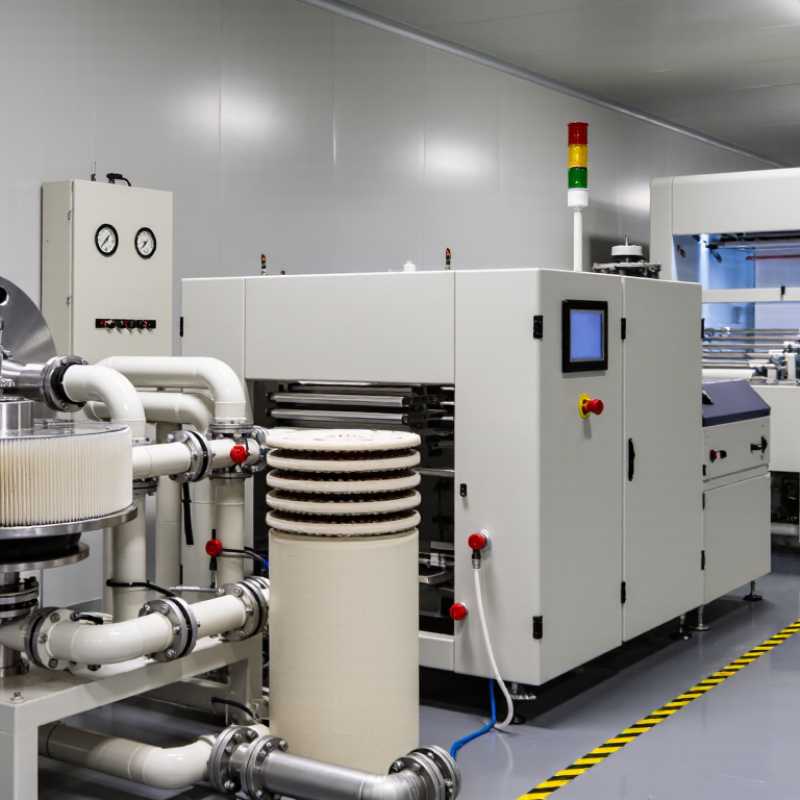
Spinning Filter Basics and Their Role in Modern Filtration
Spinning filters are mechanical devices that separate suspended solids from liquid as a screen, disc, or drum rotates. The movement keeps debris from forming a dense cake on the filter surface. Clean liquid passes through the openings, while larger particles remain outside. Some models use brushes, scrapers, or automatic backwashing to restore flow.
Common designs include rotary screen filters, disc filters, and centrifugal spinning filters. Rotary screens suit steady flows with visible particles, such as fibers, grit, or process debris. Disc filters provide a larger filtration area in a compact housing. Centrifugal designs use rotational force to separate heavier solids, although their performance depends strongly on particle density and liquid viscosity. Filter opening size matters. So does pressure.
In practical system reviews, buyers should examine flow rate, solids loading, temperature, cleaning method, and pressure loss. A filter that performs well in clear water may struggle with oily or fibrous wastewater. This is often underestimated. Operators should also check screen material, seal quality, access for maintenance, and the accuracy of stated capacity. Laboratory results rarely represent every plant condition. A small pilot test can reveal clogging patterns, cleaning intervals, and actual energy use before full installation. Good filtration is not only about removing particles. It is about stable operation, predictable maintenance, and safe integration with the wider process.

Main Spinning Filter Types Available to Global Buyers in 2026
2026 Top Spinning Filter Types for Global Buyers?
Main Spinning Filter Types Available to Global Buyers in 2026
Global buyers in 2026 can choose several spinning filter types for polymer melt processing. Screen-pack filters remain common for simple, cost-sensitive lines. They use layered metal screens to capture gels, dust, and unmelted particles. Candle filters provide deeper filtration and longer service intervals. Their cylindrical elements fit many continuous spinning systems.
Leaf-disc filters offer a larger filtration area inside a compact housing. They work well when stable pressure and consistent fiber quality matter. Sintered metal candle filters can withstand repeated cleaning and high temperatures. Automatic backflush filters reduce manual screen changes during long production runs. However, their control systems require careful setup and skilled maintenance.
Selection should match polymer viscosity, contamination level, throughput, and acceptable pressure loss. A buyer should request test data using the actual polymer and processing temperature. Mesh size alone does not guarantee better filtration. Very fine media may improve cleanliness but increase energy use and break risks. Check sealing surfaces, spare-element availability, cleaning methods, and local technical support before ordering. A small trial is wise. In practice, even experienced teams can choose incorrectly when they rely only on catalog figures.
How to Compare Spinning Filter Design, Capacity, and Performance
2026 Top Spinning Filter Types for Global Buyers
How to Compare Spinning Filter Design, Capacity, and Performance
Choosing a spinning filter starts with the process, not the catalog. Candle, disc, and continuous screen designs suit different polymer loads. Candle filters often provide stable filtration in compact spaces. Disc systems can offer larger active areas and easier scaling. Continuous filters reduce interruptions during long production runs.
Compare capacity using more than kilograms per hour. Check screen area, melt viscosity, operating temperature, and allowable pressure drop. A filter rated for high output may perform poorly with contaminated or heat-sensitive material. Ask for pressure data at your actual viscosity range. Small details matter. Seal quality also affects leakage, waste, and operator safety.
Performance should include filtration consistency, changeover time, cleaning needs, and energy use. In production reviews, I have seen buyers focus on throughput while overlooking residence time. That mistake can increase degradation and unstable fiber quality. I would not trust one short trial as final evidence. Request extended testing, inspection records, and clear maintenance intervals. Confirm material compatibility, control-system integration, and replacement-element availability in your region. A larger filter is not automatically the better choice. The practical winner is the design that maintains stable pressure, predictable output, and manageable service demands.
2026 Top Spinning Filter Types for Global Buyers
How to compare spinning filter design, capacity, and performance
| Filter type | Typical filtration rating | Typical operating capacity | Typical initial pressure drop |
|---|---|---|---|
| Screen pack | 10–40 μm | 100–500 kg/h | 10–30 bar |
| Candle filter | 5–25 μm | 300–1,500 kg/h | 8–25 bar |
| Disc filter | 10–30 μm | 500–2,500 kg/h | 6–20 bar |
| Leaf filter | 5–20 μm | 500–3,000 kg/h | 5–18 bar |
The chart compares representative midpoint throughput values for common polymer melt spinning filter designs. Screen packs are compact and economical for lower flow rates, while candle, disc, and leaf filters generally support higher continuous capacity. Buyers should also compare filtration fineness, pressure-drop growth, contaminant-holding capacity, cleaning method, and melt-temperature compatibility before selecting a design.
Industry Applications and Material Compatibility by Filter Type
2026 Top Spinning Filter Types for Global Buyers?
Industry Applications and Material Compatibility by Filter Type
Spinning filters are not interchangeable. Rotary drum screens suit wastewater plants, aquaculture, and coarse solids removal. Their rotating mesh handles continuous flow, but fibrous waste can blind fine openings. Disc filters provide larger screening areas in compact irrigation systems. The International Water Management Institute reports that agriculture consumes about 70% of global freshwater withdrawals, increasing demand for reliable irrigation filtration. Polypropylene discs resist many agricultural chemicals, while stainless steel performs better under pressure and repeated cleaning.
Centrifugal filters remove sand and heavier particles from wells, cooling loops, and process water. They work without disposable cartridges, although very light solids may escape. Self-cleaning screen filters fit industrial cooling and production lines where flow interruptions are costly. Stainless steel mesh tolerates heat and mechanical stress. Nylon and polypropylene are lighter, but compatibility must be checked against solvents, oxidizers, and temperature.
Material selection needs evidence. The 2024 UNESCO World Water Development Report links water stress with rising industrial and agricultural efficiency requirements. In food and pharmaceutical processing, smooth stainless steel surfaces support hygienic cleaning. PTFE offers strong chemical resistance, yet it can be expensive and mechanically delicate. A practical test with real fluid is still essential. Laboratory charts can mislead. A perfect specification rarely survives the first dirty-water trial. Buyers should record particle size, pressure, temperature, cleaning frequency, and wet-contact material before comparing quotations.
Global Buying Factors: Standards, Costs, Suppliers, and Maintenance
For global buyers, spinning filter selection starts with process evidence, not catalog images. Disc, screen, and candle-style units suit different solids, flow rates, and cleaning routines. Ask for tested capacity at your actual viscosity, temperature, and contaminant load. A polished data sheet is not enough. Request pressure-drop curves, material certificates, and sample test records. Standards vary by destination and application. Confirm electrical ratings, pressure-vessel requirements, food-contact rules, and documentation before ordering. Some buyers overlook regional certification, then face costly redesigns.
Purchase price rarely shows the full cost. Compare media replacement, energy use, labor hours, shipping, spare parts, and wastewater handling. A cheaper filter may require weekly cleaning, while a costlier design may run for months. However, long-service claims need independent verification. Use total-cost models over three to five years. Include customs duties and local technician availability. For supplier evaluation, inspect factory procedures, traceability records, response times, and references from similar industries. Video calls help, but an audited site visit reveals more.
Maintenance planning should be practical and visible. Specify inspection intervals, seal replacement steps, allowable wear, and safe isolation procedures. Keep a small spare kit near the line. Operators should record differential pressure and cleaning frequency after each shift. Those records expose performance drift early. I have seen buyers choose oversized units for comfort, but excess capacity can increase capital and cleaning costs. The better decision is sometimes less certain: pilot the filter, challenge supplier assumptions, and revise the specification.
2026 Top Spinning Filter Types for Global Buyers? - Global Buying Factors: Standards, Costs, Suppliers, and Maintenance
Comparative reference for rotating, rotary, centrifugal, and self-cleaning filtration equipment. Cost figures are indicative 2026 purchasing ranges in USD and vary by capacity, materials, automation, certification, and delivery location.
| Filter type | Working principle | Typical filtration range | Typical capacity | Best-fit applications | Indicative equipment cost | Relevant standards and compliance | Supplier selection criteria | Routine maintenance | Main buying risks |
|---|---|---|---|---|---|---|---|---|---|
| Rotary drum screen | Influent passes through a rotating perforated or wedge-wire drum; retained solids are lifted and discharged. | Approximately 0.25–3 mm opening size | About 20–1,000 m³/h, depending on screening aperture and solids loading | Municipal wastewater, food processing, aquaculture, industrial pre-treatment, irrigation-water intake | US$5,000–80,000 for standard equipment; larger packaged systems cost more | EN 12255-3 where applicable; ISO 12100; IEC 60204-1; IEC 60529; ATEX requirements if installed in a hazardous area | Verified hydraulic test data, corrosion-resistant construction, accessible spray-bar design, local spare-parts support | Inspect screen surface weekly; clean spray nozzles; check seals, bearings, chain or gearbox, and differential level controls monthly | Screen blinding, undersized discharge conveyor, high-pressure wash-water demand, corrosion at welds |
| Rotary disc filter | Water flows through rotating filter panels; solids accumulate on the media and are removed by backwash sprays. | Typically 10–100 µm, depending on media and process conditions | About 50–3,000 m³/h for tertiary-water applications | Tertiary wastewater treatment, water reuse, cooling-water polishing, aquaculture and process-water clarification | US$20,000–250,000, excluding civil works and major control-system integration | ISO 12100; IEC 60204-1; IEC 60529; local wastewater discharge or reclaimed-water requirements; NSF/ANSI/CAN 61 where applicable to potable-water contact | Independent performance testing, clear net-area calculations, documented backwash-water consumption, replaceable media panels | Check panel fouling and spray pressure weekly; inspect drive, shaft, seals, and level sensors monthly; deep-clean media as required | Actual flow may fall sharply with high suspended solids; poor panel access; excessive backwash-water use |
| Automatic self-cleaning screen filter | Pressurized liquid passes through a cylindrical screen; an internal scanner or suction assembly removes retained particles automatically. | Approximately 20–3,000 µm | About 5–2,000 m³/h, depending on mesh size and water quality | Irrigation, cooling towers, membrane pre-treatment, industrial process water, pump protection | US$2,000–100,000 per unit, depending on diameter, material, automation, and pressure rating | Pressure-equipment rules where applicable; ISO 12100; IEC 60204-1; IEC 60529; NSF/ANSI/CAN 61 where applicable | Pressure-loss curves, minimum flush-flow data, screen-area calculations, electrical compatibility, availability of seals and screens | Monitor differential pressure; inspect screen and scanner monthly; verify flushing valves, actuators, and control logic quarterly | Incorrect mesh selection, insufficient flush pressure, control-panel incompatibility, unplanned downtime during screen replacement |
| Rotary vacuum drum filter | A rotating drum partially submerged in slurry forms a filter cake under vacuum; the cake is dewatered and discharged continuously. | Approximately 5–200 µm equivalent separation, strongly dependent on cake properties | About 1–100 m³/h of slurry feed, depending on solids concentration | Mineral processing, chemicals, food ingredients, sludge dewatering, and industrial solids recovery | US$30,000–300,000, excluding vacuum pumps, cake conveyors, and building services | ISO 12100; IEC 60204-1; pressure and hazardous-area requirements where applicable; food-contact rules where applicable | Pilot-test results with the buyer’s slurry, documented cake-moisture data, vacuum-pump sizing, material compatibility, and wear-part availability | Inspect filter cloth, scraper, vacuum seals, drum bearings, and filtrate lines; replace cloth according to wear and blinding condition | Performance varies greatly with particle shape and cake permeability; vacuum leakage; cloth blinding; high installation complexity |
| Centrifugal separator | Rotational flow creates centrifugal force that separates denser solids or liquid phases from the carrier fluid. | Commonly about 5–100 µm for hydrocyclonic or centrifugal solid separation; actual cut size depends on density and viscosity | About 5–500 m³/h for industrial liquid-solid separation | Sand removal, cooling-water protection, machine-tool fluids, process liquids, and pre-treatment before fine filtration | US$1,500–75,000, depending on pressure, materials, automation, and solids-discharge method | ISO 12100; IEC 60204-1; pressure-equipment requirements where applicable; ATEX requirements for classified areas | Verified separation curve, minimum operating pressure, wear-resistant liners, automatic purge option, and density assumptions | Check purge outlet and wear surfaces weekly; inspect pressure gauges, valves, liners, and supports; flush accumulated solids as needed | Cannot reliably remove particles with insufficient density difference; abrasive wear; pressure loss; incorrect flow-rate assumptions |
| Rotary pressure filter | A rotating filter element operates inside a pressurized housing, allowing continuous filtration and solids discharge. | Approximately 1–50 µm, depending on media and process conditions | About 1–150 m³/h for process liquids or slurries | High-value process fluids, pigment and chemical production, oils, polymers, and continuous solids removal | US$40,000–350,000, excluding upstream pumps, instrumentation, and hazardous-area upgrades | Applicable pressure-equipment legislation; ISO 12100; IEC 60204-1; IEC 60529; ATEX or IECEx requirements where specified | Pressure-vessel design records, factory pressure testing, material certificates, seal compatibility, and documented clean-in-place capability | Monitor pressure differential and leakage; inspect seals, bearings, drive train, filter media, and discharge mechanism on a scheduled basis | High capital cost, complex sealing, difficult access to internal parts, and potentially long lead times for custom components |
Article Source:

Whether your solution requires a single pumping application or an expansive engineered system,
CheckPoint is committed to becoming your partner in excellence.


